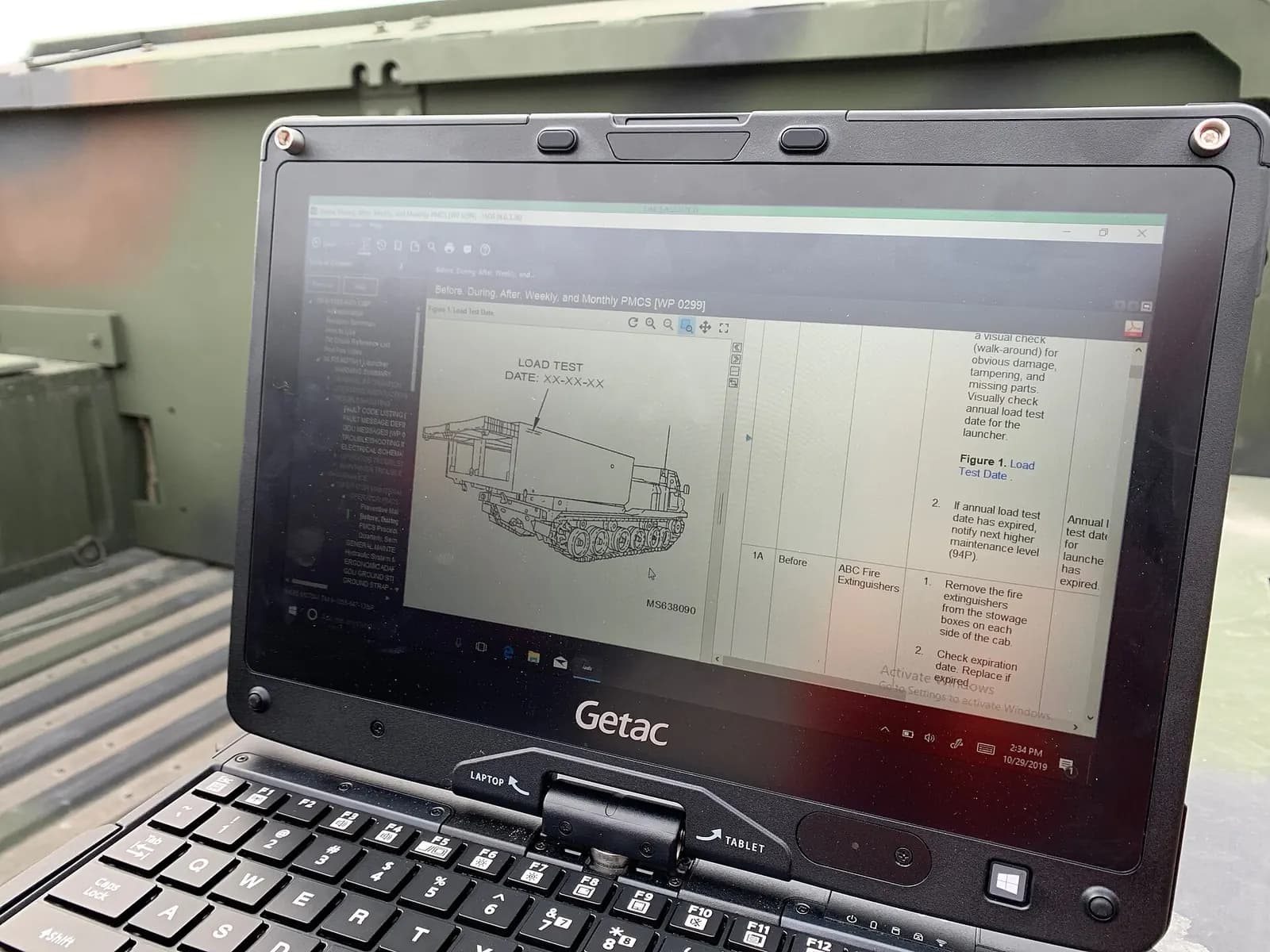
AI for drive manuals is useful when it answers only from the manuals you give it and shows the document and page each answer came from. LADX Knowledge works that way: you upload drive manuals, machine specifications and site standards to a project, ask questions in plain language, and get answers with citations, or a clear 'not in the documents' when the answer is not there.
That last behaviour is the important one. A general chatbot asked for a specific drive parameter will often produce a confident number from nowhere in particular. When the number is a torque limit or a ramp time, a plausible invention is worse than no answer at all.
Why general chatbots are risky for equipment questions
Large language models generate text that fits the pattern of what they have read. Researchers call the failure mode hallucination; a 2023 survey of hallucination in large language models sets out how often and why models produce fluent statements that are not supported by any source. In the NIST Generative AI Profile (NIST AI 600-1, July 2024), managing that kind of risk is part of using generative AI responsibly.
For a maintenance engineer, the practical problem is that a wrong answer and a right answer look identical. Without a citation you cannot tell which kind you got, so you end up opening the manual anyway.
How answers with citations work
The technique is usually called retrieval-augmented generation. The original 2020 RAG paper by Lewis and colleagues combined a language model with a searchable index of documents, and pointed out that retrieving from an explicit store makes it possible to trace where an answer came from. Applied to engineering documents, the flow is simple:
- Your PDFs and text files are indexed for the project they belong to.
- A question is matched against passages in those documents.
- The model writes an answer using only the retrieved passages.
- The answer shows the document and page behind each claim, so you can open the page and check it.
- If no passage supports an answer, it says so rather than filling the gap.
What is Retrieval-Augmented Generation (RAG)?
IBM Technology
This video is hosted on YouTube. Playing it loads content from Google, which may set cookies.
Watch on YouTube
What LADX Knowledge does
- Answers with citations. Every claim points at a document and page.
- Refuses to pad. Anything not in your documents comes back as not in the documents.
- Scoped per project. One project's manuals never leak into another's answers, and nothing is used for training.
- Works with the rest of LADX. Chat can search the project's documents while writing logic, so a generated rung can respect limits stated in the drive manual.
Where it helps on a real job
Picture a packaging line with six variable speed drives from two manufacturers, a servo axis on the cutter, and a site electrical standard nobody has read end to end. The useful questions are specific:
| Situation | Question to ask | What to check on the cited page |
|---|---|---|
| Drive trips on deceleration | What causes an overvoltage trip during ramp-down on this drive? | Applicable model and firmware, recommended actions |
| Writing the start sequence | Which control word bits must be set before a run command is accepted? | Bit numbering and the communication profile in use |
| Panel design review | What does the site standard require for cable segregation inside panels? | Revision and date of the standard |
| Commissioning a replacement drive | Which parameters must be set for motor data and current limit? | Units and default values |
How to judge an answer in thirty seconds
A citation is only useful if someone looks at it. The habit we teach is simple: read the answer, open the cited page, and check three things before acting. First, that the page is from the manual for the model actually installed, not a sister product in the same family. Second, that the units match what you think they are: hertz or percent, seconds or milliseconds, amps RMS or peak. Third, that the surrounding text does not add a condition, such as 'only in vector control mode' or 'from firmware version x'.
Questions phrased like a search query work better than questions phrased like a conversation. 'Overvoltage trip causes during deceleration, model X' retrieves better passages than 'why does my drive keep tripping?'. Name the device, the parameter or the fault, and ask one thing at a time. If an answer cites a page that does not say what the answer claims, treat that as a defect and report it, the same way you would report a wrong drawing.
What it does not do
- It does not check that a manual is the current revision. Load the manual that matches the installed hardware and firmware, and remove superseded copies.
- Scanned manuals without a text layer cannot be read. A scanned page is a picture; you need a PDF with real text.
- Heavy tables lose some structure. Parameter tables are where values live, so always open the cited page before acting on a number.
- It is on the web app, not yet the desktop build. Isolated sites should plan accordingly, as covered in our offline AI guide.
Fitting it into maintenance practice
Citation-backed answers suit the way good maintenance teams already work: find the source, check it, record what was done. They pair well with structured PLC training for maintenance technicians, because a technician who can find the right page quickly learns faster, and with AR maintenance guidance at the machine. They do not replace either.
Next step
Try LADX Knowledge with the manuals for one machine, or see how it fits the wider industrial AI practice. If your team needs help structuring documentation for a line or a migration, get in touch.