ISO 13849 vs IEC 62061 is a choice between two harmonised routes to the same goal: designing safety-related control functions on machinery that reduce risk enough. ISO 13849-1 uses Performance Levels (PL a to e) and simplified architectures; it suits most machines built from standard components, including pneumatic and hydraulic parts. IEC 62061 uses Safety Integrity Levels (SIL 1 to 3) within the IEC 61508 framework and suits complex, programmable electronic safety systems. Either can be used; pick one per safety function and apply it fully.
ISO 13849 vs IEC 62061 at a glance
| ISO 13849-1 | IEC 62061 | |
|---|---|---|
| Current edition | 2023 | 2021, amended 2024 |
| Integrity scale | PL a to e | SIL 1 to 3 |
| Technologies | Electrical, electronic, pneumatic, hydraulic, mechanical | All technologies since the 2021 edition |
| Method | Designated architectures (categories), MTTFD, DC, CCF | Subsystem architectures, failure rates, PFH |
| Typical users | Most machine builders | Complex systems, process-oriented teams |
IEC 62061:2021 brought the two standards closer. It was restructured to follow the design process, extended to non-electrical technologies, aligned its definitions with IEC 61508 and replaced the old SIL claim limit (SILCL) with the maximum SIL of a subsystem. ISO 13849-1:2023 is the current edition of the other route. As a rough guide, PL d corresponds to SIL 2 and PL e to SIL 3, but always check the mapping tables in the standards rather than relying on a rule of thumb.
Machine Safety Standards (IEC 62061, ISO 13849)
exida
This video is hosted on YouTube. Playing it loads content from Google, which may set cookies.
Watch on YouTubeBoth start from the same place: risk assessment
Neither standard tells you how much risk reduction you need. That comes from the risk assessment under ISO 12100, which identifies hazards, estimates risk and applies inherently safe design and guarding before control measures. Only the residual risk handled by control functions, such as a guard interlock, a light curtain or a safe speed function, is then specified as a required PL (PLr) or required SIL.
- Carry out the risk assessment to ISO 12100 and decide which risks need safety functions.
- Write a safety requirements specification: each function, its trigger, its response, response time and required PL or SIL.
- Choose the standard for each function and design the architecture.
- Select components with the reliability data you need.
- Calculate the achieved PL or SIL, including diagnostics and common cause failure measures.
- Develop safety software under the standard's software requirements.
- Verify and validate, and record everything in the technical file.
How to choose between them
- Mostly standard safety components, relays and a safety PLC, including fluid power: ISO 13849-1 is usually simpler and familiar to inspectors and customers.
- Complex programmable safety systems, many subsystems or process-industry customers used to SIL: IEC 62061 fits better.
- Customer or sector requirement: some customers specify one; follow it.
- Team experience and tools: consistent use of one method across your machines reduces errors. Tools such as SISTEMA support ISO 13849 calculations.
Safety software: where many projects slip
Both standards set requirements for safety-related software: specification, structured design, coding rules, verification and validation, and change control. In practice, this means safety program code written from a specification, reviewed, tested against each safety function and kept under version control. Safety logic should not be changed casually on site. AI-generated code needs particular caution here, as discussed in AI for PLC programming.
The EU Machinery Regulation raises the stakes
In the EU, the Machinery Regulation (EU) 2023/1230 applies on a mandatory basis from 20 January 2027, replacing the Machinery Directive regime for machinery placed on the market from that date (European Commission). It keeps the approach of essential requirements supported by harmonised standards, so ISO 13849 and IEC 62061 remain central, and it adds stronger attention to software that performs safety functions and to protection against corruption. Machine builders selling into Europe should review their safety software processes now.
Common mistakes in safety function design
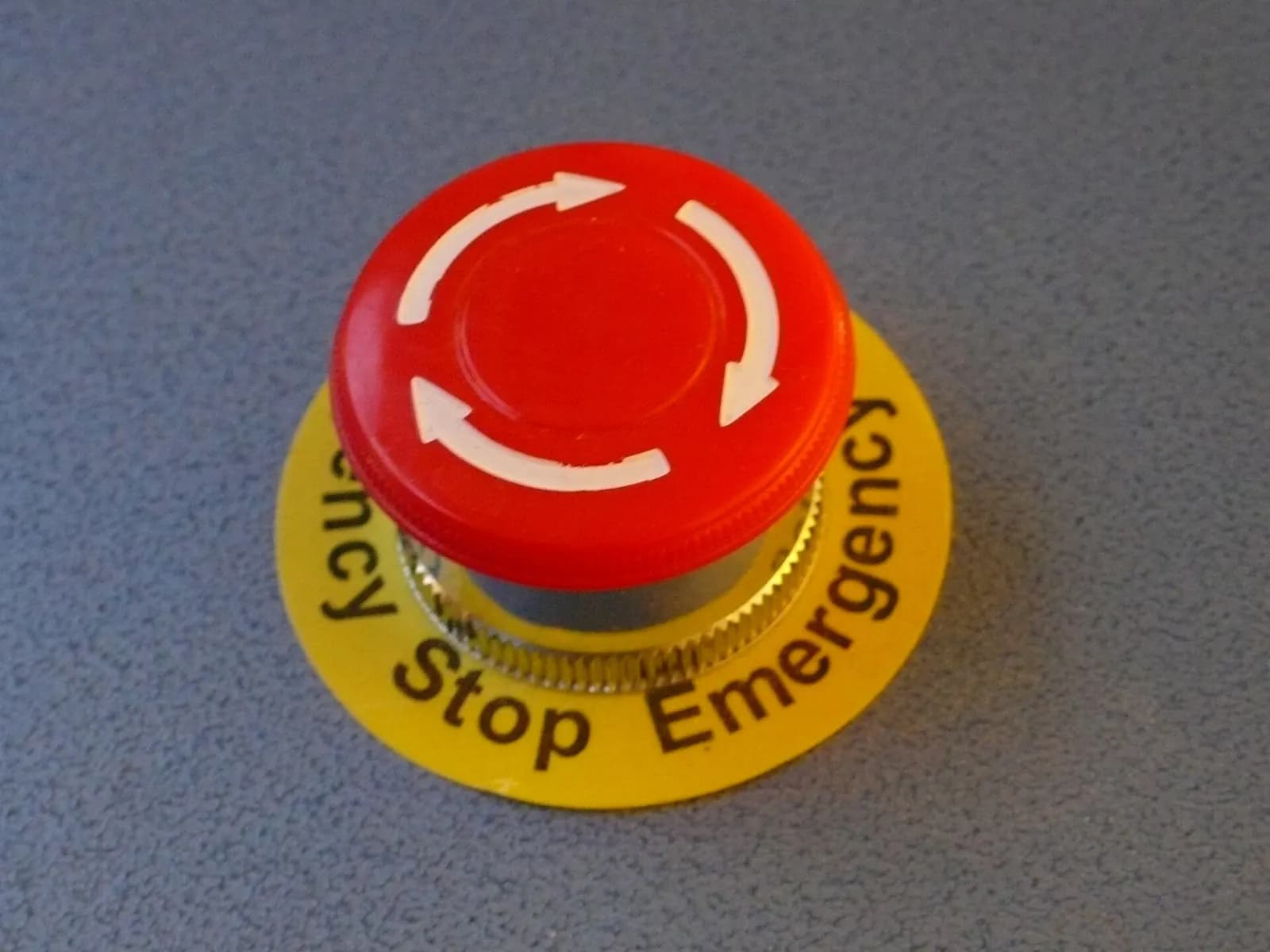
- Treating the emergency stop as the main safety function, instead of designing proper guard interlocks and presence sensing
- Calculating PL or SIL for the safety PLC only, ignoring the sensors, contactors and valves that make up the function
- Missing common cause failure measures on dual-channel designs
- Using reliability data without recording its source, so nobody can check it later
- Changing safety parameters on site without updating the calculations and validation records
Most of these are process failures, not technical ones. A second engineer reviewing each calculation and each validation test catches the majority before the machine ships. Keep a simple register of every safety function with its required and achieved level, so the whole picture fits on one page for reviewers and customers.
Testing safety functions earlier
Safety function logic can be tested in simulation before site, for example confirming that opening a guard stops the right axes within the response time, and that restart needs the correct reset sequence. That does not replace final validation on the real machine, but it removes many surprises. See what is virtual commissioning.
How Wartens supports safety work
Wartens develops PLC and safety PLC software from your safety requirements specification, with documentation for the technical file, working alongside your CE or safety partner. See our automation engineering service or contact us to discuss your machine.