Control system handover documents are the specifications, registers, test records and manuals that let a client operate, maintain and change a system after the integrator leaves. A typical automation project owes around seventeen of them, from the user requirements specification to the O&M manual and change control. Most of the facts in them are the same: client, site, tag list, sequences and alarms, which is why retyping them is both slow and the main source of errors.
This guide lists the documents phase by phase, links each to the standard or practice behind it, and shows how LADX Documents generates first drafts from the project so they stay consistent.
The control system handover documents a project owes
| Phase | Documents | Who relies on them |
|---|---|---|
| Requirements | User requirements specification (URS) | Client, integrator, validation |
| Design | Functional design specification (FDS), control narrative, software design specification, I/O list, bill of materials, cable schedule, cause and effect matrix, risk assessment | Engineers, panel shop, safety |
| Development and alarms | Alarm and trip schedule, alarm rationalisation record | Operators, process engineers |
| Factory test | Factory acceptance test (FAT) protocol and record | Client witness, integrator |
| Commissioning | Commissioning checklist, site acceptance test (SAT) | Site team, client |
| Handover and support | Handover certificate, O&M manual, change control | Maintenance, future integrators |
Not every job needs all of them. A programming-only work package might owe an FDS, an I/O list and a FAT record. A full lifecycle project owes the lot. Agree the list in the contract, not at the end.
The standards behind the paperwork
- Testing. IEC 62381:2024 covers factory acceptance, site acceptance and site integration tests for automation systems in the process industry, with checklists that help write project-specific test procedures. Our FAT vs SAT guide explains the difference in practice.
- Alarms. The ISA-18.2 series defines the alarm management lifecycle, including rationalisation, which is why the alarm rationalisation record exists.
- Manuals. IEC/IEEE 82079-1 sets principles and requirements for information for use, for products from simple items up to large industrial plants. It is a good yardstick for an O&M manual.
- Specifications. A functional specification that operators, engineers and testers can all use is the backbone of everything after it; see how to write a PLC functional specification.
Pre-Commissioning vs Commissioning - What Takes Place During Each Stage?
ICxA
This video is hosted on YouTube. Playing it loads content from Google, which may set cookies.
Watch on YouTubeWhy handover documents go wrong
Documentation is usually written last, by the people with the least time left, and it starts going out of date the moment someone edits a rung. The I/O list in the O&M manual disagrees with the one in the FDS. The alarm list was exported from the HMI three revisions ago. The client name is spelled two ways. None of this is anyone's fault; it is what happens when the same fact lives in fifteen files.
Generating documents from the project with LADX Documents
LADX Documents holds seventeen working templates across specification, design, registers, safety, testing and handover, with tables and sign-off blocks already in place. They are filled from the project rather than typed again:
- The I/O list comes from the program's tags and addresses.
- The control narrative comes from the rungs and their comments.
- The letterhead, client, site and document number come from the project.
- Regenerating produces the current version after changes, and output is in Word and PDF for readers outside engineering.
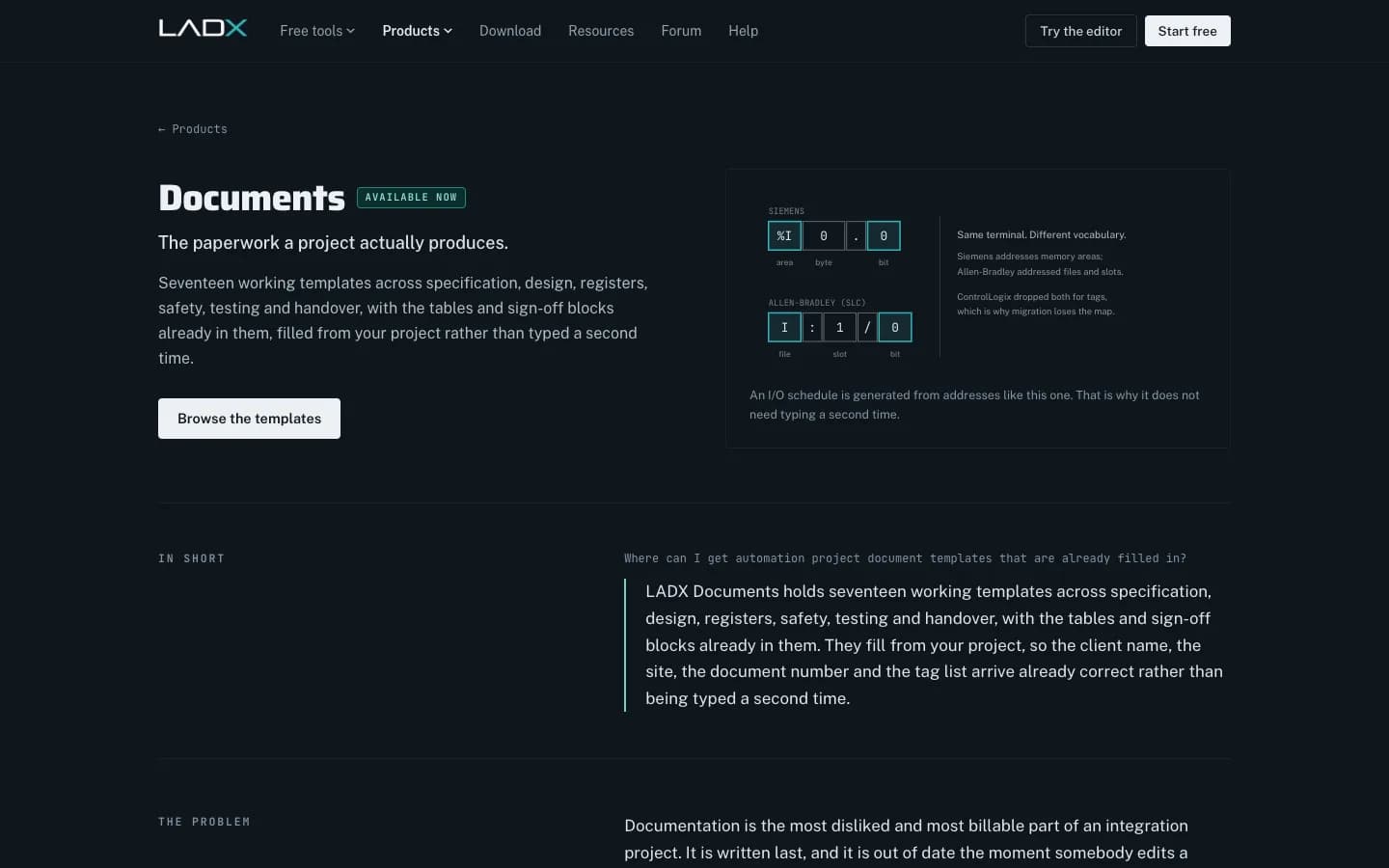
The templates are also available to download without an account: fill in a few fields and they arrive with your values substituted, or leave them blank and they arrive with bracketed placeholders. LADX Projects lets you choose a preset from programming only, three documents, up to the full seventeen, and the design basis answered once at the start flows into every document.
What still needs a person
- Review. Generated documents are a first draft that is right about the project's facts. They are not a finished submission.
- House standards. The templates follow common practice, not a particular client's format. Expect to adapt sections, especially for regulated clients.
- Change tracking. Revision tracking between regenerations is on LADX's plan, not yet available, so keep your normal document control in place.
- Judgement. A cause and effect matrix or risk assessment records decisions. The tool fills the structure; engineers make the decisions.
Who writes, reviews and signs each document
Ownership causes more handover disputes than content does. Settle it at kick-off. The client usually owns the URS and signs the FDS as the agreed interpretation of it. The integrator writes the FDS, software design, I/O list and test protocols. The client or their representative witnesses and signs the FAT and SAT records. The O&M manual is written by the integrator but should be reviewed by the maintenance team who will use it, not only by a project manager.
Two practical rules save weeks. Freeze the document list and the template set in the contract, including any client house style. And agree that every document carries the same revision and date as the software it describes at handover, so nobody has to guess whether the I/O list matches the code they are looking at.
Planning the documents, not just writing them
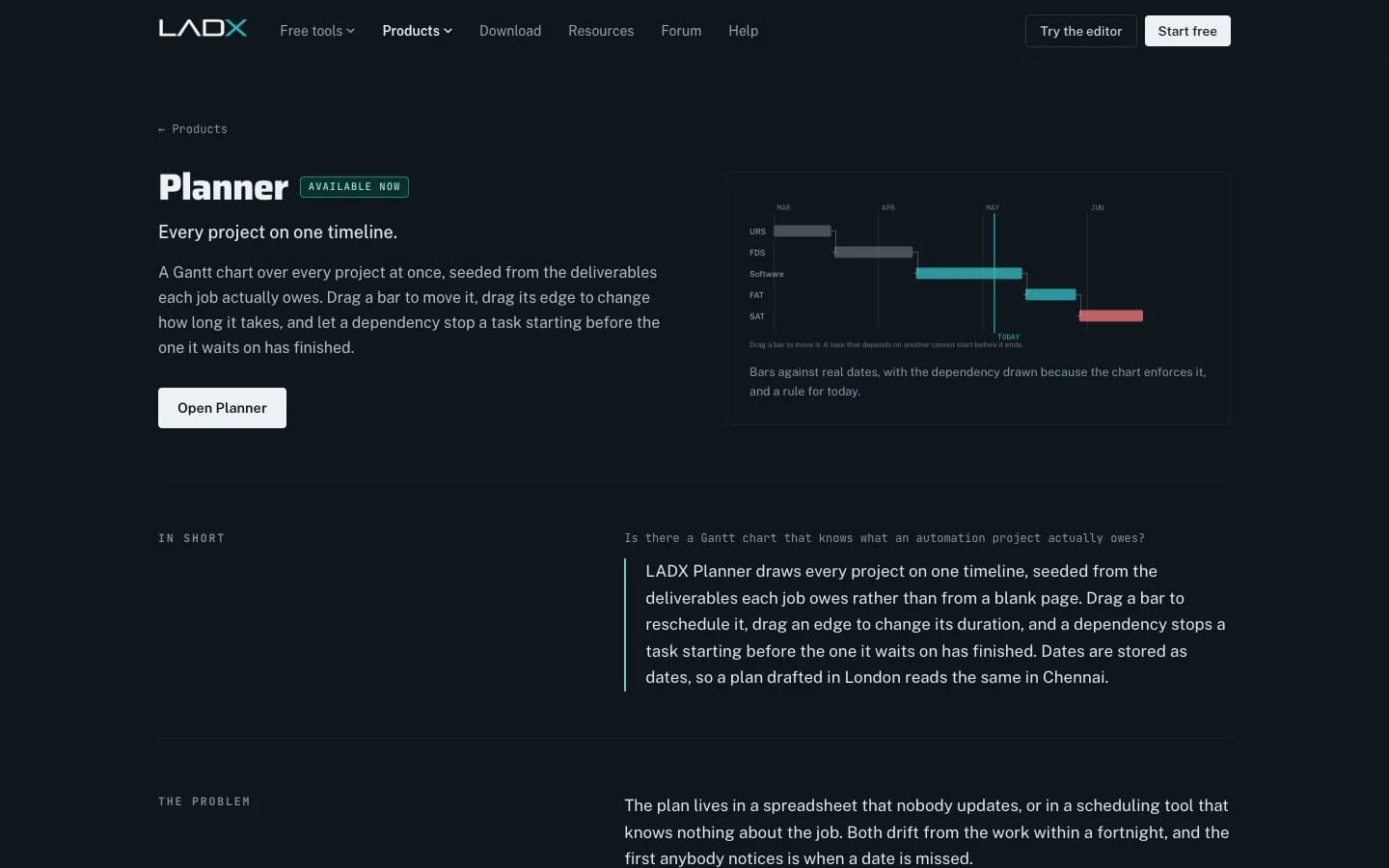
Documents have dependencies like any other deliverable: no FAT protocol before the FDS is approved, no SAT before the FAT punch list is closed. LADX Planner seeds a Gantt chart from the deliverables each project owes and refuses to let a task start before the one it depends on has finished.
Next step
Browse the LADX document templates, or see the group's industrial AI practice. If you want a project delivered with a complete, consistent handover pack, our automation engineering service includes documentation, training and support in every handover. Contact us with your scope.