BESS SCADA is the supervisory control and data acquisition layer of a battery energy storage system: it collects data from batteries, inverters, meters and auxiliaries, presents it to operators, and passes commands from the energy management system or grid operator to the site. Behind it sit several control layers, each with a distinct job. Getting the boundaries between them right is what makes a storage site reliable, safe and bankable.
Storage is being built at record pace. The US installed a record 18.9 GWh in Q2 2026, according to Wood Mackenzie and the American Clean Power Association (T&D World), and Great Britain's fleet reached 7.2 GW and 11.8 GWh after Q1 2026 (Modo Energy). Every one of those sites needs controls engineering.
The control layers in a BESS
| Layer | Job | Typical platform |
|---|---|---|
| Battery management system (BMS) | Cell and rack monitoring, balancing, protection, state of charge | Supplied with the battery |
| Power conversion system (PCS) | Inverters converting DC to AC, executing power setpoints | Inverter manufacturer's controller |
| Site controller or power plant controller (PPC) | Closed-loop control at the grid point: active and reactive power, frequency response | Dedicated PPC or PLC-based controller |
| Energy management system (EMS) | Decides what the site should do: trading schedules, services, state-of-charge strategy | Software platform, local or cloud |
| SCADA | Data acquisition, HMI, alarms, historian, remote access, reporting | Industrial SCADA platform |
The key distinction is speed and authority. The BMS protects the battery and can override anyone. The PPC acts in milliseconds to seconds at the grid connection. The EMS plans over minutes to days. SCADA watches everything and lets humans intervene. When these roles blur, for example when trading logic sits in the PPC or safety trips depend on SCADA, sites become hard to test and harder to fix.
Decoding BESS: What is Battery Energy Storage Systems | Moxa
Moxa
This video is hosted on YouTube. Playing it loads content from Google, which may set cookies.
Watch on YouTubeCommunication and grid standards
- Device communication: Modbus TCP remains common for BMS and inverters; check every register map early.
- Substation and utility interfaces: the IEC 61850 series for power utility automation is widely used for protection and substation integration, alongside DNP3 and IEC 60870-5-104 for telecontrol.
- Grid behaviour: in North America, IEEE 1547-2018 covers distributed resources and IEEE 2800-2022 inverter-based resources on transmission systems; elsewhere, national grid codes apply.
- Fire and installation safety: NFPA 855 is the US standard for installing stationary energy storage systems and shapes alarm, ventilation and emergency response design.
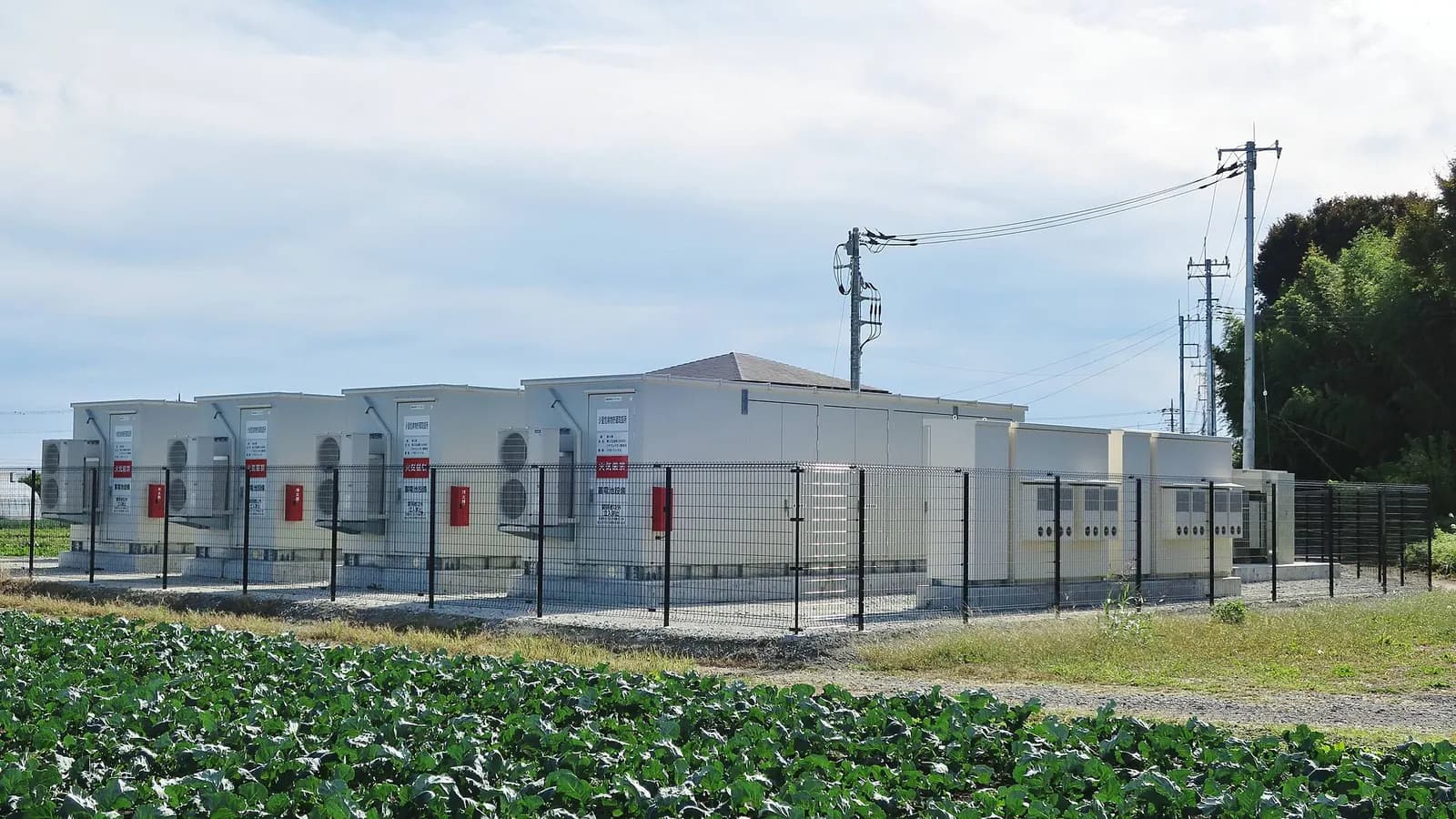
What to monitor on a battery storage site
- State of charge and state of health by rack and by site, with energy available for each service
- Cell temperature spread and maximum, cooling system status, ambient conditions
- Power at the point of connection against setpoint, reactive power and voltage
- Availability by inverter and battery block, with reasons for any derating
- Fire detection, gas detection and suppression system status
- Auxiliary power, UPS, communications health and time synchronisation
Present these at three levels: a fleet overview for remote operators, a site page that shows availability and any derating at a glance, and detailed device pages for engineers. Most nuisance in storage SCADA comes from showing everything at the same level.
Testing BESS control logic before energisation
Storage projects suffer the same commissioning problems as factories, with higher stakes. Register maps that do not match the device, setpoints in the wrong units, frequency response that oscillates, alarms that flood the operator during a trip. Most of this can be found before energisation by testing the controller and SCADA against simulated devices: an emulated BMS and PCS, a simple grid model and scripted events such as frequency excursions or a rack trip. It is the energy equivalent of virtual commissioning.
Alarm management on storage sites
A large BESS can produce thousands of alarms during a single grid event, most of them consequences of one cause. Operators working remotely across many sites cannot handle that. Apply the same discipline used in process plants: a documented alarm philosophy, priorities based on the action required, suppression of consequential alarms, and regular review of the worst offenders. The aim is that the first alarm an operator sees tells them what happened and what to do. ANSI/ISA-18.2, written for process plants, is a good model for the lifecycle even though it was not designed for storage.
Data for owners, operators and offtakers
Storage sites have more data customers than most plants: the owner, the asset manager, the operations contractor, the optimiser or trader, the grid operator and often lenders. Agree early which data each receives, at what resolution, through which interface and with what availability. Settlement and warranty disputes are far easier to resolve when metering, state of charge and availability data are consistent across all of them.
Cybersecurity is not optional
Storage sites are remotely operated by design, which makes them attractive targets. Apply the zones and conduits approach from IEC 62443, keep the BMS and PCS networks separate from corporate IT, and control third-party remote access tightly. Many sites have several parties needing access: the battery supplier, the inverter supplier, the EMS provider and the operator.
How Wartens supports storage projects
Wartens engineers SCADA, monitoring dashboards and controller logic for standalone and solar-plus-storage sites, for integrators, developers and EPC contractors, with engineering at our India centre. See our energy systems service, read about solar power plant controllers, or send us your single-line diagram.