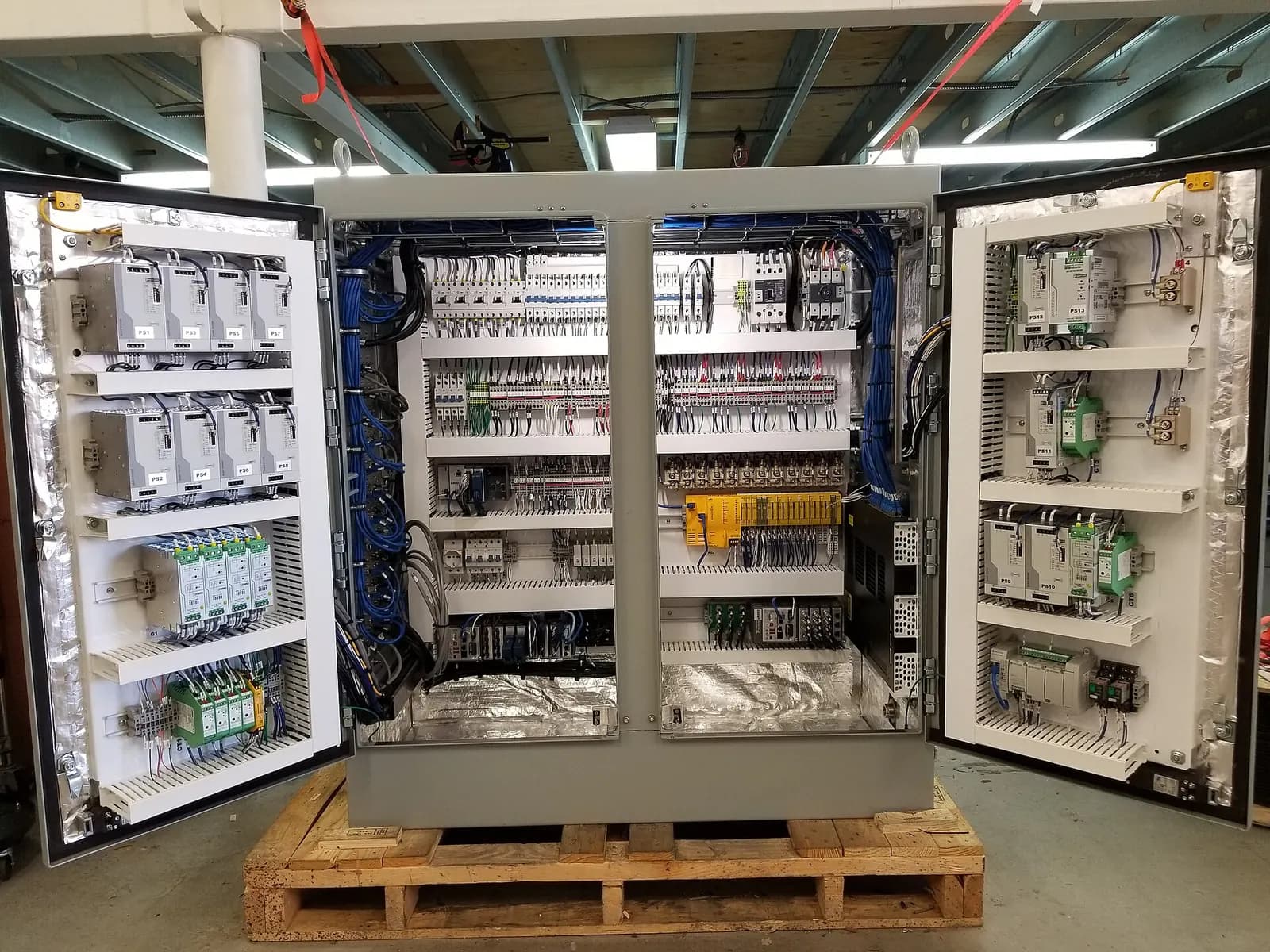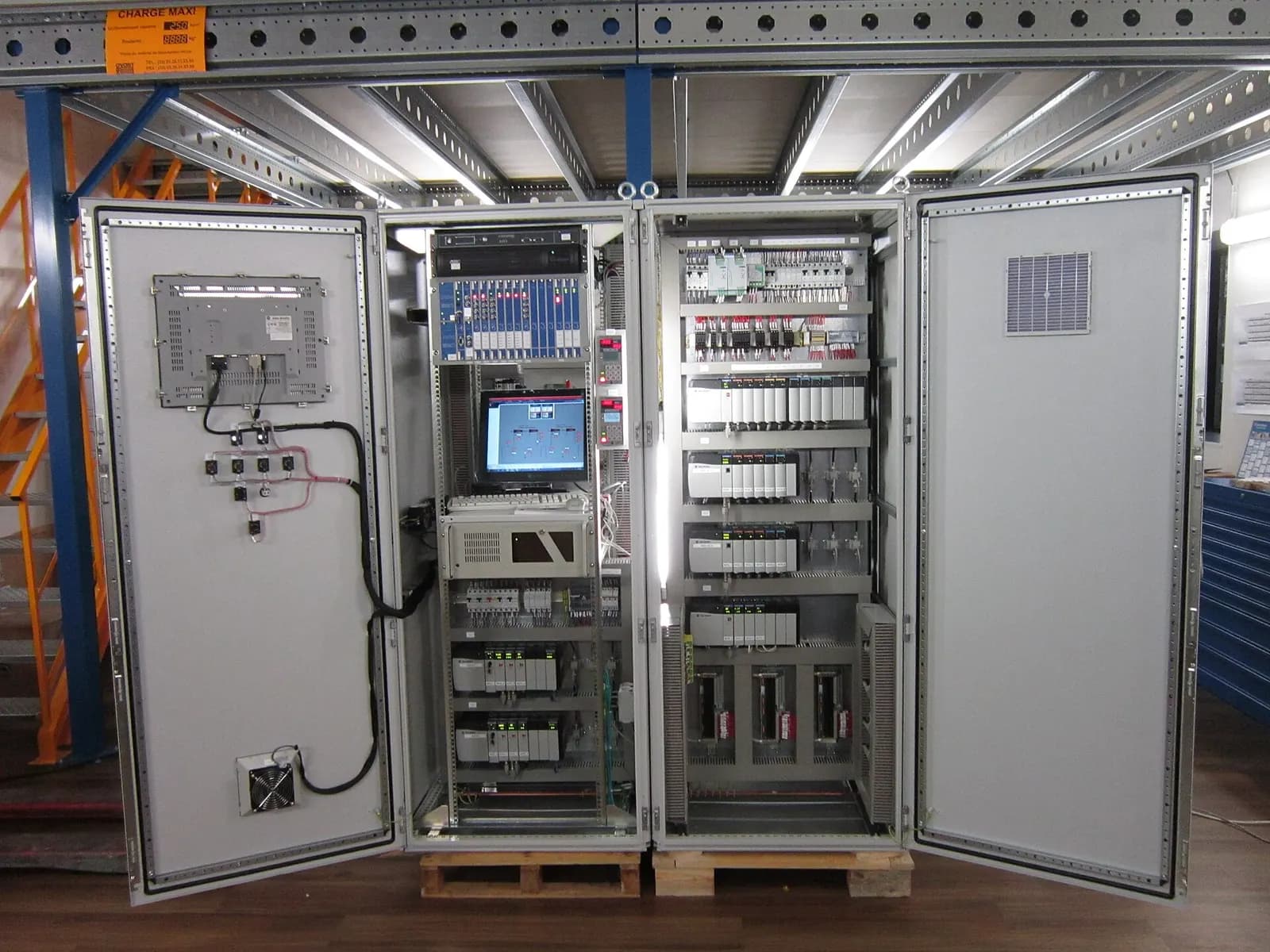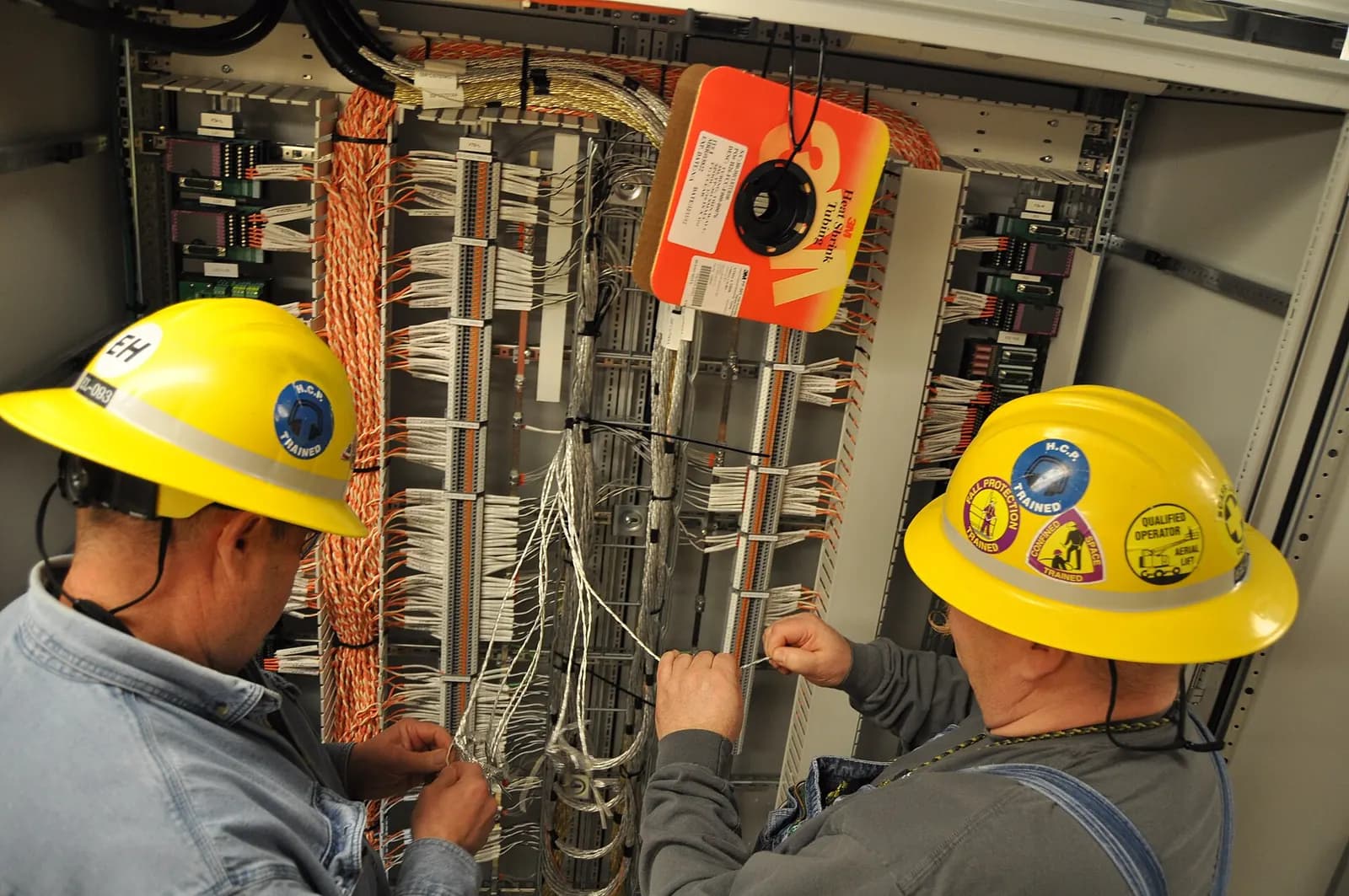
Offline AI for OT networks means running the AI model on a machine you control, with no prompts, programs or drawings leaving the site. LADX Studio is the desktop build of LADX for macOS 11 or later and 64-bit Windows 10 or later. It runs the ladder editor, simulator, CAD, HMI builder, Convert and the document pack locally, uses a local Ollama model for inference, and needs no network after the first-run licence check.
For engineers on water treatment works, pumping networks and battery storage sites, that is often the only way AI assistance can be used at all. This article explains why, how to set it up, and what it does not do.
Why OT teams cannot paste code into a chatbot
A PLC program is a map of the plant. It holds network addresses, interlock logic, setpoints and alarm limits, and on a water network it may reveal how an asset fails safe. Many UK water and energy operators are assessed against the NCSC's Cyber Assessment Framework, which expects them to know where sensitive system information goes. Sending that file to a public AI service is hard to square with that.
In December 2025 the UK NCSC co-authored joint guidance with CISA, Canada's Cyber Centre and other partners on the secure integration of AI in operational technology. It sets out four principles: understand AI, consider AI use in the OT domain, establish governance and assurance, and embed safety and security practices. An offline engineering tool is one of the easier ways to meet them, because the AI never sits in the control path.
What LADX Studio runs offline
- The ladder editor and scan-accurate simulator, plus Monitor for forcing inputs and recording a test run.
- LADX CAD for schematic and panel sheets, and the HMI/SCADA builder that binds screens to the program's own tags.
- Convert, to write programs as Structured Text, Siemens SCL, Rockwell neutral text or PLCopen XML.
- The Documents pack, from FDS to O&M manual, filled from the project.
- Projects stored as real folders you can back up, put on approved media and hand over.
Some LADX tools are web-only for now. LADX states that the planner, client records and the Knowledge base are on the web app and not yet in the desktop build.
Setting up offline AI for an OT network, step by step
- Choose the machine. Use an engineering workstation in your engineering zone, not a server on the control network. The AI does not need to see a PLC to be useful.
- Install Ollama and pull a model while connected. LADX does not bundle Ollama because model weights run to gigabytes. Pull the model you want on a connected build machine, then move it under your normal media control procedure. Ollama also offers cloud models; for an air-gapped set-up use local models only.
- Verify the installer. The LADX download page publishes a SHA-256 hash for each installer. The installers are not code-signed yet, so macOS and Windows warn on first run; checking the hash is how you confirm the file is the one published.
- Run the licence check once. After that, Studio needs no network.
- Leave updates off. The update check is off unless you enable it, and LADX says updates are signed. On an isolated machine, download new versions elsewhere and transfer them through change control.
- Decide where projects live. Each project is a folder, so include it in your backup and retention rules like any other engineering record.
Why a small local model can be good enough
Local models are usually smaller than the large hosted ones, and on their own they make more mistakes in ladder logic. LADX's answer is the compile loop: generated logic is compiled with matiec, checked with iec-checker and a PLCopen schema pass, and sent back to the model with the errors until it passes. LADX argues that this loop is what makes a small free model useful. In practice, the bigger constraint on a site laptop is memory and speed, so test response times on the actual hardware before rolling it out.
| AI-in-OT principle | How an offline engineering tool addresses it |
|---|---|
| Understand AI | Engineers treat output as a draft that must pass review and test |
| Consider AI use in the OT domain | AI stays in engineering, never in the control or safety path |
| Governance and assurance | Model, tool version and use recorded in change control |
| Embed safety and security | No network after setup, no writes to live controllers |
What it does not do
LADX never connects to a controller, so downloads, online edits and diagnostics stay in TIA Portal, Studio 5000 or the relevant vendor tool. A compiler proves code is valid, not that it is correct, so peer review and FAT still apply. Offline does not mean exempt: the workstation still needs patching, access control and malware protection under your OT security policy, and the NCSC's operational technology guidance applies to it like any other engineering asset.
What is Ollama? Running Local LLMs Made Simple
IBM Technology
This video is hosted on YouTube. Playing it loads content from Google, which may set cookies.
Watch on YouTubeWhere this fits on UK water and energy projects
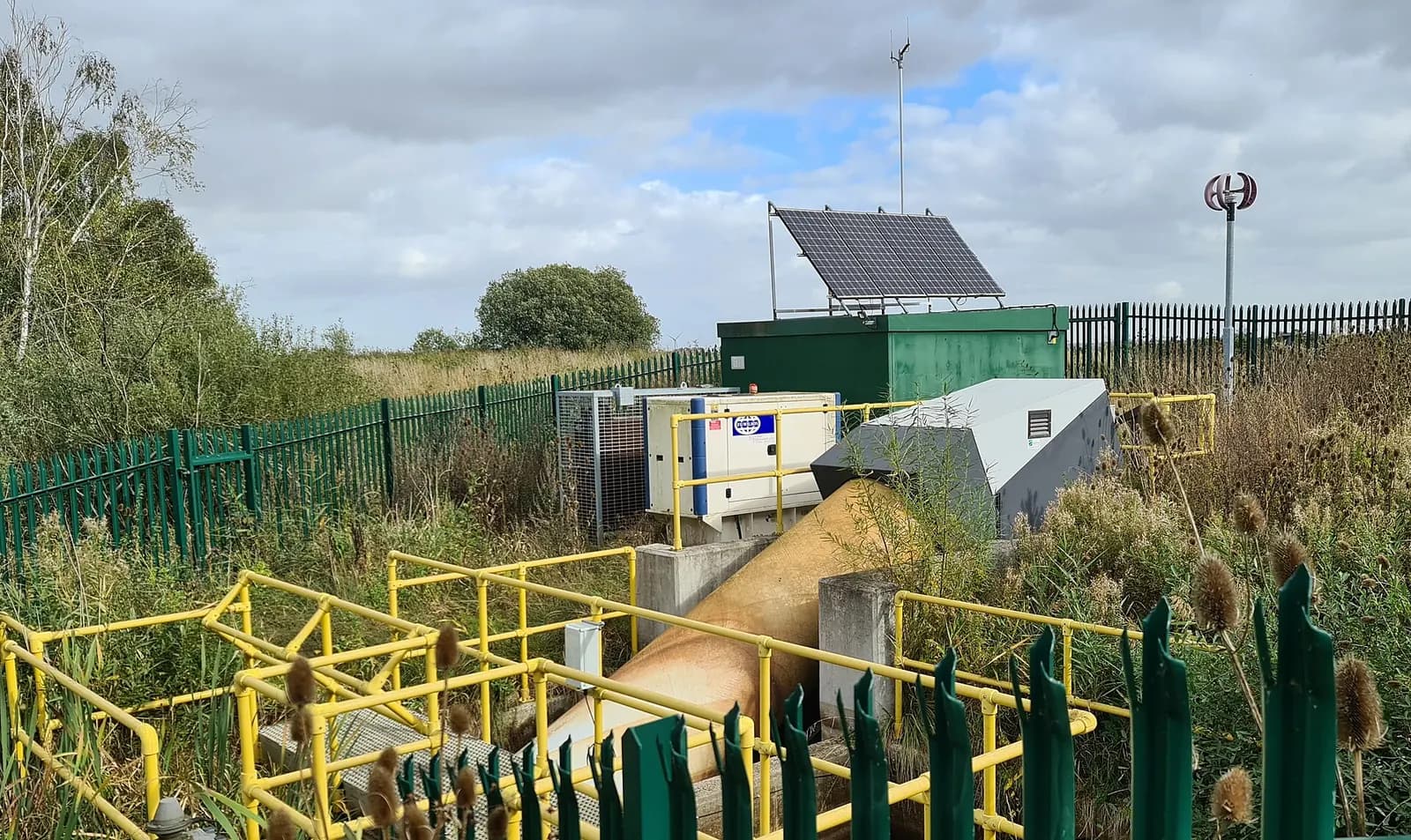
On a treatment works upgrade, offline AI is useful for drafting function blocks, converting legacy logic to a readable form and producing first-draft documents, all without breaching the client's data rules. Our article on water SCADA cyber security and the NCSC CAF covers the wider design decisions. On battery storage sites the same applies to controller logic and SCADA screens; see our battery storage SCADA and controls service.
Wartens engineers PLC and SCADA software for UK water companies and their contractors through our automation engineering service, working within each client's security and engineering standards.
Next step
Read the requirements on the LADX download page and test Studio on a non-production workstation first. If you need PLC or SCADA engineering delivered under strict data rules, contact our Milton Keynes team with your client's constraints.