An iUNI digital twin for UK manufacturers is a 1:1 replica of a line or factory, built from your CAD, connected to live machine and sensor data, and viewed in a web browser or VR. It is used to test PLC code before site work, plan layout changes, monitor operations and train staff. iUNI's digital twin service states a typical timeline of 12 to 24 weeks, and its pricing page lists digital twin development from £20,000 at the time of writing.
iUNI is the Wartens group's digital twin and immersive technology company. This brief sets out what you get, who it suits, how a build runs and the limits worth knowing before you commit.
What the product includes
| Component | What it does |
|---|---|
| 1:1 model from CAD | Your line, cell or building at true scale, from existing drawings |
| IoT integration layer | Live data from PLCs, sensors, SCADA and ERP mapped to equipment |
| Web-based 3D viewer | Opens in a browser with no software to install |
| Analytics and reporting dashboard | Trends, anomaly detection and what-if scenarios |
| VR/AR visualisation module | Walk-throughs for layout reviews, training and maintenance |
Who a digital twin for UK manufacturers suits
- SME manufacturers adding or changing a line, who want to test layout and PLC logic before equipment arrives.
- Machine builders who want to commission software against a model and shorten time at the customer's site.
- Plants with recurring downtime where a shared visual view of machine states would help maintenance and production agree on causes.
- Sites with a training problem, where new operators need safe practice on equipment that cannot be stopped for training.
It is a poor fit if what you need is a downtime dashboard on two machines. A simpler data project will do that faster and cheaper; our guide to OEE monitoring on a packaging line shows how.
How the build runs, step by step
- Discovery. Agree the first use case, the decisions it should improve and how success will be measured.
- Data and drawings. Collect CAD, layouts, PLC tag lists and the data sources that already exist. Gaps are found here, not in week ten.
- Model build. The line or plant is modelled at 1:1 from CAD, with the level of detail the use case needs and no more.
- Integration. Live data is connected through the IoT layer, read-only from the control system, and mapped to each machine.
- Analytics and dashboards. Trends, anomaly flags and what-if scenarios are configured around the agreed use case.
- VR and training content, where it is in scope.
- Acceptance and handover. Users test against real events, then the team is trained to keep the model current.
One model, four jobs
Because Wartens are automation engineers first, the twin runs the same control logic the plant will run. That lets one model serve several purposes over its life:
| Use | Typical question it answers |
|---|---|
| Virtual commissioning | Does the PLC program work before we go to site? |
| Planning and layout | Will the new line fit and flow before we spend money? |
| Operations monitoring | Which machine is stopping the line, and why? |
| Training | Can new staff practise faults and procedures safely? |
Costs to plan beyond the build
The build price is not the whole cost. Budget for hosting of the web viewer and data layer, any gateways or sensors needed to get data out of older machines, headsets if the VR module is in scope, and staff time to keep the model current after line changes. Ask for these to be itemised in the quote so you can compare a first phase against the measure you agreed in discovery. A twin that answers one question well in year one is a better base for year two than one that tries to answer ten.
The Made Smarter context
Many SME projects in England start with Made Smarter Adoption, where a registered manufacturer works with an adviser to identify the right technology, and funding depends on what is available in its region. Made Smarter also runs a technology providers directory. Funding decisions belong to Made Smarter and your regional team, not to suppliers, and nothing here implies endorsement of iUNI or Wartens.
What we can do is help you scope a first phase that fits an SME budget: usually one line and one use case, with a clear measure. Our article on the Made Smarter grant for automation explains how projects are typically framed.
What it does not do
- It does not fix poor data. If machines do not report states today, part of the project is getting that data first.
- It does not control the plant. Data flows from the control system to the twin, not back.
- It does not stay accurate by itself. Someone must update the model when the line changes.
- It is not a certification. The ISO 23247 series gives a useful digital twin framework for manufacturing, but following its structure is a design choice, not a badge.
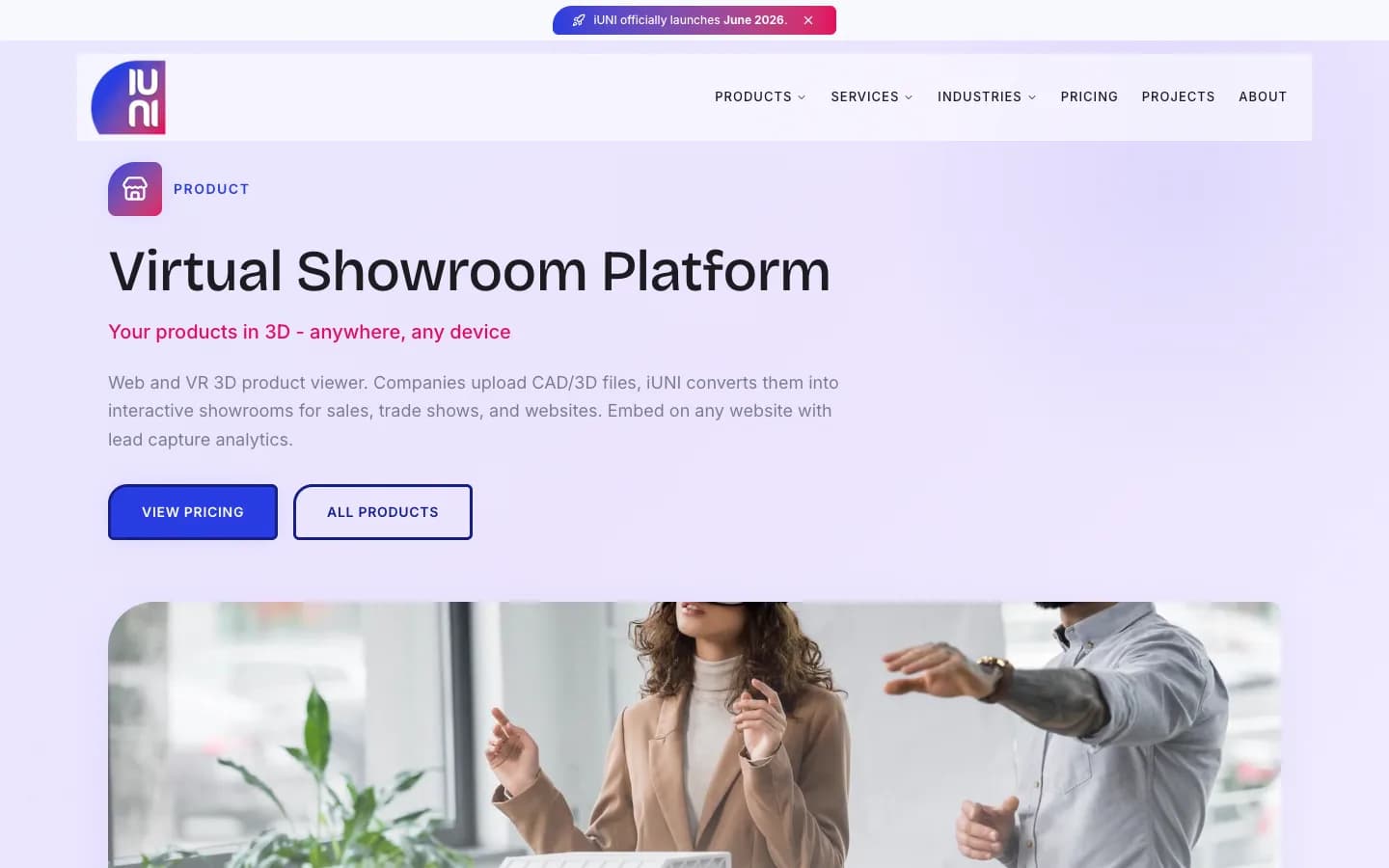
Equipment makers can reuse the same CAD in iUNI's Virtual Showroom Platform, which imports STEP, OBJ, FBX and glTF files into an interactive 3D viewer with a configurator, WebAR and lead capture for sales and trade shows.
Digital Twin 101: Introduction to Digital Twins
Digital Catapult
This video is hosted on YouTube. Playing it loads content from Google, which may set cookies.
Watch on YouTubeNext step
Read about our digital twins and virtual commissioning service and the UK market briefing, then send the items above through the contact page. We will reply with a written scope, timeline and price for a first phase.