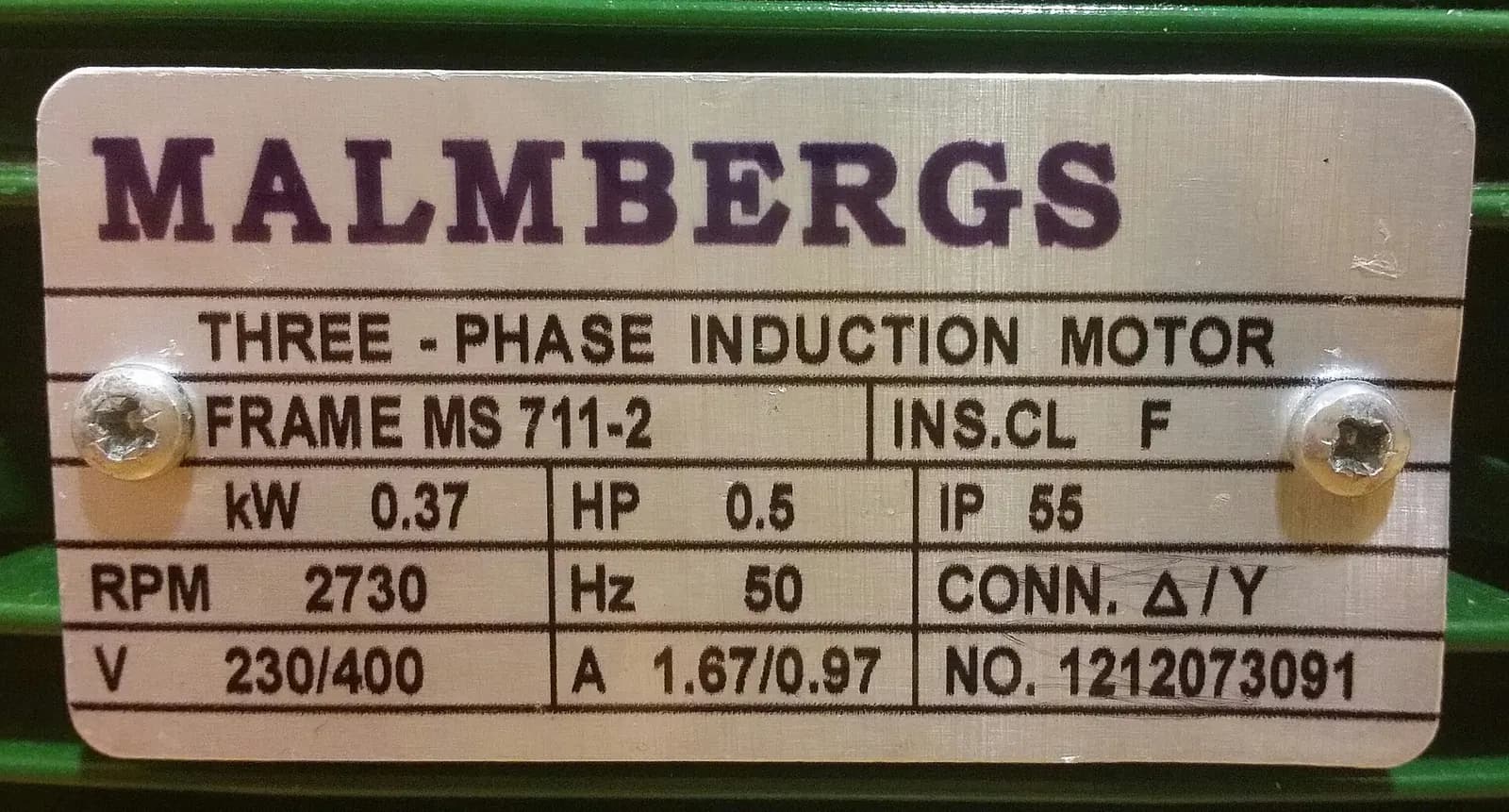
The Asset Administration Shell (AAS) is a standardised digital representation of an industrial asset, such as a motor, a sensor, a machine or a whole line, that any software can read in the same way. Think of it as a digital nameplate that has grown up: it holds identification, technical data, documentation, operational data and services in a common structure, so information flows between suppliers, integrators and operators without manual re-entry.
The structure is now an international standard: IEC 63278-1:2023 defines the AAS structure for industrial applications, covering physical, digital and intangible assets across their lifecycle. The Industrial Digital Twin Association (IDTA) maintains the specifications and the library of submodel templates.
How the Asset Administration Shell is structured
An AAS has a header that identifies the shell and the asset, and a set of submodels, each describing one aspect of the asset. Submodels use standard templates so that, for example, every supplier's 'technical data' looks the same to a buyer's system.
| Submodel (examples) | What it holds | Who uses it |
|---|---|---|
| Digital nameplate | Manufacturer, type, serial number, ratings | Purchasing, maintenance, asset registers |
| Technical data | Characteristics in standard semantics | Engineering and selection tools |
| Handover documentation | Manuals, certificates, drawings | Commissioning and maintenance |
| Time series and operational data | Live or historical measurements | Monitoring, analytics, twins |
| Carbon footprint | Product carbon data | Sustainability reporting, product passports |
Shells come in two practical forms: a file package exchanged with a delivery (often called type 1), and a shell served through an API that other systems query at runtime (type 2). Most companies start with files and move to APIs as use cases grow.
The Asset Administration Shell (AAS) as the foundation for the Digital Twin in Industry 4.0
Industrial Digital Twin Association
This video is hosted on YouTube. Playing it loads content from Google, which may set cookies.
Watch on YouTubeWhy the AAS matters now
- Industry commitment. In December 2025, 75 companies from the electrical and digital industries signed a declaration with IDTA and ZVEI to build the AAS into their products within twelve months (all-about-industries).
- Data spaces. The AAS is the standard twin used across Germany's Manufacturing-X data-space projects, supported by the DAVID project for interoperability (IDTA).
- Digital product passport. IDTA positions the AAS as a practical way to deliver the semantically rich data that product passport rules will require.
- Industrial AI. Models trained on data with standard semantics transfer between plants far more easily.
AAS, OPC UA and ISO 23247: how they fit together
These are complementary, not competing. The AAS describes an asset and its information in a standard structure. OPC UA moves live data from machines, and AAS content can be mapped to OPC UA information models. ISO 23247 provides the overall framework for a manufacturing twin. A practical architecture might use OPC UA at the machine, AAS for asset information exchanged between companies, and an ISO 23247-style structure for the twin that uses both.
What machine builders should do now
- Ask your key component suppliers which AAS submodels they already deliver; many drive and sensor makers do.
- Start with the digital nameplate and handover documentation submodels for your own machines; they are the easiest wins.
- Use IDTA submodel templates rather than inventing structures.
- Generate shells from your ERP and PLM data rather than by hand, so they stay correct.
- Plan how operational data will be linked, usually through OPC UA from the machine controller.
- Watch customer requirements in Germany and the EU: AAS delivery is starting to appear in tenders.
A worked example: a pump skid supplier
Consider a company that builds pump skids for water and food plants. Today each delivery ships with a folder of PDFs: datasheets for the pumps, motors, valves and instruments, wiring diagrams, a certificate pack and an I/O list. The customer's maintenance team re-types the important parts into its asset system, usually incompletely.
With an AAS approach, the skid ships with a shell containing a digital nameplate for the skid itself and references to the shells of its main components, most of which the component makers already provide. Handover documents sit in a standard documentation submodel. The skid's controller exposes key operating data, such as flow, pressure, running hours and alarms, through OPC UA, linked from the shell. The customer imports the package; assets, documents and spares information appear in the maintenance system without re-typing, and an operational dashboard can be built from the same structure. For the supplier, the same data serves the next customer without extra work.
Common questions from plant operators
Operators often ask whether they need to do anything. In the short term, mostly ask for it: make AAS delivery a line in purchase specifications, so documentation and technical data arrive in a usable form rather than as a box of PDFs. Over time, maintenance and asset systems that read shells directly will remove a great deal of manual data entry, and operational twins can be built from standard building blocks instead of custom integration.
The Plattform Industrie 4.0, the German initiative that originated the concept, publishes background material on its website for anyone wanting the full history and roadmap.
How Wartens can help
Wartens builds machine and line twins driven by your PLC program and can structure them for interoperability, including AAS-based asset information, on request. If you are a machine builder preparing for Manufacturing-X or customer AAS requirements, see our digital twins service and automation engineering, or contact us to scope a first shell.