Virtual commissioning vs digital twin is a common point of confusion, and simulation gets thrown into the same bucket. The simplest way to separate them is by the question each answers. Simulation asks whether a design will work. Virtual commissioning asks whether the control software works with that design. A digital twin asks what the real asset is doing now, and what would happen if something changed.
Our earlier article on digital twin vs simulation covers the model side in detail. This one adds virtual commissioning and puts all three on one project timeline, because that is where buyers usually get stuck.
Three tools, three questions
| Simulation | Virtual commissioning | Digital twin | |
|---|---|---|---|
| Question | Will this design meet its targets? | Does the PLC and HMI software work with this machine? | What is the asset doing now, and what if? |
| Runs the real control code? | Usually not | Yes, emulated or on a bench PLC | Reads from it; may run it for what-if |
| Connected to the real asset? | No | No, the asset may not exist yet | Yes, synchronised with live data |
| When | Concept and design | Before FAT and site work | From start-up for the asset's life |
Simulation: will the design work?
Process and discrete-event simulation test a design before money is spent: throughput of a packaging line, buffer sizes between machines, robot reach, the number of AGVs a warehouse needs. The model abstracts the control system. It assumes the sequence works and asks whether the physical design can hit its numbers. A good simulation answers that question in days and stops being useful once the design is fixed.
Virtual commissioning: does the control software work?
Virtual commissioning connects the real PLC program, running on an emulated controller or on a bench PLC, to a behaviour model of the machine. Every input and output is mapped, so the code sees sensors switch and drives respond as they will on site. Sequences, interlocks, fault recovery and restarts are tested at a desk. ISA InTech describes it as moving the debugging of PLC code into a virtual environment before it reaches physical equipment.
The model in virtual commissioning only needs the fidelity the code can see. It does not need photorealistic graphics or live data, because the real machine may still be in a fabrication shop. The full method is in what is virtual commissioning?
Emulate3D - The ICT Catalog: 3. Virtual commissioning
Emulate3D Digital Twin Software
This video is hosted on YouTube. Playing it loads content from Google, which may set cookies.
Watch on YouTubeDigital twin: what is the asset doing now?
A digital twin is synchronised with the real asset. The Digital Twin Consortium definition stresses synchronisation at a specified frequency and fidelity, which is the test to apply to anything sold as a twin. Live sensor and SCADA data drive the model, so it can show current state, spot anomalies, support predictive maintenance and run what-if scenarios against today's conditions rather than last year's design assumptions.
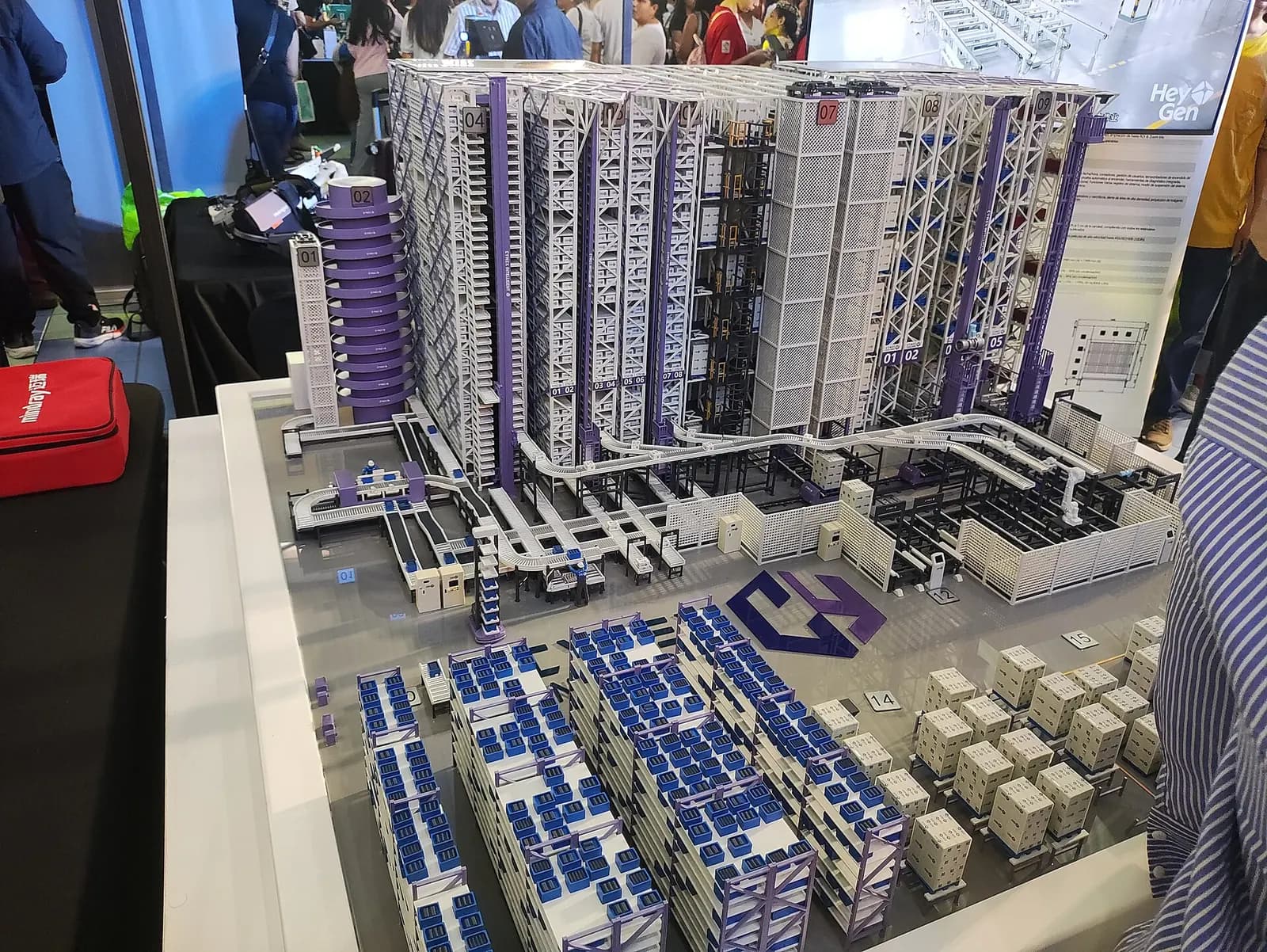
One project, three stages
Take a new end-of-line area: case packer, palletiser, stretch wrapper and conveyors. A sensible sequence uses all three, and reuses one model as it goes:
- Concept (simulation). Check that the palletiser keeps up with peak line speed and size the accumulation conveyor.
- Software build (virtual commissioning). Add I/O-level behaviour to the same layout, connect the emulated PLC and test every sequence, jam and e-stop recovery before the factory acceptance test.
- Start-up and operation (digital twin). Connect the model to live data from SCADA and the PLCs, then use it for monitoring, maintenance planning and operator training.
- Change (all three again). When a new product format arrives, simulate the throughput, virtually commission the code change and update the twin.
How much fidelity each one needs
Fidelity is where budgets go wrong. A throughput simulation needs accurate cycle times, breakdown statistics and buffer capacities, but no I/O at all. A virtual commissioning model needs every sensor and actuator the PLC can see, with realistic switching and travel times, but the graphics can be plain boxes. An operational twin needs a clean, current tag mapping to live systems and enough geometry for people to recognise where they are; physics may matter only for the what-if scenarios you actually intend to run.
Write the fidelity requirement into the scope for each stage. 'Model the line' is not a specification. 'Model all 212 I/O points at switching level with travel times from the mechanical design, and animate product flow for jams and rejects' is.
Signs you are being sold the wrong one
- A 'digital twin' with no live data connection is a simulation or a 3D model. That may be fine, but price it as one.
- A 'virtual commissioning' service that does not run your actual PLC program is a simulation of the process, not a test of the software.
- A twin proposal with no named owner for keeping the model current after plant changes will decay quickly.
- Photorealistic rendering is rarely what a commissioning model needs. Fidelity should follow the question.
How Wartens and iUNI handle it
Wartens builds machine and line models from CAD at 1:1 scale with iUNI and drives them with the PLC program that will run on site, then connects the same model to live data for operations and VR training. The iUNI digital twin development brief sets out features and timelines. To discuss a specific line, see our digital twins and virtual commissioning service, the Siemens view of virtual commissioning for vendor context, or contact us.