A VR PLC lab gives every student in a batch a virtual PLC, a ladder editor and a working machine to control inside a headset, so they practise programming and fault-finding without waiting for a shared trainer. For engineering colleges and ITIs in India, it works best as a second room next to real hardware: VR for repetition and faults, the physical trainer for wiring and field devices.
The timing is good. In May 2025 the Union Cabinet approved a ₹60,000 crore National Scheme for ITI Upgradation, covering 1,000 government ITIs in a hub and spoke arrangement with industry-aligned trades, with 20 lakh youth to be skilled over five years and training for 50,000 trainers. Institutes are being asked to teach new-age trades with industry involvement, and automation is one of them.
What iUNI's VR PLC/SCADA Digital Twin Lab does
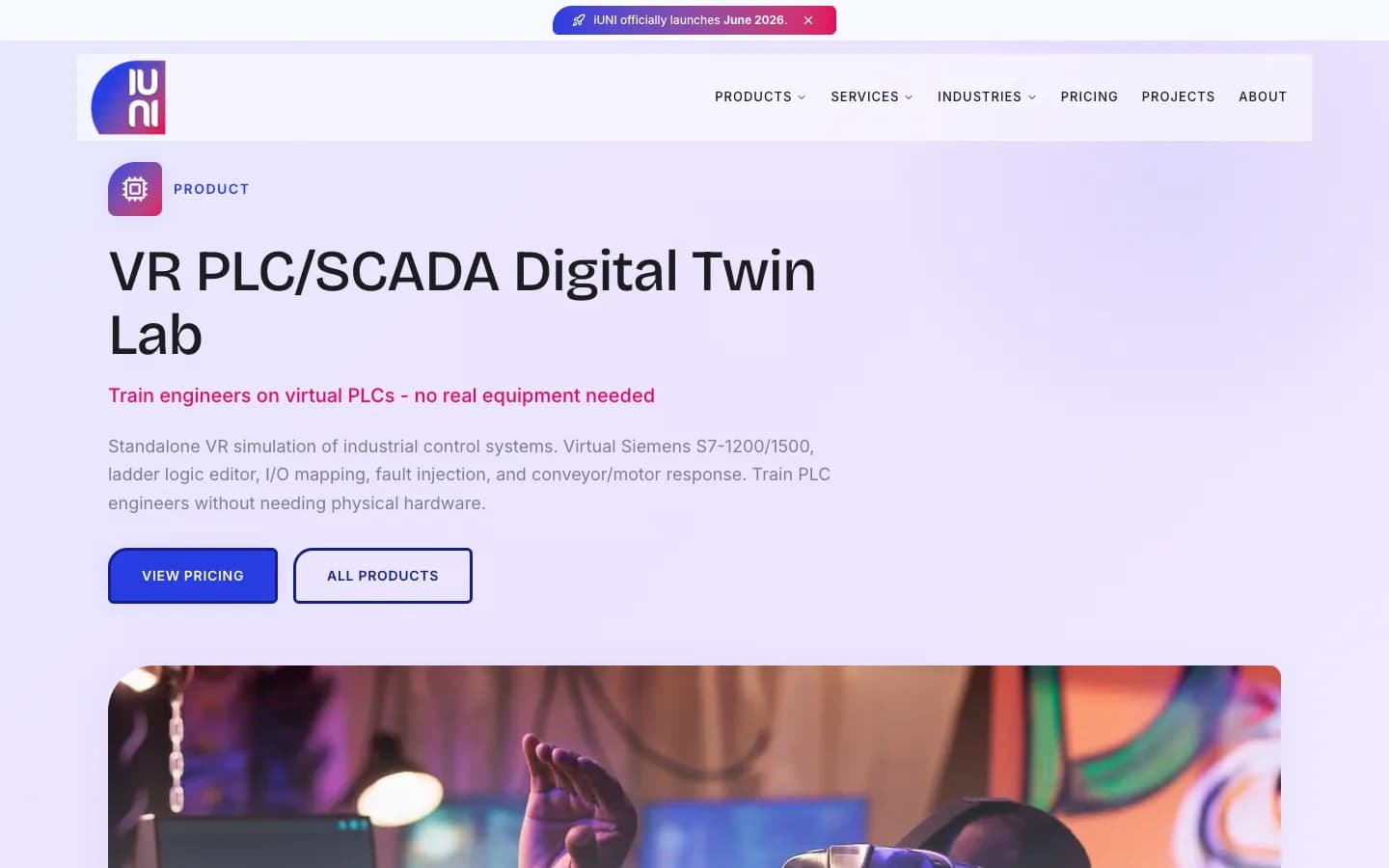
The VR PLC/SCADA Digital Twin Lab from iUNI, the Wartens group's VR company, is a standalone VR simulation of an industrial control system. According to iUNI it includes:
- 3D models of Siemens S7-1200 and S7-1500 PLCs and a simplified TIA Portal-like interface in VR.
- A ladder logic editor with contacts, coils, timers and counters.
- Virtual I/O: switches, sensors, motors and lamps, with conveyor and motor response.
- Fault injection for troubleshooting exercises, and programme verification with automated feedback.
- Multiplayer instructor mode, so the trainer can observe and guide students.
- LADX AI integration for code assistance, and support for Quest 2 and 3, PC VR and WebXR.
Why a VR PLC lab helps Indian colleges
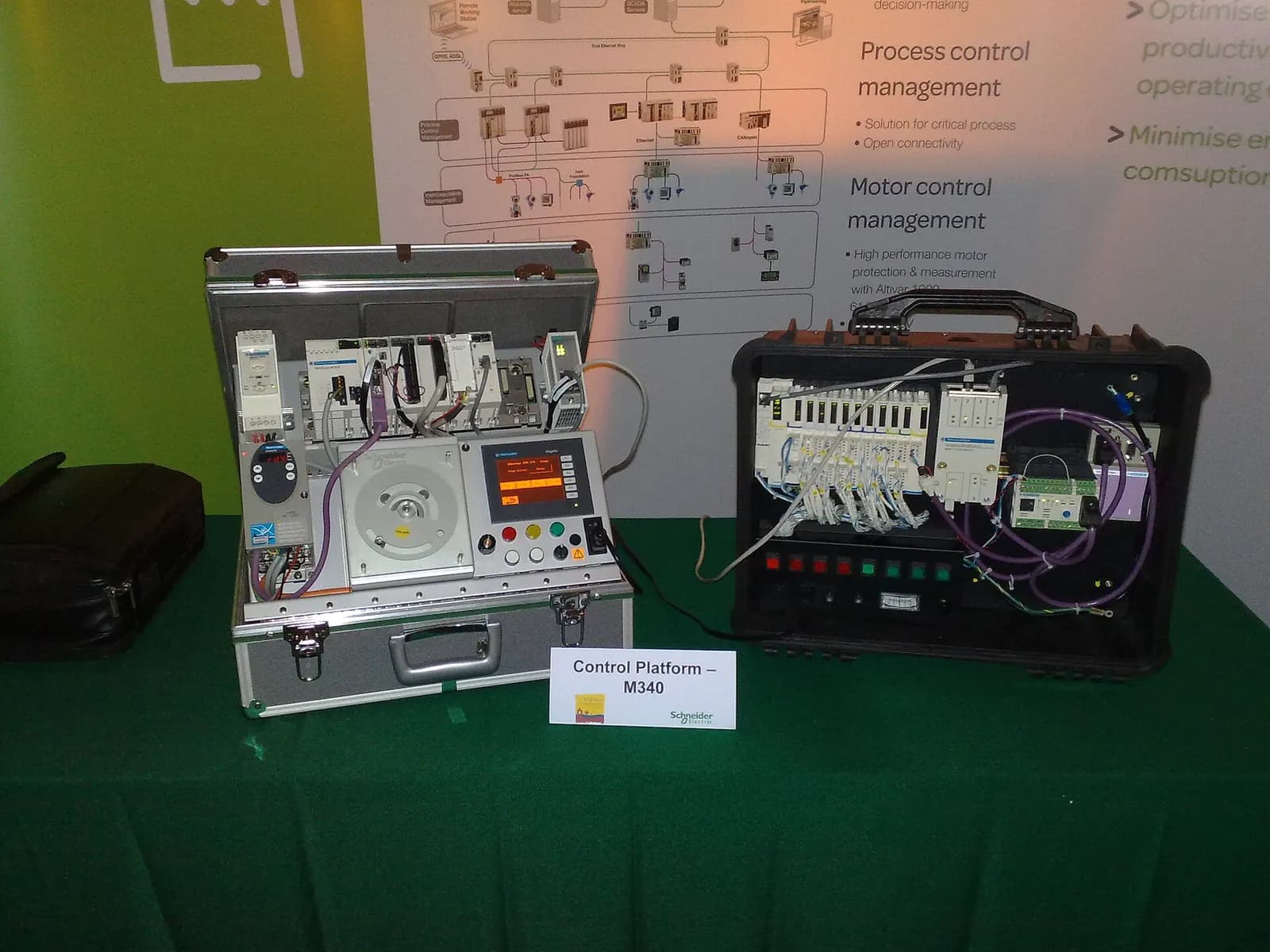
Hardware is the bottleneck. A good PLC trainer with I/O, a drive and an HMI is expensive to buy and to maintain, so a batch of sixty shares a handful. Students who get ten minutes on a trainer learn to copy rungs, not to diagnose a machine. Fault injection is the bigger gain. Instructors rarely break a real trainer on purpose, so students never practise the real work of a maintenance engineer: a sensor that sticks, a motor that does not start, a program that latches when it should not.
Virtual Reality (VR) Lab | Future of Education & Training | HIMT
HIMT
This video is hosted on YouTube. Playing it loads content from Google, which may set cookies.
Watch on YouTubeWhat a VR lab cannot replace
Be honest about the limits. VR does not teach how to terminate a cable, read a multimeter, trace a 24 V fault with a drawing, or feel how a contactor sounds when it fails. It does not replace platform skills on real software either: a simplified TIA Portal-like interface is a bridge, not the real tool. Keep the physical trainers, the panel wiring practical and, where possible, licensed vendor software from programmes such as Siemens SCE.
How to set up a VR PLC lab, step by step
- Map it to the syllabus. Pick the experiments that are hard to run on hardware: fault diagnosis, sequences with many machines, safety interlocks.
- Choose the room. A clear floor area per student, reliable Wi-Fi, power backup and charging points for headsets and controllers.
- Start with a pilot batch. One semester, one subject, a few headsets, with the instructor running multiplayer mode.
- Pair every VR session with hardware. The same exercise on the physical trainer the following week shows what transferred.
- Assess with evidence. Use programme verification results and fault-finding times, not attendance.
- Look after the kit. Face covers, cleaning between users, a charging rota and someone who owns updates.
What students should be able to do after one semester
Set outcomes before you buy anything. After a semester that mixes VR and hardware, a student should be able to write a start/stop circuit with proper interlocks from a written description, build a timed sequence for a conveyor or tank, find an injected fault in a few minutes and explain its cause, and wire the same I/O on a physical trainer. If the pilot batch cannot do these better than the previous batch, change the exercises before adding headsets. Measure it simply: time to find a fault, number of attempts before a program passes verification, and the instructor's rating of the final practical.
Cost and procurement
iUNI publishes current price ranges for the PLC simulator as a subscription and for custom digital twins on its pricing page; check there rather than relying on figures in an old brochure. For government ITIs, procurement usually follows state rules and, under the new scheme, industry partners. Ask any VR vendor for a demo on your own Wi-Fi, a curriculum mapping, and a written support response time.
ITIs run under the Directorate General of Training, so align VR exercises with the trade syllabus you already teach. Colleges can use VR labs for electrical, electronics, instrumentation and mechatronics students at once, which spreads the cost across departments.
How Wartens supports colleges and ITIs
In India we provide VR and AR training through iUNI, including the VR PLC and SCADA lab, and run hands-on PLC courses through edWartens at Electronic City, Bengaluru, with placement assistance rather than job promises. Our guides to VR safety training for Indian factories and free PLC programming software for students cover the rest of a modern automation lab.
Next step: contact us with your batch sizes, current trainers and syllabus, and we will propose a pilot mix of VR and hardware for one semester.