Good PLC training in Bangalore puts you on real PLC panels for most of the course, covers more than one brand, teaches HMI, SCADA and drives alongside ladder logic, and is run by trainers who have commissioned plants. Judge any institute on those four points first. Brochures, certificates and placement claims come after.
Bengaluru is a sensible place to learn. It sits close to the manufacturing belts of Hosur, Tumakuru and the Peenya and Bommasandra industrial areas, and many system integrators and machine builders have engineering teams here. The demand for people who can read, modify and troubleshoot PLC programs is steady across food, pharma, auto components, packaging and utilities.
What a good PLC course in Bangalore should cover
- Electrical basics for automation. Control circuits, contactors, relays, sensors, 24 V DC wiring and reading electrical drawings.
- PLC fundamentals. Scan cycle, inputs and outputs, memory, addressing, and the languages of IEC 61131-3.
- Ladder logic and beyond. Timers, counters, comparisons, sequences, analogue scaling and PID basics. Structured text for anything complex.
- HMI and SCADA. Screens, alarms, trends, recipes and user levels.
- Drives. VFD parameters, control from the PLC, and fault diagnosis.
- Networks. PROFINET, EtherNet/IP and Modbus at a practical level.
- Troubleshooting. Online monitoring, forcing safely, reading diagnostics, and fixing faults on real hardware.
The programming languages are standardised. IEC 61131-3, now in its 2025 edition, defines ladder diagram, function block diagram, structured text and sequential function chart. A course that teaches the concepts properly makes it far easier to move between brands later.
Which PLC brands should you learn?
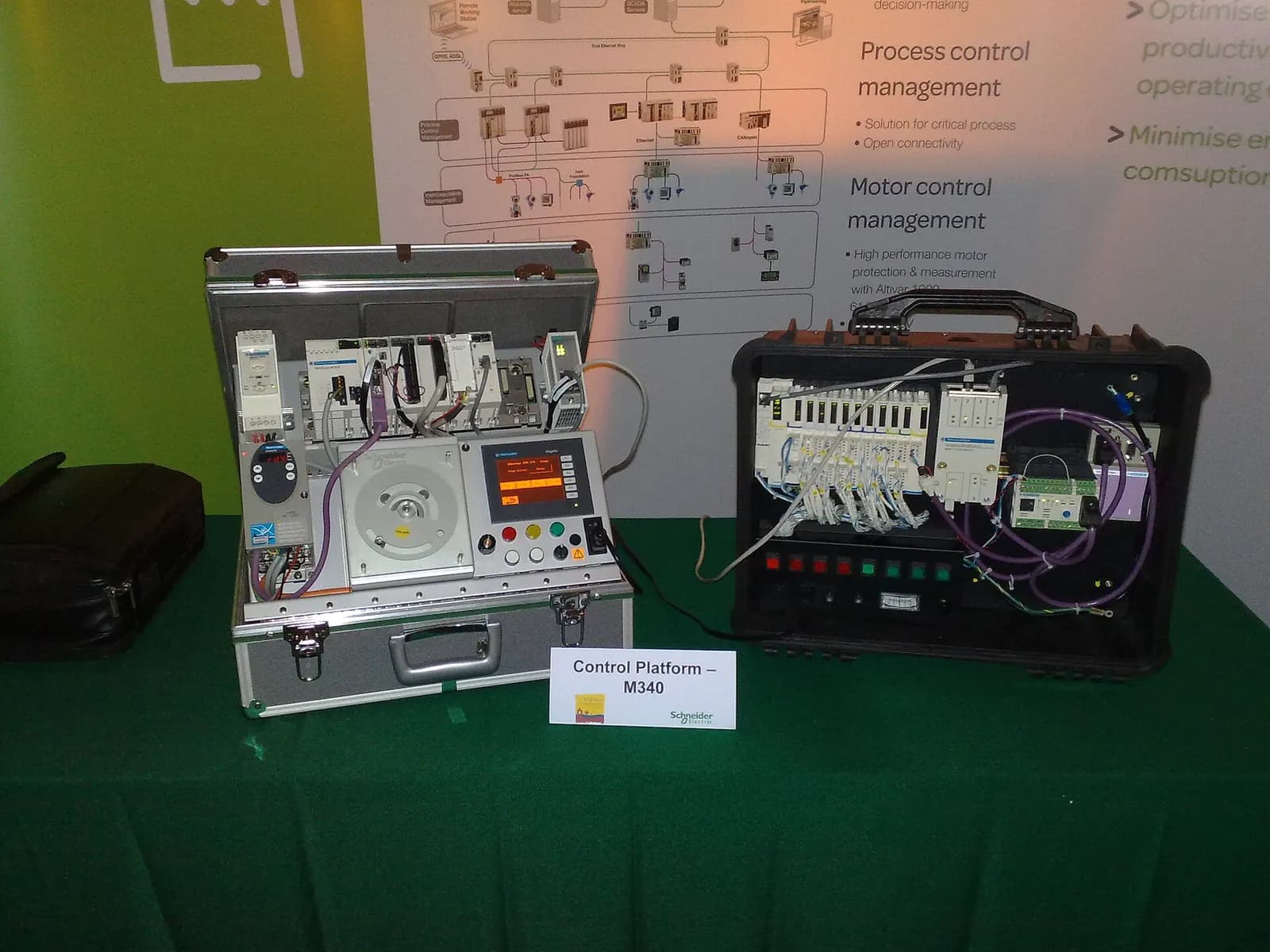
Indian plants are mixed. Siemens is widespread in process industries and on European machines. Allen-Bradley appears in pharma, FMCG and plants built to US specifications. Mitsubishi and Delta are common on Asian machines and smaller OEM equipment. ABB, Schneider Electric and Omron all have a large installed base. Learning one brand deeply and two or three others well enough to read and modify programs is a realistic target for a fresher.
| Brand | Where you will often meet it |
|---|---|
| Siemens (TIA Portal) | Process plants, European machines, utilities |
| Allen-Bradley (Studio 5000) | Pharma, FMCG, US-specified lines |
| Mitsubishi | Japanese machines, assembly, electronics |
| Delta | Smaller OEM machines, packaging |
| Schneider Electric, ABB, Omron | Mixed plants, drives and motion |
What is Ladder Logic?
RealPars
This video is hosted on YouTube. Playing it loads content from Google, which may set cookies.
Watch on YouTubeWhat employers in Bangalore actually test
Interviews for automation roles at integrators and machine builders are practical. Expect to be handed a printed ladder program and asked what happens when a sensor fails. Expect questions on sinking and sourcing inputs, how a star-delta starter works, how you would scale a 4 to 20 mA signal, and what you would check first if a motor does not start. Some firms sit you at a laptop with TIA Portal or Studio 5000 and ask you to write a small sequence. None of this can be learned from slides alone.
Plants hiring maintenance engineers care even more about troubleshooting. They want people who will go online to a PLC at night, find the faulty input, and get the line back without making things worse. Good courses spend real time on fault-finding: a trainer breaks something on a panel and students find it.
A realistic learning path for a fresher
- Four to six weeks on electrical control circuits and PLC basics, on hardware.
- Deep work on one main platform, including HMI, until you can write and debug a complete machine sequence.
- Working knowledge of two more brands, enough to upload, read and modify programs.
- SCADA, drives and networks at a practical level.
- A small project of your own you can explain in an interview, with screenshots and code.
Questions to ask before you pay
Be careful with job promises. Hiring decisions belong to employers, and no institute controls them. What a good institute can do is prepare you properly, help with your CV and interviews, and introduce you to employers looking for trained people. That is what placement assistance should mean, and it is what we offer.
Free learning to start with
You do not have to pay to find out whether automation suits you. NPTEL's Industrial Automation and Control course from IIT Kharagpur covers sequence control, PLC hardware and relay ladder logic. Manufacturer academies such as Siemens SITRAIN publish course catalogues that show what employers expect at each level. And edWartens runs free online courses; see our guide to free PLC courses with certificates.
The edWartens Automation Engineer Program in Bangalore
edWartens, the training arm of Wartens, runs a classroom Automation Engineer Program at our Electronic City centre in Bengaluru, covering 20 PLC brands including Siemens, Allen-Bradley, Mitsubishi, Delta, ABB and Schneider Electric. Because the centre is also where Wartens engineers control systems for clients in five countries, students learn in the same building where real projects are designed and tested. The programme includes placement assistance, such as interview preparation and introductions to employers. We never guarantee a job or salary.
Details of the programme and its schedule are on edWartens India. For employers who want to upskill a team, see our engineering training services, read how to become an automation engineer in India, or contact us to arrange a visit to the centre.