The PM Surya Ghar subsidy in Kerala gives homeowners central financial assistance of ₹30,000 per kW for the first 2 kW of rooftop solar and ₹18,000 for the third kW, capped at ₹78,000 for systems of 3 kW and above. You apply on the national portal, choose a registered vendor, install a grid-connected system with made-in-India modules, and the subsidy is released after KSEB inspects the system and fits the net meter.
The Union Cabinet approved PM Surya Ghar: Muft Bijli Yojana in February 2024 with an outlay of ₹75,021 crore, aiming to put rooftop solar on one crore homes, according to PIB. Kerala has taken it up strongly. A Rajya Sabha reply reported by Morung Express (IANS) in August 2026 put Kerala at 3,15,129 installations and 1,220.83 MW under the scheme.
How much subsidy will you get?
| System size | Central financial assistance | Notes |
|---|---|---|
| 1 kW | ₹30,000 | Suits very low consumption |
| 2 kW | ₹60,000 | ₹30,000 per kW for the first 2 kW |
| 3 kW | ₹78,000 | Adds ₹18,000 for the third kW |
| Above 3 kW | ₹78,000 | No extra CFA beyond 3 kW |
These amounts come from the MNRE operational guidelines for residential consumers. The guidelines also give worked examples: a 2.5 kW system gets ₹69,000, and a 6 kW system still gets ₹78,000.
Who is eligible
- A residential electricity connection with a valid KSEB consumer number.
- A grid-connected rooftop system. Off-grid systems are not eligible for this subsidy.
- Solar modules made in India (DCR modules). Non-DCR modules make the installation ineligible.
- Installation by a vendor registered on the national portal.
- A suitable roof, terrace or elevated structure with enough shade-free area.
How to apply for PM Surya Ghar in Kerala, step by step
- Register on the PM Surya Ghar national portal with your state, KSEB as your DISCOM, your consumer number and mobile number.
- Apply for rooftop solar through the portal. Systems up to 10 kW get deemed technical feasibility under the guidelines.
- Choose a registered vendor and agree the system size, components and price.
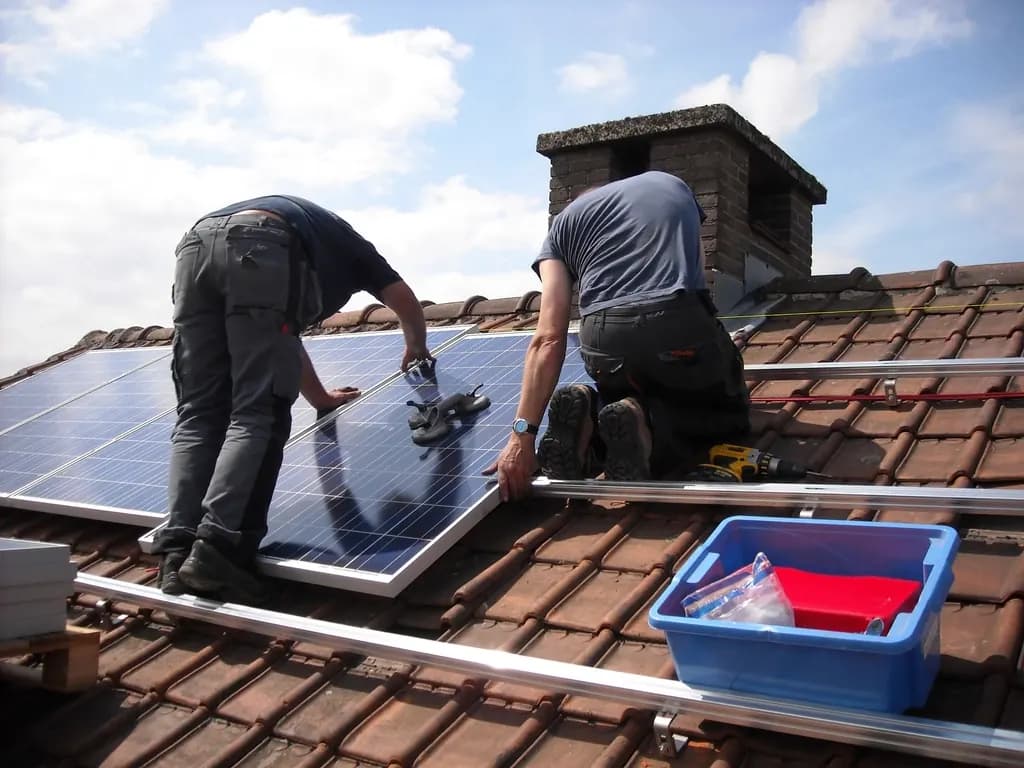
- Install the system. The vendor uploads details and geo-tagged photos to the portal.
- KSEB inspection and net meter. KSEB inspects the installation, signs the net metering agreement and fits the net meter.
- Subsidy release. After commissioning is approved, you submit bank details and the CFA is credited. The guidelines say it is processed within 15 days of DISCOM approval.
PM Surya Ghar: Muft Bijli Yojana- Consumer- How to submit application
mnreindia
This video is hosted on YouTube. Playing it loads content from Google, which may set cookies.
Watch on YouTube
Loans under PM Surya Ghar
Collateral-free loans are available through public sector banks via the Jan Samarth portal. As an example, SBI's PM Surya Ghar loan page listed a rate of 5.75% a year for loans up to ₹2 lakh for systems up to 3 kW, as on 15 December 2025, with tenure up to 120 months. Rates are floating and change, so check the current rate with your bank. If you take a loan, the subsidy is credited to the loan account.
What size system should a Kerala home choose?
A PIB explainer from March 2025 suggests 1 to 2 kW for homes using up to 150 units a month, 2 to 3 kW for 150 to 300 units, and above 3 kW for higher use. Remember KSEB bills every two months, so halve your bi-monthly units first. Our detailed guide on how many kW of solar a Kerala home needs works through examples.
How Kerala's districts are doing
KSEB data obtained under RTI and reported by ETV Bharat in August 2026 showed 19,982 installations in Kannur, 18,979 in Kozhikode, 9,031 in Kasaragod and 1,675 in Wayanad, the lowest in the state. North Kerala still has plenty of roofs to go.
Why applications get stuck
- The name or consumer number on the portal does not match the KSEB bill.
- The vendor used non-DCR modules, which makes the system ineligible.
- Geo-tagged photos or documents were uploaded incomplete, so inspection is not scheduled.
- The connected load or phase does not suit the system size, and KSEB asks for changes first.
- Bank details for the subsidy do not match the applicant.
Most of these are avoidable with care at the start. A good vendor checks your bill, your connection type and your roof before quoting, and tells you if anything needs fixing with KSEB first. Ask who will follow up each step on the portal, and keep copies of every document and photo in one folder.
What to expect after the subsidy
Once the net meter is in, KSEB bills you on the difference between what you import and what you export. KSEB's own solar FAQ says a kW of panels generates about 4 units a day on average. Keep panels clean, especially after the dry months, and watch the inverter's daily generation so a fault is spotted in days, not at the next bill.
Wartens Energy handles the paperwork in North Kerala
Wartens Energy installs on-grid and hybrid rooftop systems in 2, 3 and 5 kW for homes in Kannur, Kasaragod, Kozhikode and Wayanad, from our installation base in Iritty, Kannur. We handle the PM Surya Ghar subsidy paperwork for you. The subsidy itself is decided under the scheme's rules. See our energy systems services, compare on-grid and hybrid systems, or contact us for a site survey.