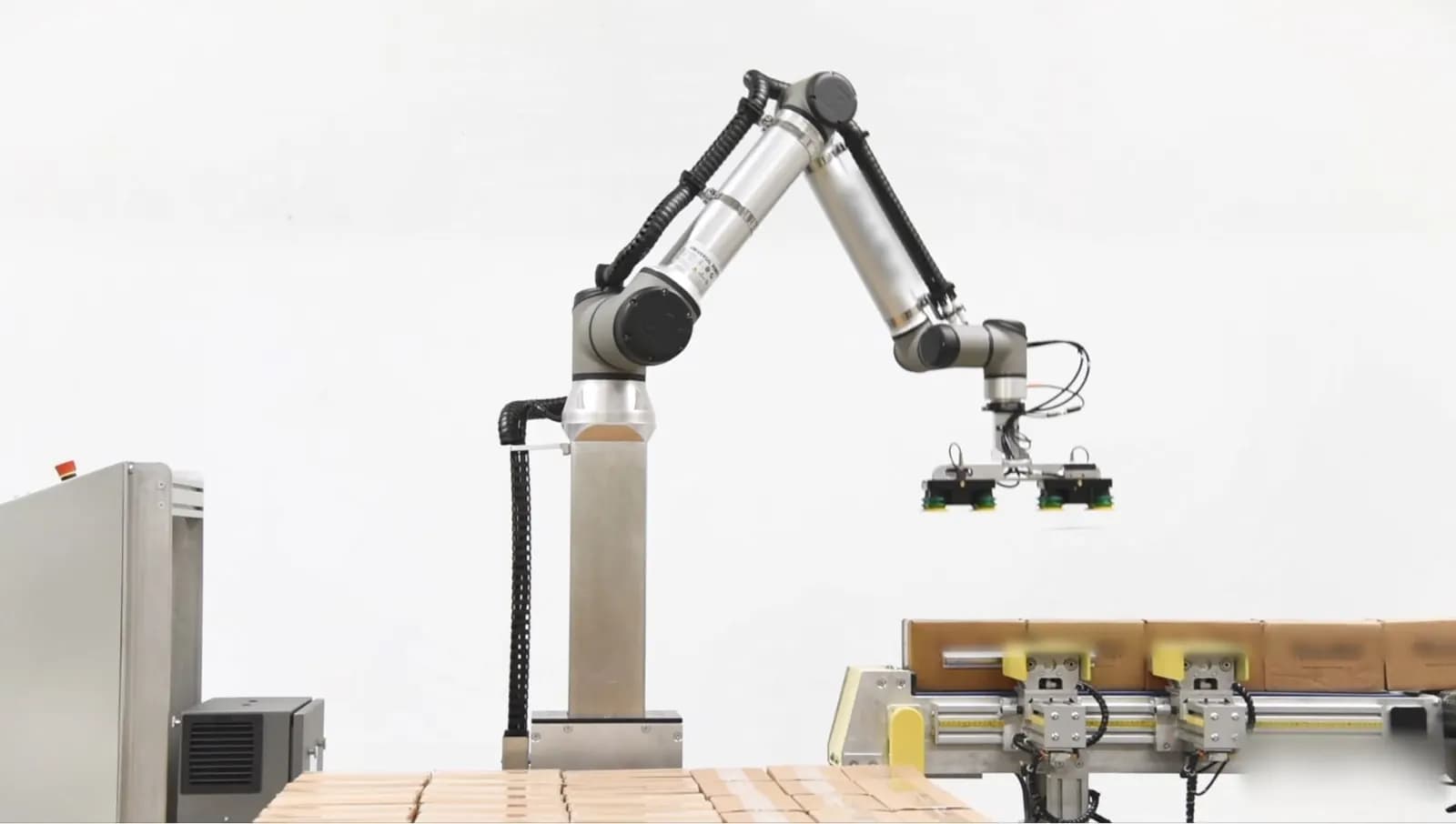
In the cobot vs industrial robot decision, choose a cobot when parts are light, cycle times are moderate and people must work close to the robot, and choose an industrial robot when you need speed, payload or reach. A cobot is not automatically safe, and an industrial robot is not automatically a large project. The application decides.
Indian MSMEs often meet cobots first at trade shows, where they run without fences and look simple to program. That is real, but it hides the limits. Below is the comparison we walk clients through before recommending either.
Cobot vs industrial robot: side by side
| Factor | Cobot | Industrial robot |
|---|---|---|
| Typical use | Light handling, tending, screwdriving | Welding, heavy handling, high-speed lines |
| Speed near people | Limited to keep contact forces safe | High, behind guarding |
| Payload range | Generally lighter | From a few kg to very heavy |
| Guarding | Reduced if risk assessment allows | Fences, light curtains, interlocks |
| Programming | Hand-guiding and simple interfaces | Teach pendant and offline tools |
| Floor space | Small | Larger, including guarding |
What makes a robot collaborative
"Collaborative" describes the application, not just the arm. The robot safety standards, ISO 10218-1:2025 for robots and ISO 10218-2:2025 for robot applications and cells, define how robots and people can share space. ISO/TS 15066, published in 2016 and now marked for revision, supplements them with guidance for collaborative operation, including limits on contact between robot and person.
The consequence: a cobot holding a sharp blade, a hot part or a heavy casting may still need guarding. A cobot moving fast enough to hit your cycle time may exceed safe contact limits. The risk assessment, not the brochure, sets how fast and how close.
Hazard Analysis and Risk Assessment of Collaborative Robots (ISO 15066)
exida
This video is hosted on YouTube. Playing it loads content from Google, which may set cookies.
Watch on YouTubeWhen a cobot is the better first robot
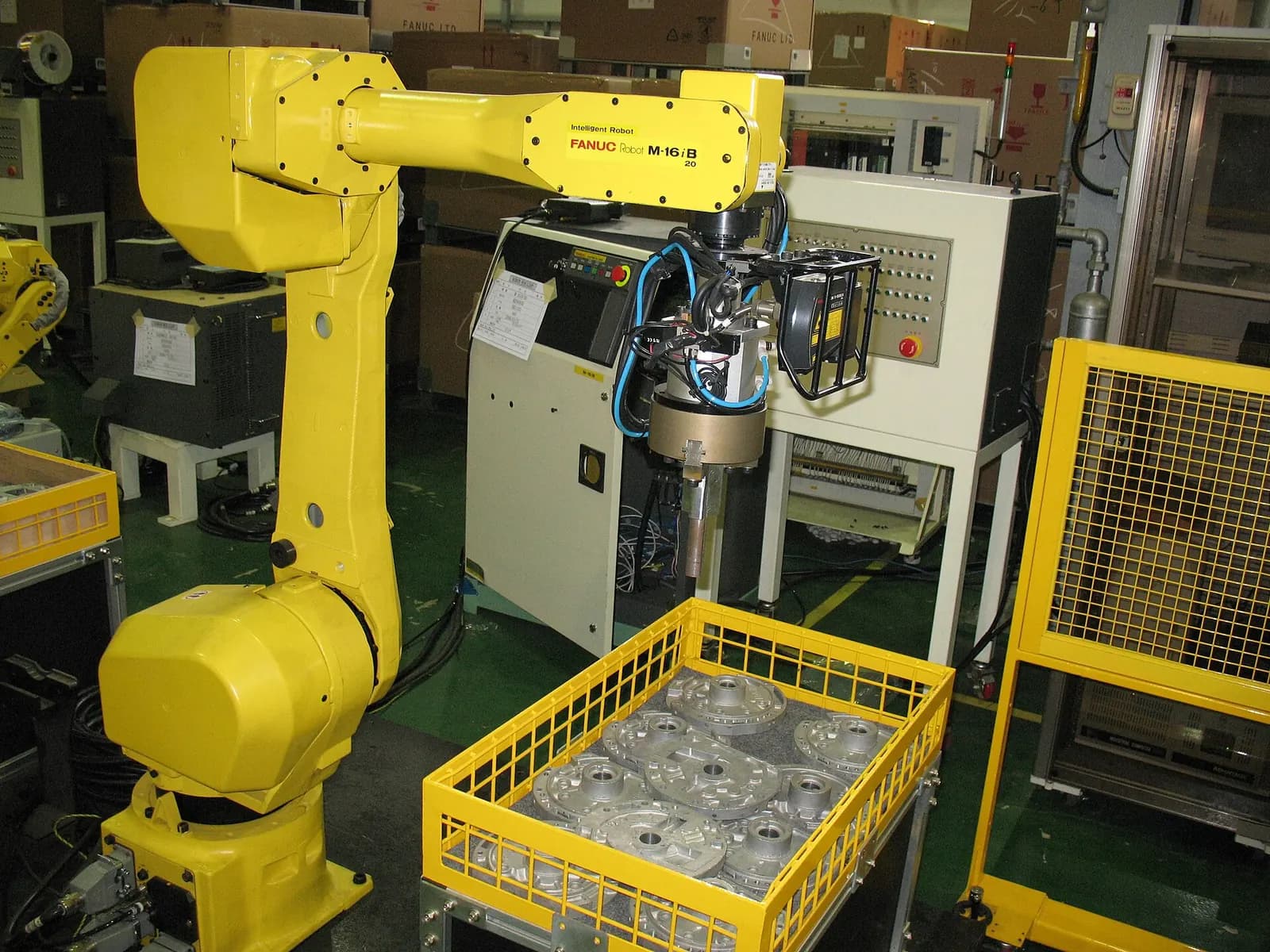
- Machine tending of CNC lathes or VMCs with parts under a few kilograms and cycle times of a minute or more.
- Screwdriving, dispensing or inspection at a bench where an operator works alongside.
- Low-volume, high-mix work where the robot moves between stations and is retaught often.
- Plants with no floor space for a fenced cell.
When an industrial robot is the better choice
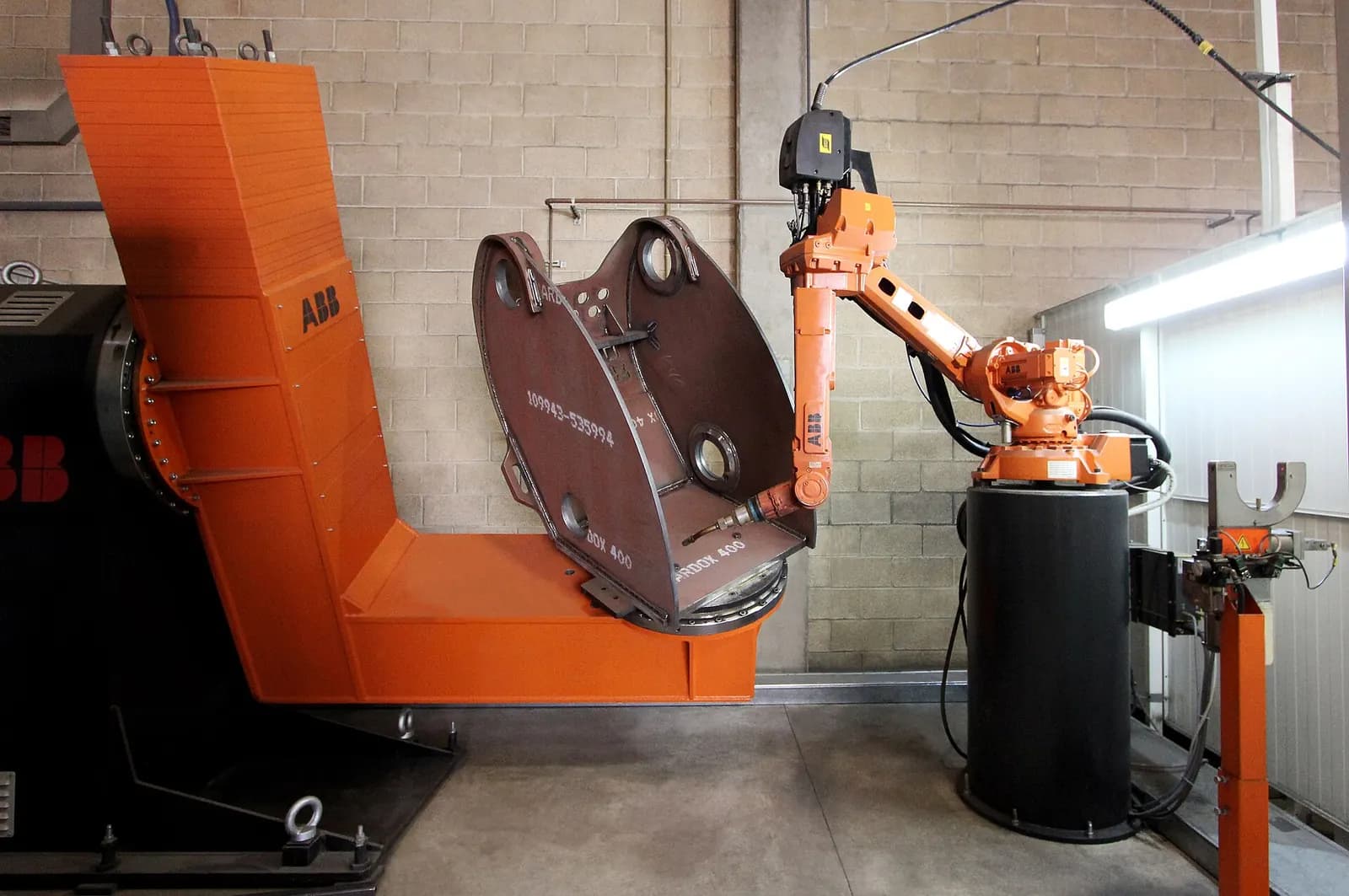
- Arc or spot welding, where the process itself is hazardous. See our robotic welding cell guide.
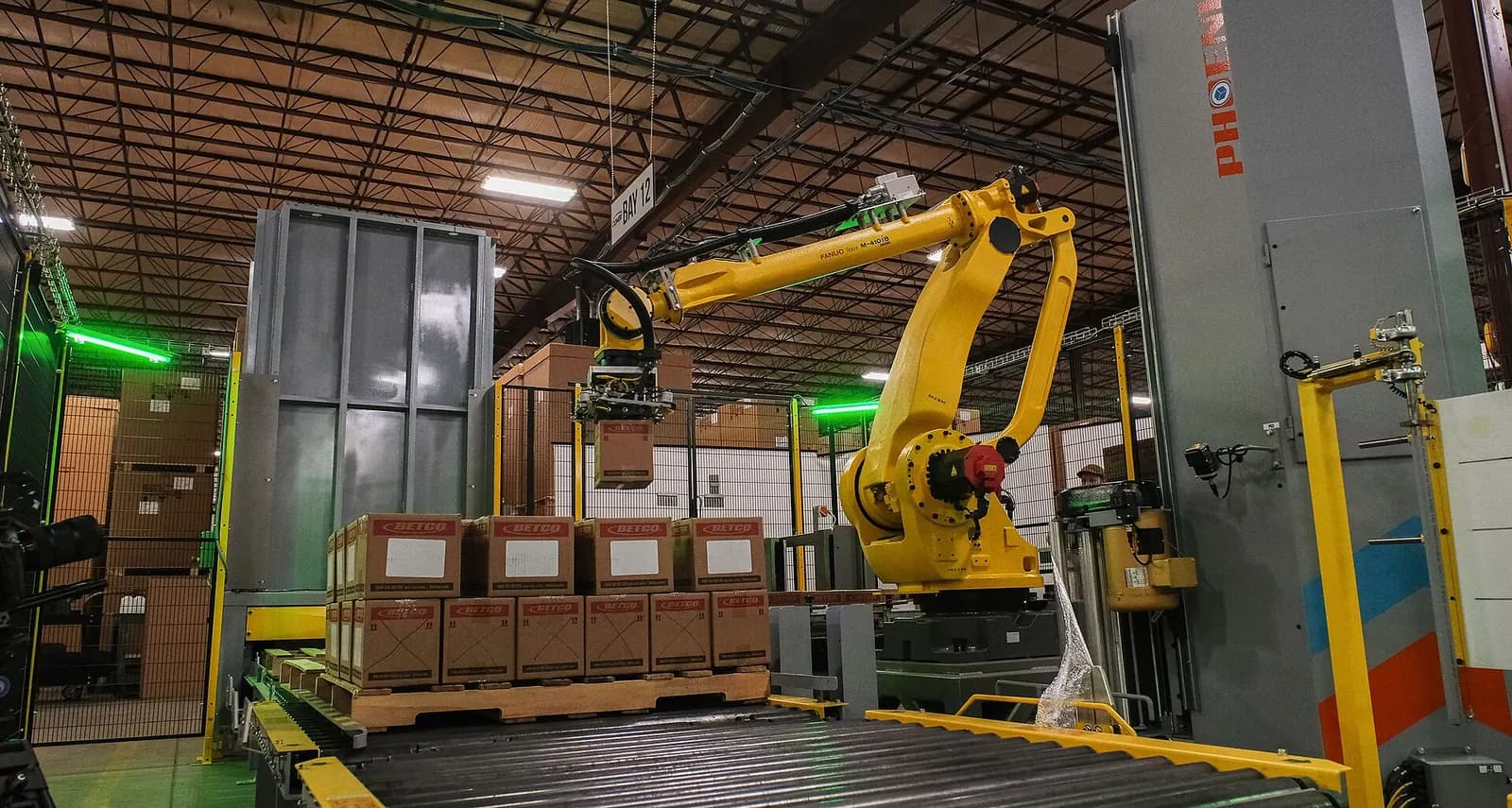
- Palletising heavy bags or cartons at line speed.
- Press tending, foundry work and anything hot, sharp or heavy.
- High-speed pick-and-place where cycle time is the main constraint.
The hidden costs are similar
The arm is often less than half of the cost of a working cell. Grippers, part presentation, fixtures, safety devices, PLC integration, commissioning and training cost much the same for a cobot as for a small industrial robot. Where cobots do save is in guarding and floor space, and in the time to reteach for new parts. Budget for the whole cell, whichever arm you choose.
A worked example
Take an auto components supplier in Coimbatore running two CNC lathes with a 90-second cycle, 2 kg billets and one operator. A cobot on a stand between the machines, loading from a drawer system, fits the cycle, needs little floor space, and lets the operator measure parts nearby. Now raise the billet to 15 kg and cut the cycle to 30 seconds. A compact industrial robot in a small fenced cell becomes the safer and faster choice.
Indian adoption is broadening beyond the big car plants. IFR's World Robotics 2026 presentation shows electrical and electronics installations in India rising to 1,066 units in 2025 and metal and machinery to 533, both well up on 2024. These are exactly the sectors where the cobot vs industrial robot question comes up most.
Skills and support: who will run it?
Cobot makers sell ease of use, and for teaching a new pick position it is true. But someone still has to understand the I/O handshake with the CNC, the gripper pneumatics, the safety configuration and what to do when a part is missing. Industrial robots need the same knowledge plus teach pendant programming. In both cases, plan for one or two maintenance engineers per plant who can recover, adjust and back up the robot program without calling the supplier.
If those people do not exist yet, train them before the robot arrives. Our training arm, edWartens, runs a classroom Automation Engineer Program in Bangalore that includes robotics alongside PLCs, and free online courses; see our PLC training in Bangalore guide. A robot with a trained owner on the floor earns its keep; one without sits idle the first time something unexpected happens.
Changing your mind later
The choice is not permanent. A cobot that proves the value of automating a CNC cell can later be moved to a lighter task while a faster industrial robot takes over the high-volume part. Design the cell with that in mind: standard mounting plates, a gripper interface that suits both, and PLC handshakes that do not depend on one robot brand.
Try before you commit
In India Wartens integrates both cobots and industrial robots, and offers robots on subscription so you can prove the case before buying. Read how robot subscription works, see automation engineering services, and send us your part details through the contact page for a recommendation based on your application.