OPC UA and the Asset Administration Shell answer different questions. OPC UA is a communication standard that carries live data and services from a running machine, such as its state, counters, alarms and process values. The Asset Administration Shell (AAS) is a standardised digital description of an asset across its whole life, such as its nameplate, technical data, documentation and carbon footprint. So the answer to "OPC UA vs Asset Administration Shell" is usually both: OPC UA for what the machine is doing now, the AAS for what the machine is.
OPC UA vs Asset Administration Shell at a glance
| Question | OPC UA | Asset Administration Shell |
|---|---|---|
| What is it? | Communication and information modelling standard | Standardised digital twin structure (IEC 63278-1) |
| Typical content | States, counters, alarms, process values, methods | Nameplate, technical data, documents, carbon footprint |
| Time horizon | Now: live operation | Whole life: from offer to recycling |
| Where it runs | Server in or near the PLC | File (AASX) or AAS server/API |
| Standard content models | Companion specifications | IDTA submodel templates |
OPC UA and companion specifications
Raw OPC UA lets every machine builder publish data however they like, which is why customers now ask for companion specifications: agreed information models for a type of equipment. The OPC Foundation's online reference lists around 150 specifications, from OPC UA for Machinery and Machine Tools to PackML, IEC 61131-3 PLCs, robotics, machine vision, weighing and plastics machinery. It even includes a companion specification for the Asset Administration Shell itself.
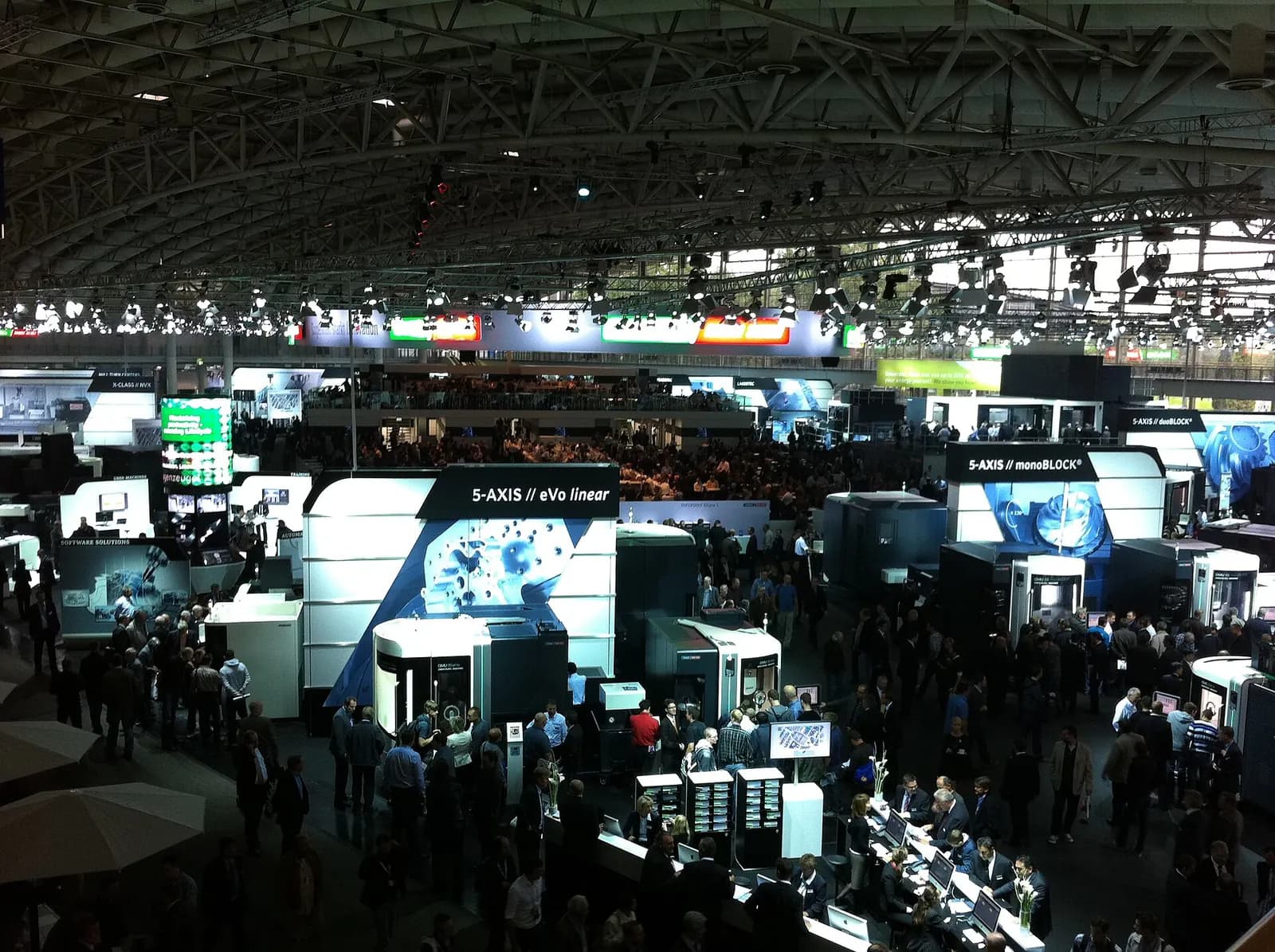
For German machine builders, umati is the community that turns these specifications into practice. It builds on OPC UA and works with machine-building sectors and the OPC Foundation, with working groups for machine tools, robotics, machine vision, and rubber and plastics machinery. Its base specification, OPC UA for Machinery, first released in September 2020, covers machine identification, finding all machines in a server and machine state.
The Asset Administration Shell and its submodels
The AAS, whose structure is defined in IEC 63278-1, groups information about an asset into submodels. IDTA publishes templates for them, such as the Digital Nameplate, Carbon Footprint and Digital Product Passport metadata (IDTA). The AAS is the common twin format in Germany's Manufacturing-X data spaces. We explain the basics in Asset Administration Shell explained.
How the two connect
The two are designed to work together. An AAS can contain submodels whose values come live from the machine, and the natural source for those values is an OPC UA server. Open-source middleware such as Eclipse BaSyx provides connectors for OPC UA and MQTT for exactly this purpose. In practice: the PLC exposes live data through OPC UA using a companion specification; the AAS describes the machine and points to that data where a customer system needs it.
Asset Administration Shell (AAS) Quick Start Guide - Introduction
Industrial Digital Twin Association
This video is hosted on YouTube. Playing it loads content from Google, which may set cookies.
Watch on YouTubeA worked example: an injection moulding cell
Take a plastics processor in Franconia buying a new injection moulding cell. The MES team wants machine state, cycle counts, scrap counts and job data, so they ask for the relevant OPC UA companion specification for injection moulding machines; the reference lists specifications for injection moulding, peripheral devices and extrusion. The quality and sustainability team wants the nameplate, documentation and energy data for each machine in a standard digital format, so the purchase specification also asks for an Asset Administration Shell. The machine builder delivers an OPC UA server on the machine controller and an AASX file with the delivery, and both teams get what they need without a custom interface.
Which to implement first
- OPC UA with a companion specification if your customers integrate machines into MES or line control. This has an immediate operational payoff.
- AAS with nameplate and documentation if customers ask for digital documentation, product passports or Manufacturing-X compatibility.
- Live AAS submodels fed from OPC UA once both exist and a customer has a use for them, such as energy or condition data.
For machine tools and plastics machinery the order is often fixed by the market: umati-compliant OPC UA interfaces are increasingly expected. For other special machines, the customer's integration plans decide. Ask early in the tender, because adding an information model after the PLC program is finished means reworking data structures that are already tested.
Security comes with the interface
OPC UA brings authentication, encryption and user rights, but only if you configure them. An OPC UA server left in its default "no security" mode on a machine network is an easy target. Plan certificate handling up front: who issues them, how they are renewed, and what happens when one expires on a Sunday night. Treat the data interface as a conduit in your IEC 62443 zone model, with certificates, user accounts and firewall rules documented like any other connection.
How Wartens helps
Wartens designs the data model in the PLC program, configures OPC UA interfaces on S7-1500, TwinCAT and CODESYS controllers, and structures digital twins for interoperability on request. See our digital twins services and automation engineering, or read Manufacturing-X explained for the bigger picture. Next step: send us your machine's tag list and we will propose an OPC UA information model and a first AAS structure. Contact us.