Operation 300bn is the UAE's national industrial strategy, and for manufacturing it sets a clear target: lift the sector's contribution to GDP from Dh133 billion to Dh300 billion by 2031 (Khaleej Times). For factory owners, the practical consequence is that more output has to come from existing plants, and most of that has to come from automation, data and better-trained people rather than headcount alone.
This article sets out what the strategy says, how it links to the Industry 4.0 programme and In-Country Value, and where we think a typical UAE factory should spend its first automation dirham.
Operation 300bn manufacturing targets in brief
The strategy was launched in 2021. By June 2026 the sector's GDP contribution had risen nearly 70% since 2021 and industrial exports had reached a record Dh262 billion in 2025 (Khaleej Times). The government's summary lists the aims: develop the industrial sector, grow local supply chains through In-Country Value, create quality jobs and promote exports (UAE Government portal).
| Measure | Figure | Source |
|---|---|---|
| Industry GDP contribution, 2021 | Dh133 billion | Khaleej Times |
| Target by 2031 | Dh300 billion | Khaleej Times |
| Industrial exports, 2025 | Dh262 billion | Khaleej Times |
| Industry 4.0 productivity goal | +30% | UAE Government portal |
The Industry 4.0 programme is the productivity lever
Inside Operation 300bn sits the UAE Industry 4.0 programme, which aims to accelerate the adoption of Fourth Industrial Revolution solutions and raise industrial productivity by 30% (UAE Government portal). The same page lists incentives for licensed manufacturers, including a higher In-Country Value score for those that engage with the readiness assessment.
Thirty per cent more output per hour is not achieved by buying robots for the sake of it. In most plants we look at, the gains hide in three places: unplanned stops, slow changeovers and energy. All three are measurable with data the PLCs already hold, if the data can be read.
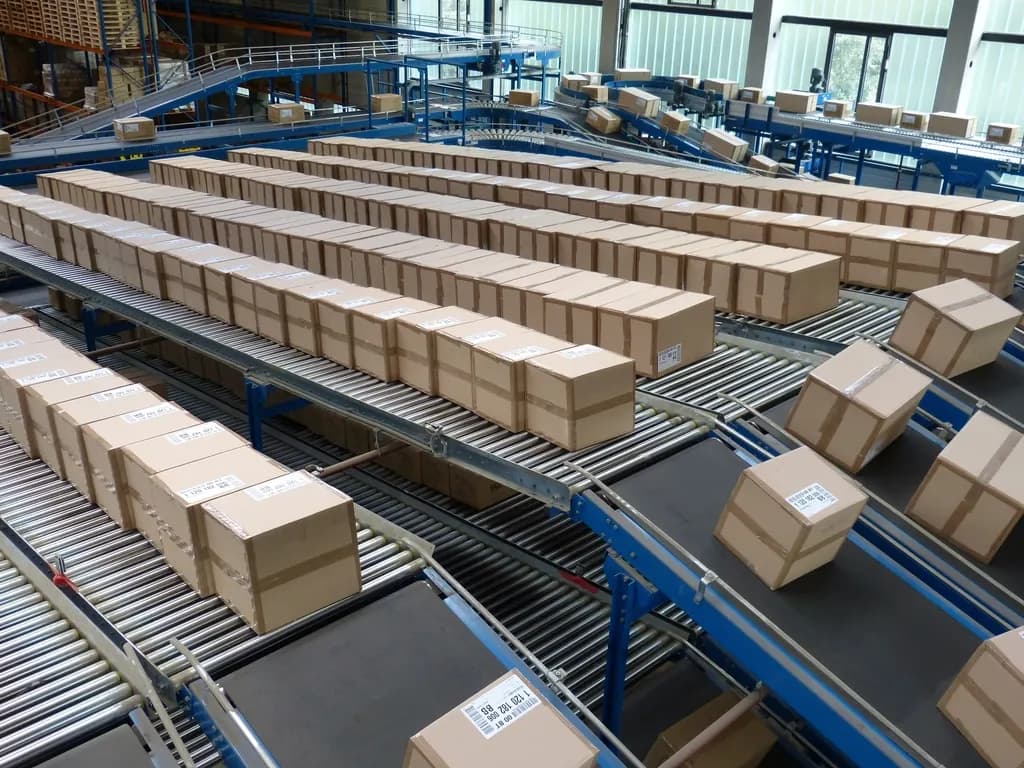
Where the first automation dirham should go
Our advice to a mid-sized food, plastics or metals plant is to work from the bottleneck outwards. A sensible order looks like this:
- Measure before you buy. Capture machine states and stop reasons on the bottleneck line for four to six weeks. Our IIoT retrofit guide shows how to do this on old machines.
- Fix the control platform if it blocks you. Controllers that are out of support, or that cannot talk on Ethernet, make every later step harder. See PLC and SCADA modernisation.
- Attack stops and changeovers. Better sequences, recipe handling in the PLC and clear HMI alarms usually return more than new machines.
- Add predictive maintenance on critical assets. Compressors, chillers, extruders and main drives first.
- Then scale. New lines are commissioned virtually against a digital twin, so they start faster and with fewer surprises.
Operation 300Bn - The UAE's New Industrial Strategy
GMIS: Global Manufacturing & Industrialisation Summit
This video is hosted on YouTube. Playing it loads content from Google, which may set cookies.
Watch on YouTubeSector by sector: where automation fits first
The strategy names established sectors such as plastics, metals and petrochemicals alongside food, healthcare and newer industries. Each has a different first move, because the losses sit in different places.
| Sector | Typical first loss to attack | Automation that usually helps |
|---|---|---|
| Food and beverage | Changeovers and CIP time on filling lines | Recipe management in the PLC, automated CIP sequences, OEE capture |
| Plastics | Scrap at start-up and unplanned extruder stops | Temperature and pressure trending, predictive maintenance on drives and gearboxes |
| Metals | Energy per tonne and furnace downtime | Combustion and furnace control upgrades, energy metering per line |
| Pharma | Batch record effort and deviations | SCADA batch reporting, electronic records, alarm management |
| Building materials | Mixer and kiln stops in summer | Condition monitoring on fans and motors, better HMI alarms |
The common thread is data. A plant that cannot see its own stop reasons will guess, and guesses tend to favour the most visible machine rather than the real bottleneck. That is why we put measurement first in every scope we write, even when the client arrives wanting a specific new system.
One more point that often gets missed: an upgrade is only as good as its documentation. Ask for updated drawings, a tag list, a commented PLC program and an alarm philosophy as deliverables. They cost little to produce during the project and a great deal to recreate later.
Local value matters as much as output
Operation 300bn is also about where value is created. The In-Country Value programme has redirected more than AED 110 billion of public spending to local manufacturers since 2020 (MEED). Automation helps here too, because a plant that makes more locally, with a measured digital maturity, scores better. We cover the scoring in our In-Country Value guide.
What this means for skills
More automation needs more people who can maintain it. The Khaleej Times report on the 2026 Industrialists Career Exhibition noted that the sector had created more than 5,200 jobs for UAE nationals in under three years (Khaleej Times). Plants that upgrade controls should budget for PLC and SCADA training at the same time, or the new system will be run like the old one.
A realistic next step
Pick one line, measure it properly and write down the three biggest losses. If controls are the constraint, our Industry 4.0 upgrade service covers PLC and SCADA modernisation, data capture and predictive maintenance, engineered in our India centre. More background is on our UAE market page, or talk to our Abu Dhabi team.