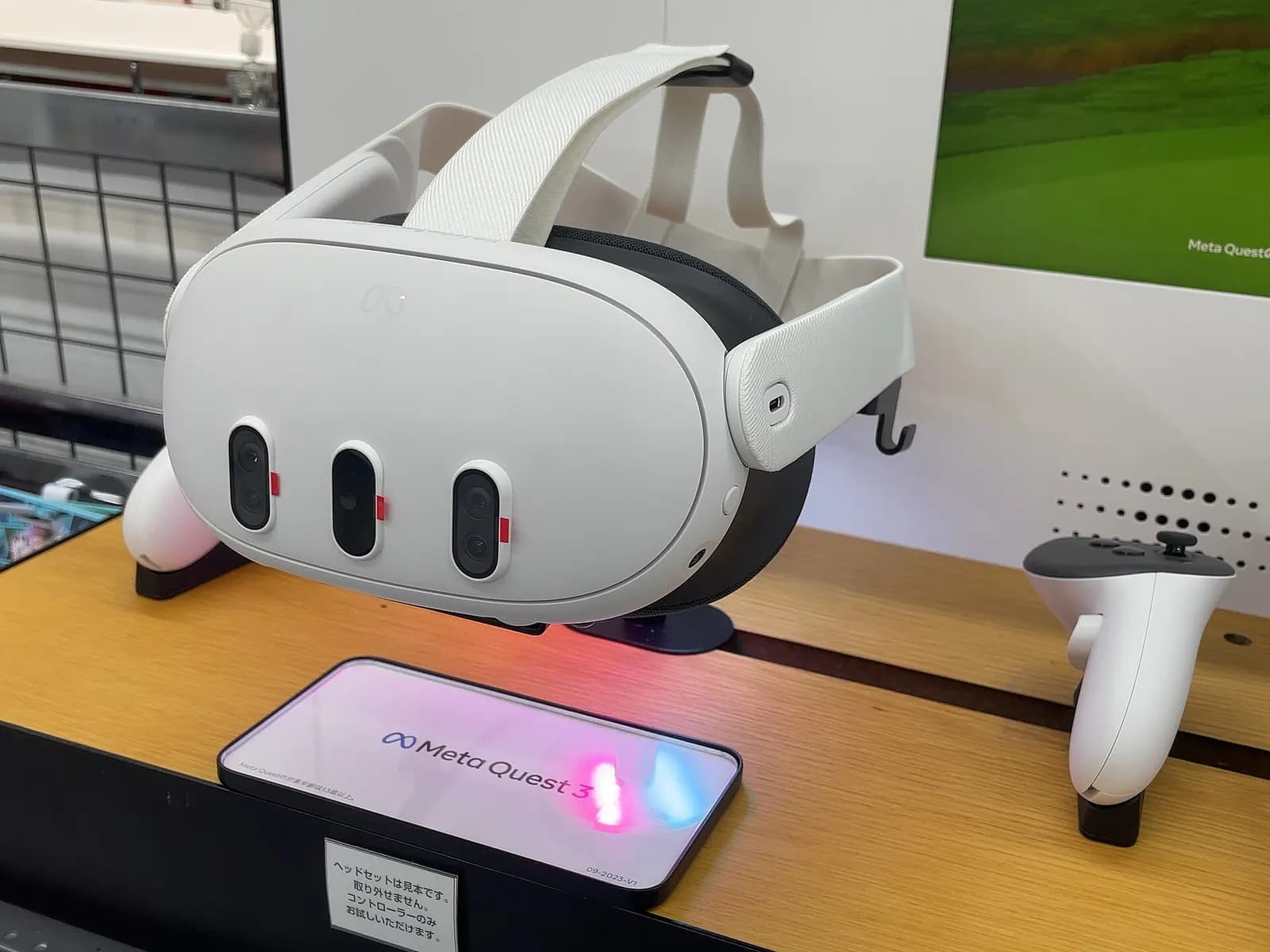
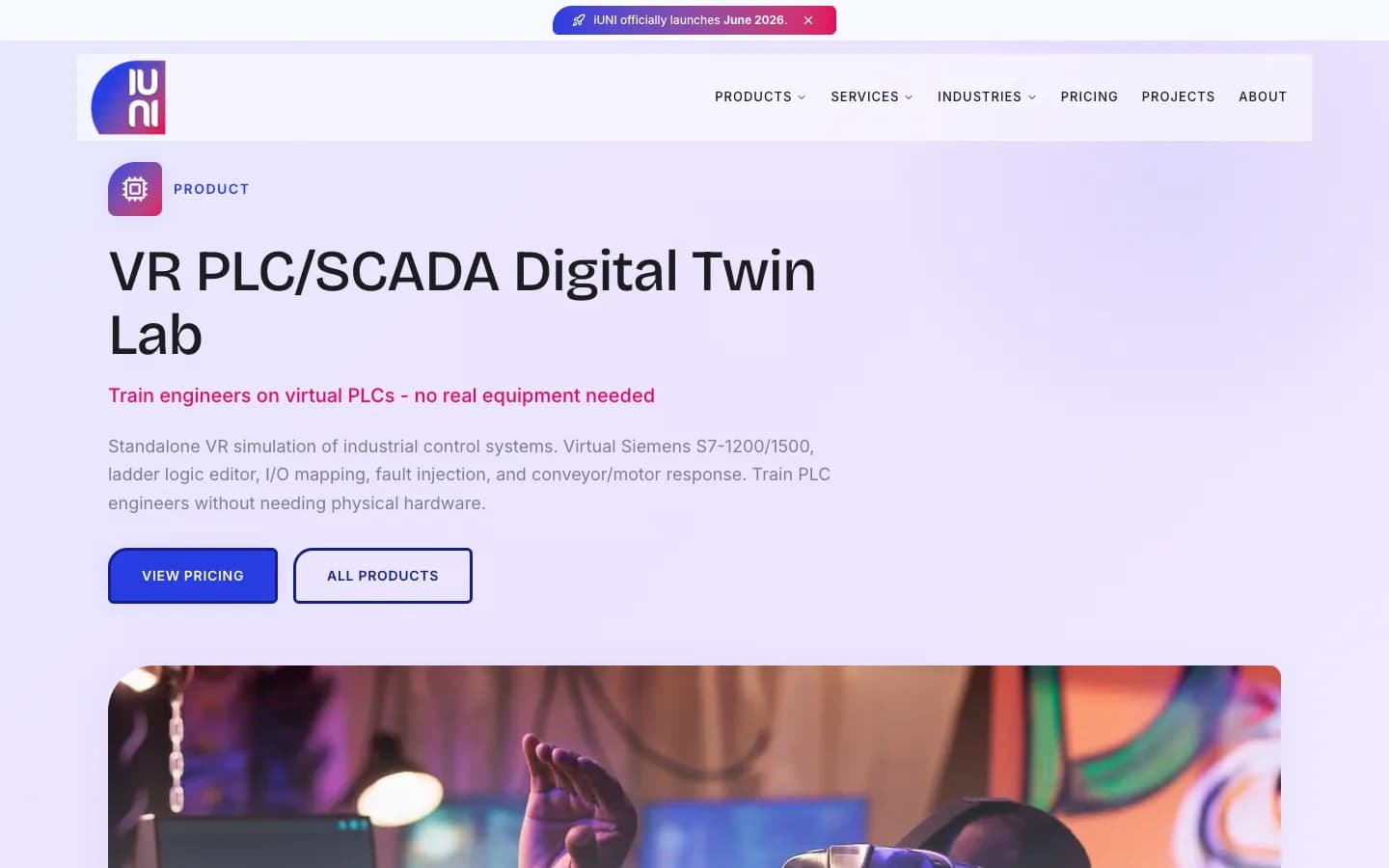
A VR PLC training lab puts a virtual controller, virtual I/O and a working machine inside a headset, so trainees can write ladder logic, wire inputs to outputs, inject faults and watch the machine respond without touching real equipment. iUNI's VR PLC/SCADA Digital Twin Lab, from the Wartens group, does this with a virtual Siemens S7-1200/1500, a simplified TIA Portal-like interface, fault injection and an instructor mode, on Meta Quest 2 or 3, PC VR or WebXR (iUNI). It is a way to multiply practice hours, not a replacement for a real panel.
The shortage it is meant to address
The Manufacturing Institute and Deloitte estimate U.S. manufacturers will need as many as 3.8 million new employees by 2033, and 1.9 million of those jobs could go unfilled. In the National Association of Manufacturers' 2024 Q1 outlook, 65% of respondents named attracting and retaining talent as their primary business challenge (The Manufacturing Institute).
Controls technicians are a hard part of that gap because the skill is learned by doing. A plant cannot hand a new hire the line's PLC to experiment with, and a physical trainer serves one or two people at a time. That is the specific problem a VR lab solves: unlimited, safe practice on a controller that can be broken on purpose.
What is in the iUNI lab
- 3D Siemens PLC models with a simplified TIA Portal-like interface inside VR.
- Ladder logic editor with drag-and-drop contacts, coils, timers and counters.
- Virtual I/O: switches, sensors, motors and lamps, with conveyor and motor response.
- Fault injection for troubleshooting exercises.
- Program verification with automated feedback.
- Multiplayer instructor mode, so an instructor can observe and guide trainees.
- LADX AI integration for code assistance.
How a training session runs
- The instructor picks a scenario, for example a conveyor with a start/stop station, a photo-eye and a jam sensor.
- Trainees write the ladder logic in the headset and map virtual inputs and outputs.
- They run it. The conveyor moves, the lamp lights, the counter counts, or it does not.
- The instructor injects a fault: a failed sensor, a stuck contactor, a wrong address.
- Trainees diagnose it, fix it, and the lab checks the program and gives automated feedback.
- The instructor, in the same virtual space, reviews and moves the group to the next scenario.
Fault-finding is where VR earns its place. On a physical trainer, faults are limited to what you can safely wire in. In VR, the instructor can break anything, as often as needed, with no damage and no reset time.
Virtual Labs | Virtual Reality Training for Manufacturers
Tooling U-SME
This video is hosted on YouTube. Playing it loads content from Google, which may set cookies.
Watch on YouTubeWhere it fits next to other training tools
| Tool | Best for | Limit |
|---|---|---|
| Physical PLC trainer | Wiring, hand skills, real software | One or two trainees at a time |
| Browser ladder simulator | Logic and scan-cycle practice at home | No machine, no I/O wiring |
| VR PLC/SCADA lab | Fault-finding on a working virtual machine, group sessions | Needs headsets and supervision |
| Plant floor shadowing | Your real equipment and procedures | Limited by production and safety |
In practice we would combine them. Logic basics on a free browser tool such as LADX Ladder, fault-finding in VR, then supervised time on a physical trainer and the real line. Each step makes the next one shorter.
Building scenarios around your own machine
Generic conveyors teach method. Your own machine teaches the job. iUNI also builds custom digital twins for the lab, so a scenario can use the actual layout, devices and fault history of a line in your plant. Start with the faults that cost you the most downtime last year: a photo-eye that drifts out of alignment, a VFD that trips on overload, an interlock that operators bypass. Turning those into VR exercises means new technicians meet them in the headset before they meet them at 3 a.m. on the night shift.
Keep the first custom scenario small. One machine, three faults, one instructor guide. Add more once you know how trainees and instructors actually use it.
Honest limits
The lab models Siemens controllers, while many U.S. plants run Allen-Bradley. The concepts carry over: contacts, coils, timers, scan behavior and fault-finding method are the same, but trainees still need time in Studio 5000 before they work on a Rockwell line. VR does not teach the feel of terminating a wire or the habit of checking for voltage. Headsets need charging, hygiene and someone who owns them. Some people find long VR sessions uncomfortable, so keep sessions short. WebXR, the W3C standard for VR in the browser, makes access easier on supported devices, but a dedicated headset still gives the best experience (W3C WebXR).
For colleges and training providers
Community and technical colleges usually fund equipment through career and technical education programs. Perkins V, signed in July 2018, provides nearly $1.4 billion a year for CTE programs nationally (U.S. Department of Education). Whether a VR lab qualifies under a given state plan is a question for your CTE administrator, not for us. iUNI publishes its SaaS and custom pricing on its pricing page.
Next step
See our immersive training service for how VR and AR training is delivered to U.S. plants, or read our broader guide to VR training for manufacturing. If you want a VR scenario built around your own machine, contact us with the equipment list and the faults your technicians struggle with.