NFPA 79 requirements apply to the electrical and electronic equipment of industrial machines in the U.S., from the point where the supply conductors connect to the machine. The standard covers protection against electrical hazards, overcurrent and short-circuit protection, control circuits and functions such as emergency stop, operator interfaces, wiring practices, marking and documentation. It works alongside the National Electrical Code (NFPA 70), which covers the building installation that feeds the machine.
Scope: which machines?
NFPA's own overview explains that NFPA 79 applies to industrial machines operating at 1000 volts or less, starting at the connection of the supply conductors to the machine's electrical equipment. Its annex lists examples from machine tools and plastics machinery to assembly, material handling and packaging machines. The overview also notes that equipment must be listed or labeled where appropriate, and that a risk assessment is required (NFPA, December 2024).
NFPA's product page carries the 2024 edition and also lists a 2027 edition (NFPA 79), and the NEC is in its 2026 edition (NFPA 70). Local adoption varies, so confirm which editions your plant, insurer and inspector work to.
The checklist
1. Risk assessment first
The control and safety design follows from the risk assessment. Without it, decisions about stop categories, guarding interlocks and safety circuit performance have no basis. On imported machines, ask for the builder's risk assessment and check it covers how your plant will actually use the machine.
2. Short-circuit current rating (SCCR)
SCCR is the most common gap on imported machines. The NEC requires industrial control panels and machine nameplates to show a short-circuit current rating, under 409.110(4) and 670.3(A), and UL 508A Supplement SB is the usual method to determine it. A default rating of 5 kA is usually not enough for an industrial service (Plant Engineering). Manufacturers publish tested high-fault combinations of breakers, starters and drives, for example Rockwell's SCCR tool (Rockwell Automation).
Check the available fault current at the machine's point of connection, then make sure the machine's SCCR is higher. If it isn't, the fix is component selection, current-limiting protection or a different feed, and it is far cheaper on the drawing than on the floor.
3. Listed components and panels
Use components listed for the application and build control panels to UL 508A, the standard for industrial control panels rated 1000 V or less (UL 508A). Many European components carry IEC markings only. They may be fine technically and still create problems with an inspector.
4. Stop functions and emergency stop
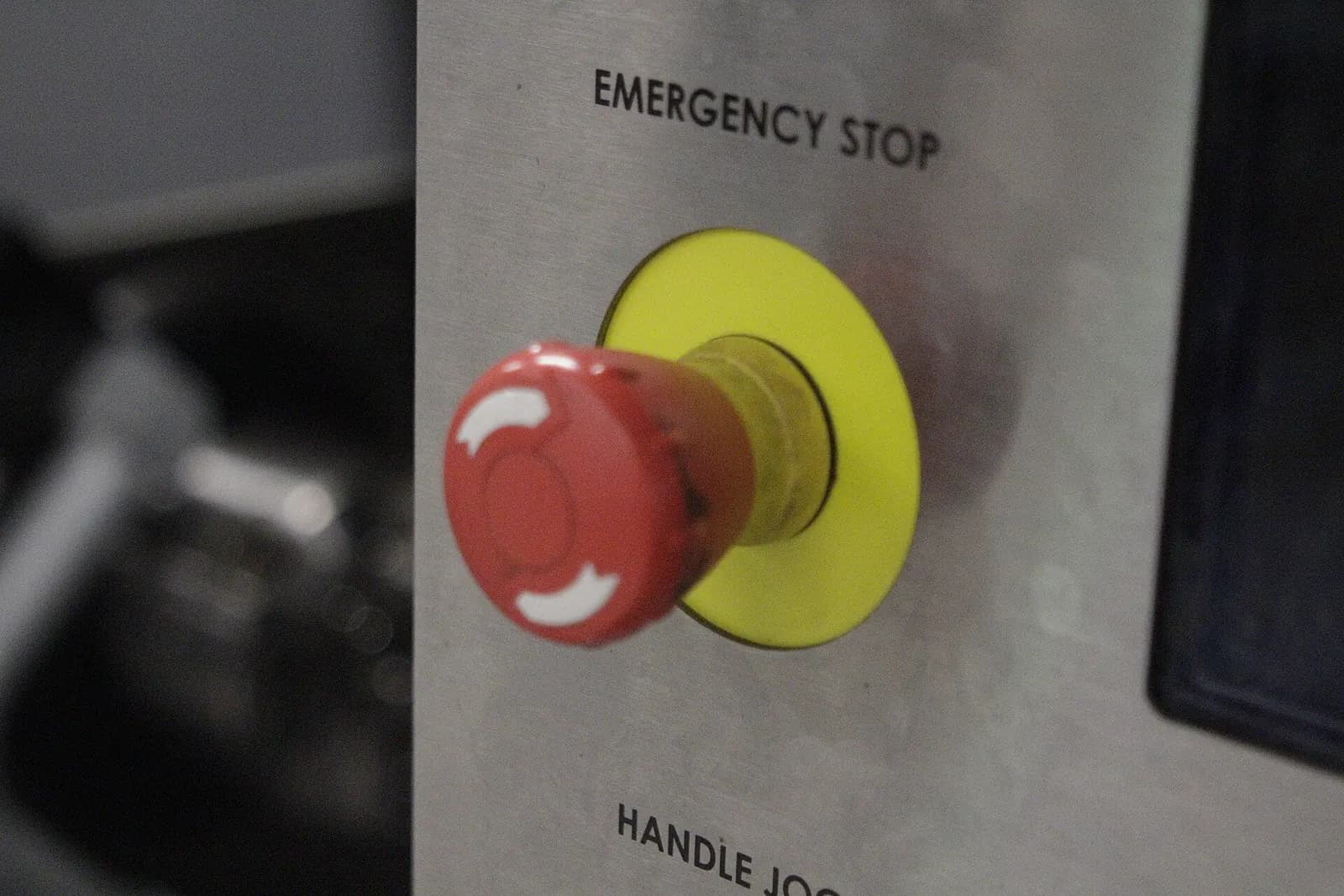
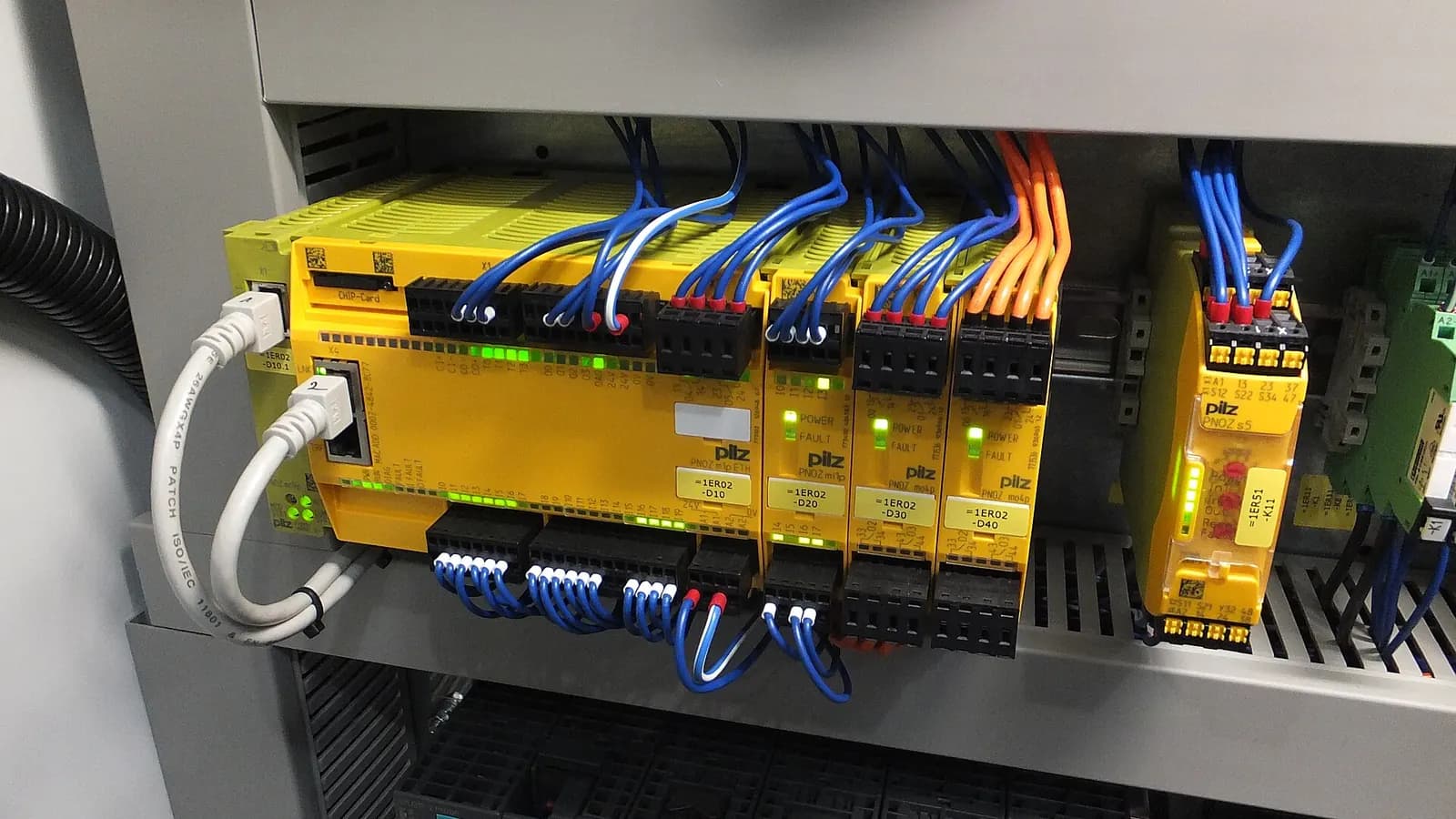
NFPA 79 defines stop categories and sets requirements for emergency stop devices and their circuits. Which stop category each function uses comes from the risk assessment. On drives and robots, a controlled stop followed by removal of power is common. On simple machines, removing power directly may be correct. Design the stop logic and wiring so a single fault cannot prevent the stop, and test every e-stop on every machine.
Why the Series Emergency Stop Circuit Failed
RealPars
This video is hosted on YouTube. Playing it loads content from Google, which may set cookies.
Watch on YouTube5. Protection against electrical hazards
NFPA's overview points to the chapters on protection against electric shock, including interlocking and the use of protective extra-low voltage and Class 2 circuits, and on equipment protection including overcurrent protection and SCCR (NFPA). In practice: disconnecting means that can be locked, enclosures that keep live parts out of reach, door interlocks where needed and correctly sized protective bonding.
6. Guarding still belongs to OSHA
NFPA 79 covers the electrical side. Mechanical guarding falls under OSHA, whose general machine requirements call for guarding against point-of-operation hazards, nip points and rotating parts (29 CFR 1910.212). Guard interlocks connect the two: the switch and its circuit are electrical, the guard is mechanical, and both must work together.
7. Control circuits and wiring practice
Control circuits are where controls engineers have the most influence. Use a control transformer or a listed power supply sized for inrush, protect it correctly and ground the control circuit consistently. Keep safety circuits clearly separated in the drawings and in the panel, and document every safety device's function and the stop it produces. When a machine combines a PLC with a safety controller, the schematic should make it obvious which signals are safety rated and which are not.
On imported machines, the most common wiring issues we see are conductor sizes chosen to IEC tables without checking U.S. requirements, mixed color conventions within one panel and terminal markings that don't match the drawings. None of these is hard to fix during design. All of them are slow to fix after the machine arrives.
8. Marking and documentation
- Nameplate with supply voltage, full-load current, SCCR and drawing reference
- Schematics, layouts and a bill of materials that match the machine as built
- Wire and terminal identification that matches the drawings
- Instructions for safe operation, maintenance and lockout
We design controls and write PLC and safety logic for U.S. machines and lines with NFPA 79 and the NEC in mind, and review imported machine documentation against this checklist. Panel building, field inspection and sign-off stay with your panel shop, electrical contractor and inspector. See our controls engineering service, read TIA Portal vs Studio 5000 on safety programming, or send us your drawings for a review.