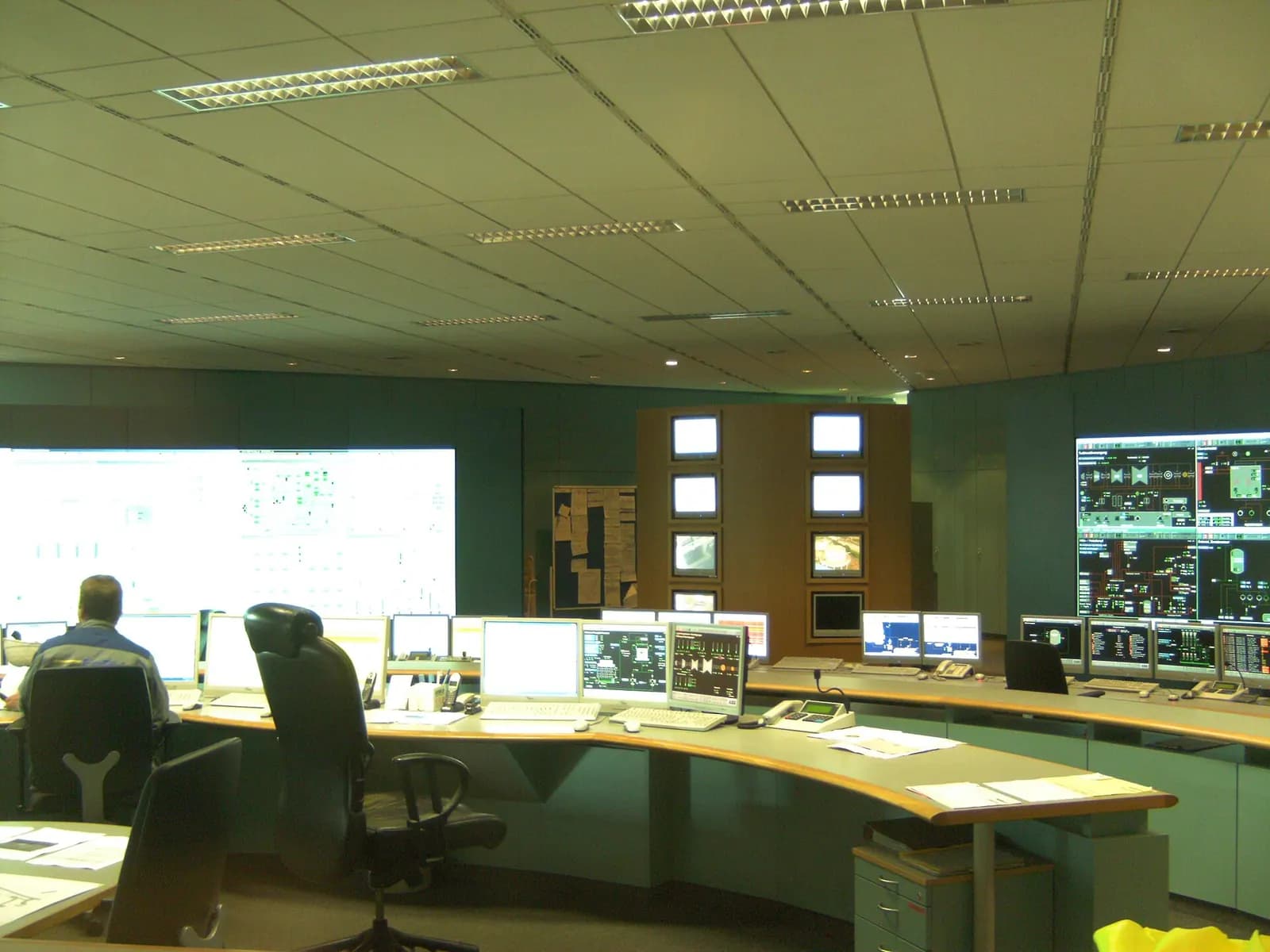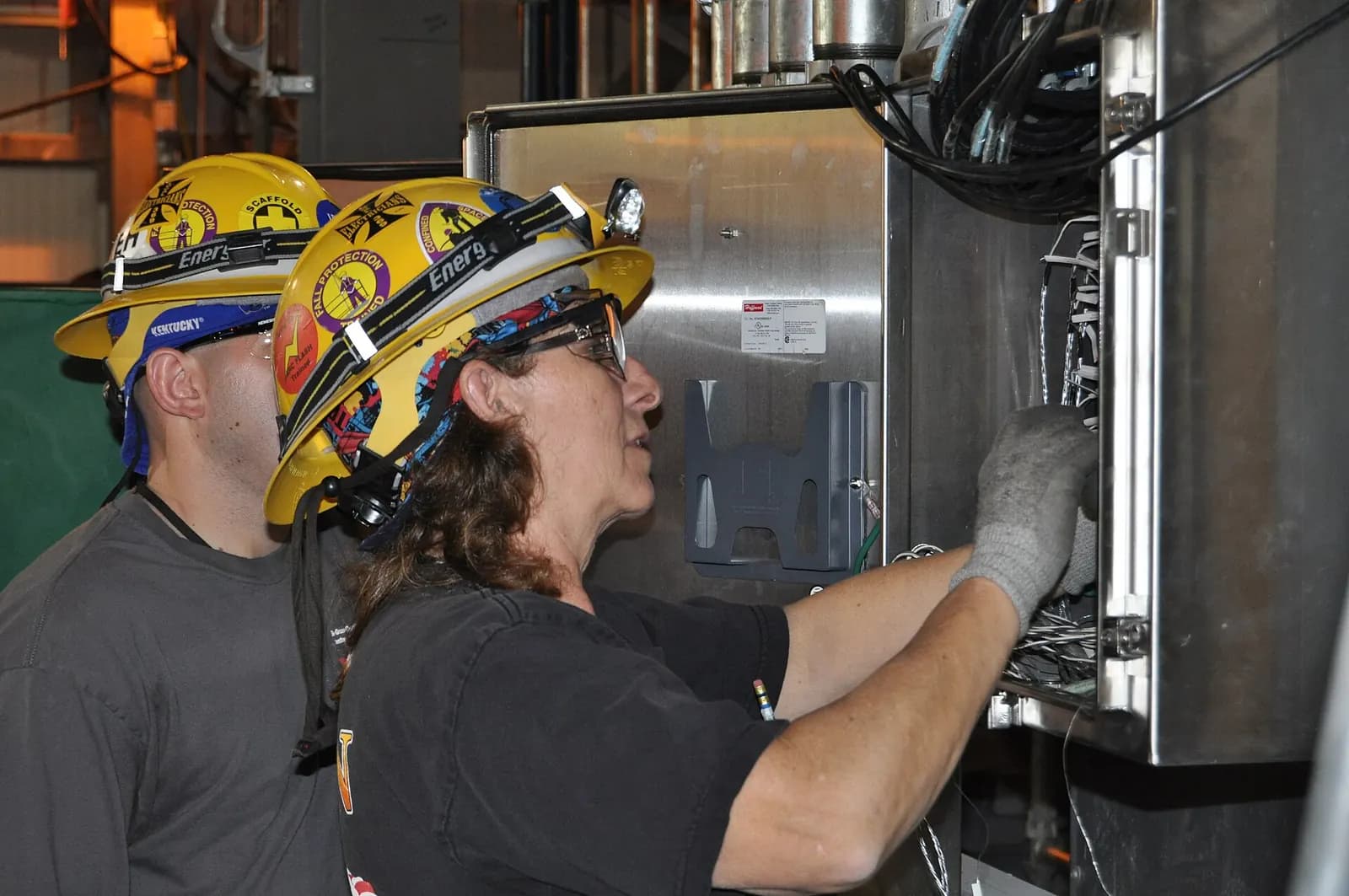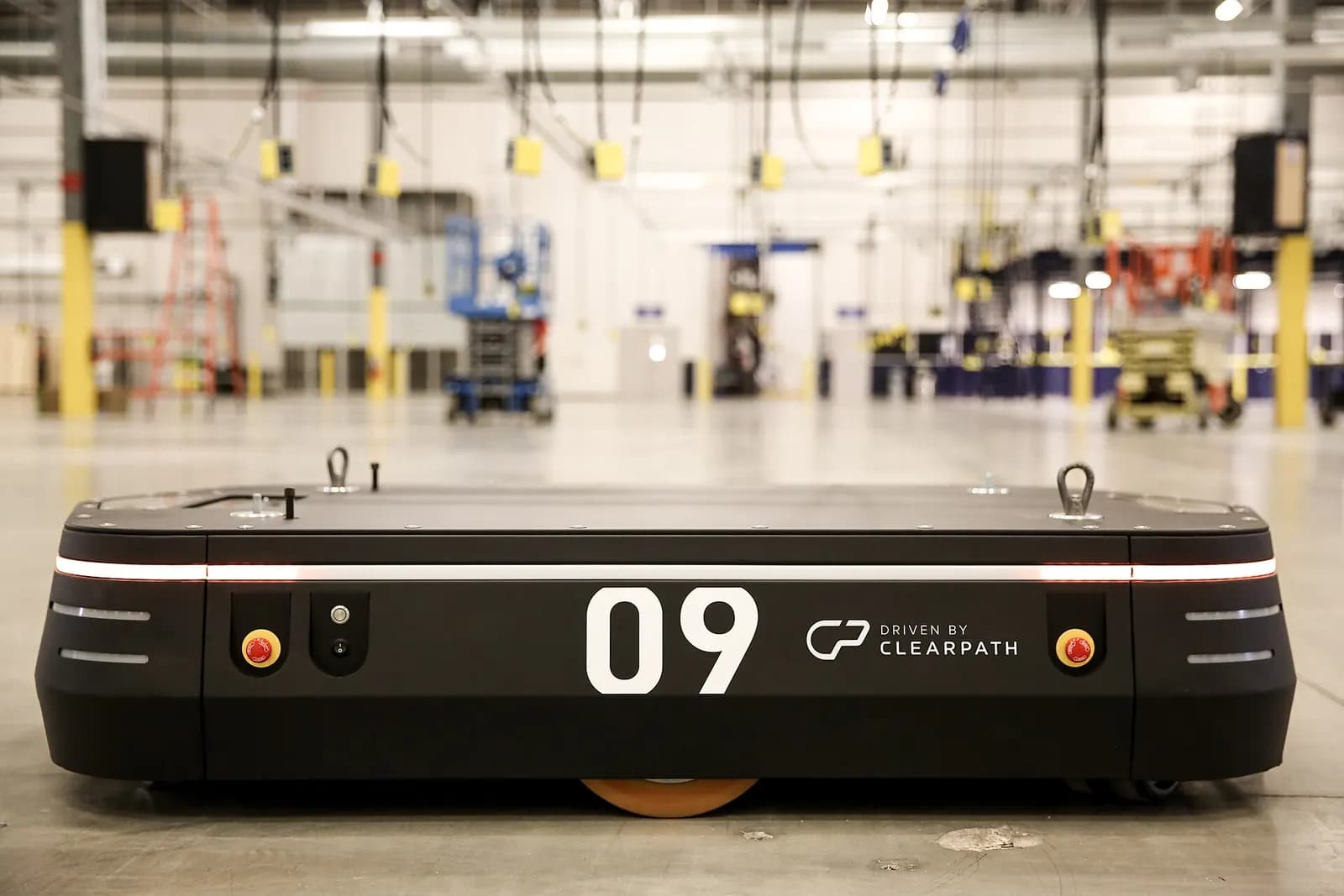
Brownfield line integration means adding new equipment to a plant that is already running: new machines, new conveyors or a new cell that has to share utilities, networks, safety systems and data with lines built ten or thirty years earlier. The controls work is harder than on a greenfield site, because every interface already exists and every mistake shows up as lost production on the old lines. The answer is to treat the interfaces as the main deliverable, and to test them before the new line arrives.
Why brownfield line integration is where U.S. growth is
Interact Analysis reported in April 2026 that U.S. reshoring has not turned into a wave of new factories. Its construction value index peaked in December 2023 and then fell 10 to 19% year on year through 2025, while demand was met mainly by brownfield expansion and higher utilization (Interact Analysis, April 2026). The same analysis expects mobile robots in U.S. factories to grow from about 103,000 in 2023 to about half a million by 2030.
Government data points the same way. The Census Bureau put manufacturing construction spending at a seasonally adjusted annual rate of $170.7 billion in August 2026, down 19.2% from August 2025 (U.S. Census Bureau, October 2026). Fewer new buildings, more equipment going into existing ones.
Why has US reshoring not translated into meaningful factory construction?
Interact Analysis
This video is hosted on YouTube. Playing it loads content from Google, which may set cookies.
Watch on YouTubeThe controls checklist
1. Survey what is really there
Drawings in a brownfield plant are a starting point, not the truth. Before design, walk the site with the maintenance team and record controller models and firmware, network switches and addressing, safety relays and safety PLCs, MCC buckets and spare capacity, and every data link to SCADA, MES and historians. Upload the running PLC programs and compare them with the files on the server. Differences are common.
2. Write the interface document first
Every signal that crosses between the new line and the existing plant goes into one interface document: upstream and downstream handshakes, line-ready and line-full signals, e-stop and safety zone links, utility permissives, data tags for MES and OEE. For each signal: direction, data type, owner, behavior on communication loss. This is the document that prevents the new filler from flooding a conveyor that the old palletizer cannot empty.
| Interface | Typical signals | What goes wrong |
|---|---|---|
| Material flow | Ready, running, full, faulted | Starvation or pile-ups between old and new |
| Safety | Shared e-stops, zone stops, guard doors | New e-stop does not stop the upstream machine |
| Utilities | Air, steam, cooling water permissives | New line overloads a shared header |
| Data | Counts, states, recipes, batch IDs | MES sees two machines with the same ID |
| Network | VLANs, IP ranges, time sync | Broadcast traffic slows an old controller |
3. Treat safety as a system, not a machine
When a new machine joins an old one, the risk assessment has to cover the combined system. Shared e-stops, transfer points and maintenance access between machines are where gaps appear. Agree who owns the safety integration and how it will be validated before purchase orders go out.
4. Manage the change formally
Process plants covered by OSHA's process safety management standard must have written management-of-change procedures that address the technical basis, safety impact, operating procedure changes and authorization, and must train affected employees before start-up (OSHA 1910.119). Even where PSM does not apply, the same discipline works for any line addition. A one-page change record per interface is enough.
5. Plan energy isolation for tie-ins
Tie-ins to live panels and shared equipment need lockout procedures written for the specific work. OSHA's hazardous energy standard requires training for authorized and affected employees, retraining when equipment or processes change, and periodic inspection of energy control procedures (OSHA 1910.147). Electrical work near energized parts falls under NFPA 70E (NFPA 70E). Your site safety team owns these procedures. The controls design should make them easy: clear isolation points, labeled panels and no hidden feeds.
6. Test the interfaces before the line arrives
This is where simulation pays most in brownfield work. A model of the new line plus simple models of the upstream and downstream equipment lets you run every handshake, every stop and every restart before anyone touches the live plant. We test the new PLC code against that model and replay the existing plant's signals to it. Read how in virtual commissioning.
7. Cut over in small, reversible steps
- Connect network and data links first, in read-only mode where possible.
- Connect safety links during a planned stop and test every e-stop path in both directions.
- Run the new line standalone, then coupled at reduced rate, then at full rate.
- Keep a written rollback for every step until production signs off.
Where legacy controls fit in
Expansions often expose old controllers that cannot take another network connection or another hundred tags. Sometimes the right move is to migrate the old controller as part of the project. Our guides to PLC-5 to ControlLogix migration and SLC 500 to CompactLogix migration cover that route.
If you are adding a line to a running U.S. plant, our controls engineering service and virtual commissioning team can take the interface work off your plate. For the market picture, see our U.S. market briefing, or send us your layout and drawings.