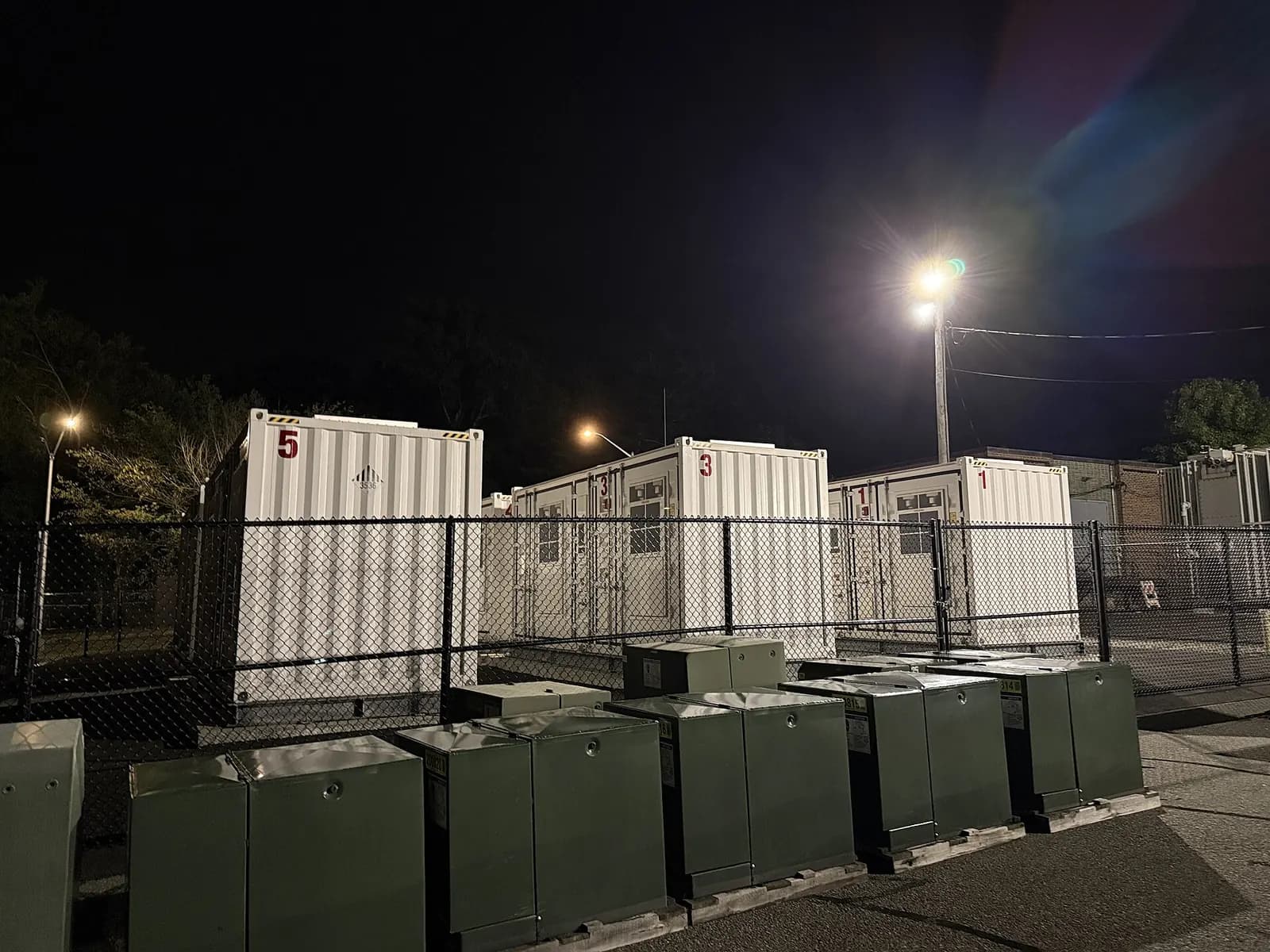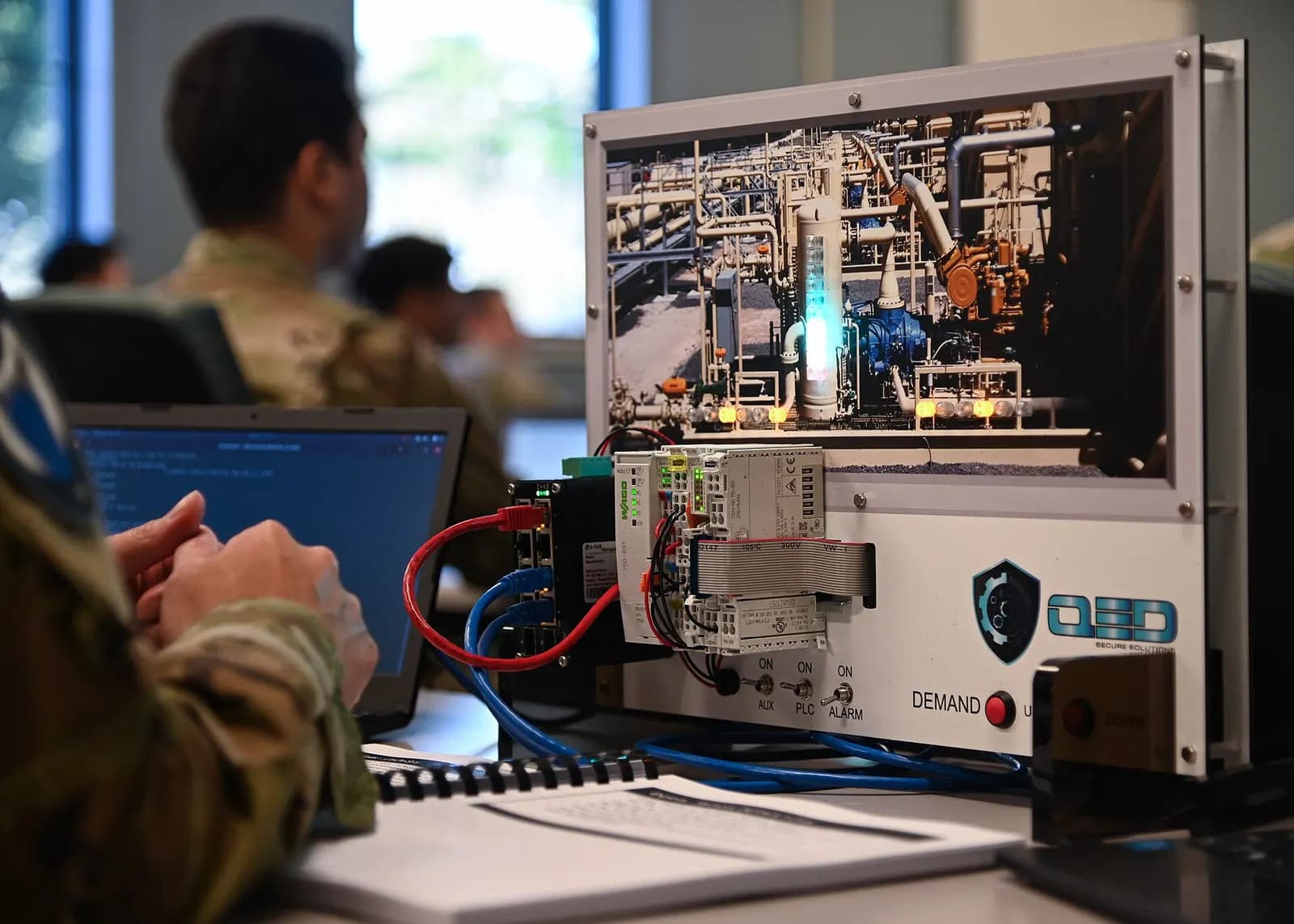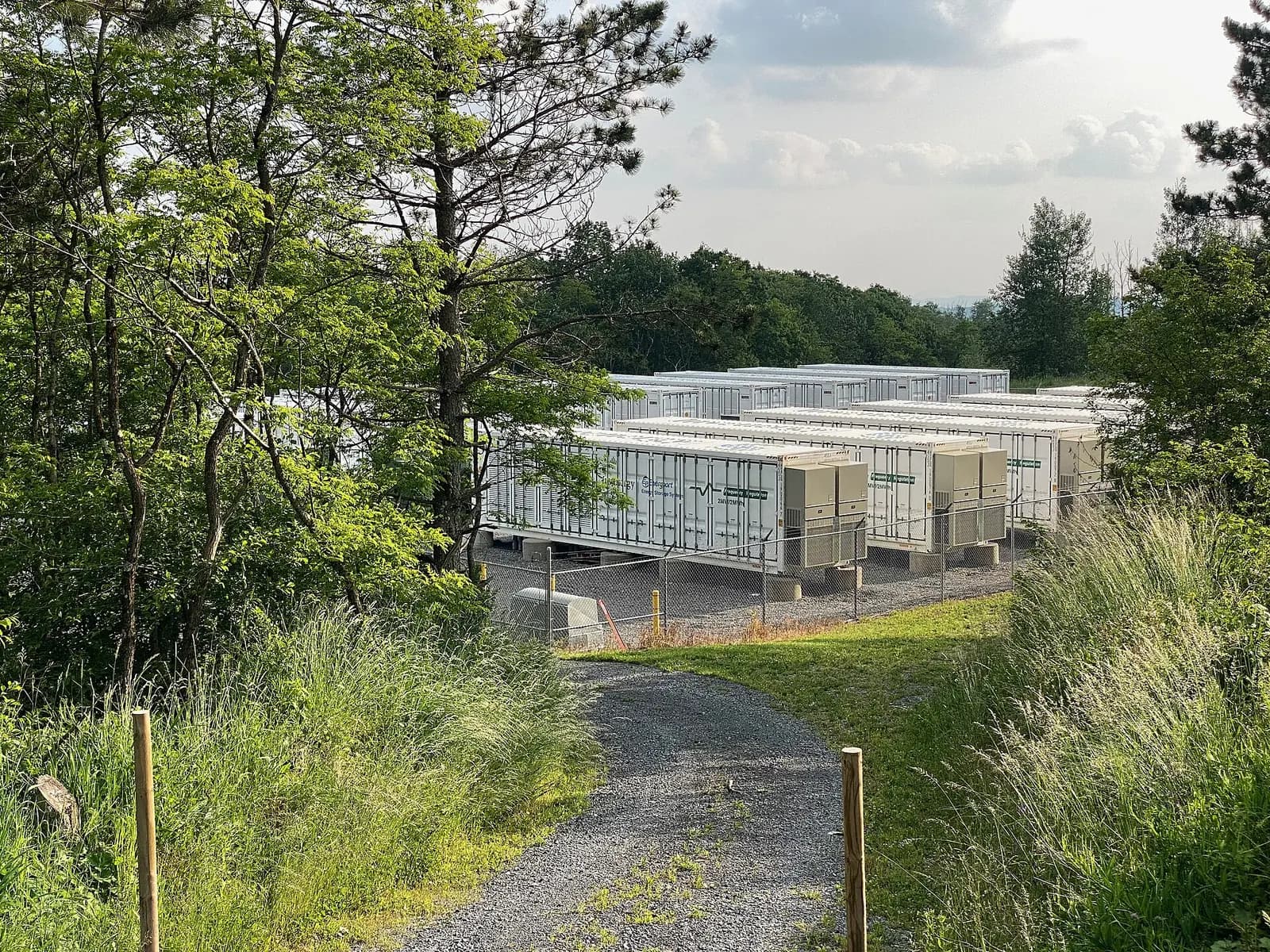
BESS SCADA is the supervisory control and data acquisition layer of a battery energy storage system. It collects data from battery management systems, inverters, meters, transformers, HVAC and fire systems, runs or supervises the site controller that decides when to charge and discharge, and exchanges signals with the utility or market operator. A storage site is a control project as much as an electrical one. Most of its revenue and most of its availability depend on software behaving correctly.
A record build-out
The U.S. installed a record 18.9 GWh of energy storage in Q2 2026, up 17% year on year, with average duration rising from 2.8 to 3.5 hours. ACP and Wood Mackenzie forecast cumulative capacity of 207 GW and 715 GWh by 2031 (T&D World, September 2026). The EIA counted 43.6 GW of battery storage operating at the end of 2025 and 8.3 GW added in the first half of 2026 (EIA, August 2026).
Longer durations and larger sites mean more batteries per inverter, more data points and more complex dispatch. They also mean controls mistakes cost more. A four-hour site that loses an hour of availability every week to nuisance trips is losing a large share of its potential revenue, and the cause is often a threshold, a timeout or a polling setting rather than hardware.
The control layers of a storage site
| Layer | What it does | Typical equipment |
|---|---|---|
| Battery management (BMS) | Cell voltages, temperatures, state of charge, protection | Vendor BMS per rack and container |
| Power conversion (PCS) | Converts DC to AC, follows power commands | Inverters |
| Site controller / EMS | Dispatch, limits, grid functions, scheduling | PLC or industrial PC |
| SCADA and HMI | Monitoring, alarms, history, operator control | SCADA server, historian |
| Utility interface | Telemetry and setpoints to the grid operator | RTU or gateway |
The site controller is the heart of it. It reads state of charge and limits from every BMS, distributes power commands across inverters, enforces export limits at the point of interconnection, and runs the grid functions in the interconnection agreement. It must also fail safely: if communication with a BMS is lost, that string must stop, not keep running on old data.
Long Story Short: Nate Blair on Energy Storage
National Laboratory of the Rockies
This video is hosted on YouTube. Playing it loads content from Google, which may set cookies.
Watch on YouTubeProtocols you will meet
- Modbus TCP inside the site, with SunSpec information models for inverters and batteries. SunSpec publishes models such as DER AC measurement, DER storage capacity and a battery base model (SunSpec models).
- DNP3 to many U.S. utilities. The DNP Users Group has owned the specification since 1993, and it was adopted as IEEE Std 1815 (DNP Users Group).
- IEC 61850 in substations and larger plants, now published as a 52-part series (IEC).
- OPC UA or MQTT to company-wide monitoring and analytics platforms.
Interconnection rules shape the controls. IEEE 1547-2018 sets interconnection and interoperability requirements for distributed energy resources, amended in 2020 (IEEE 1547-2018). Your interconnection agreement will name the functions you must provide, and the site controller has to implement and log them.
Revenue depends on the controls
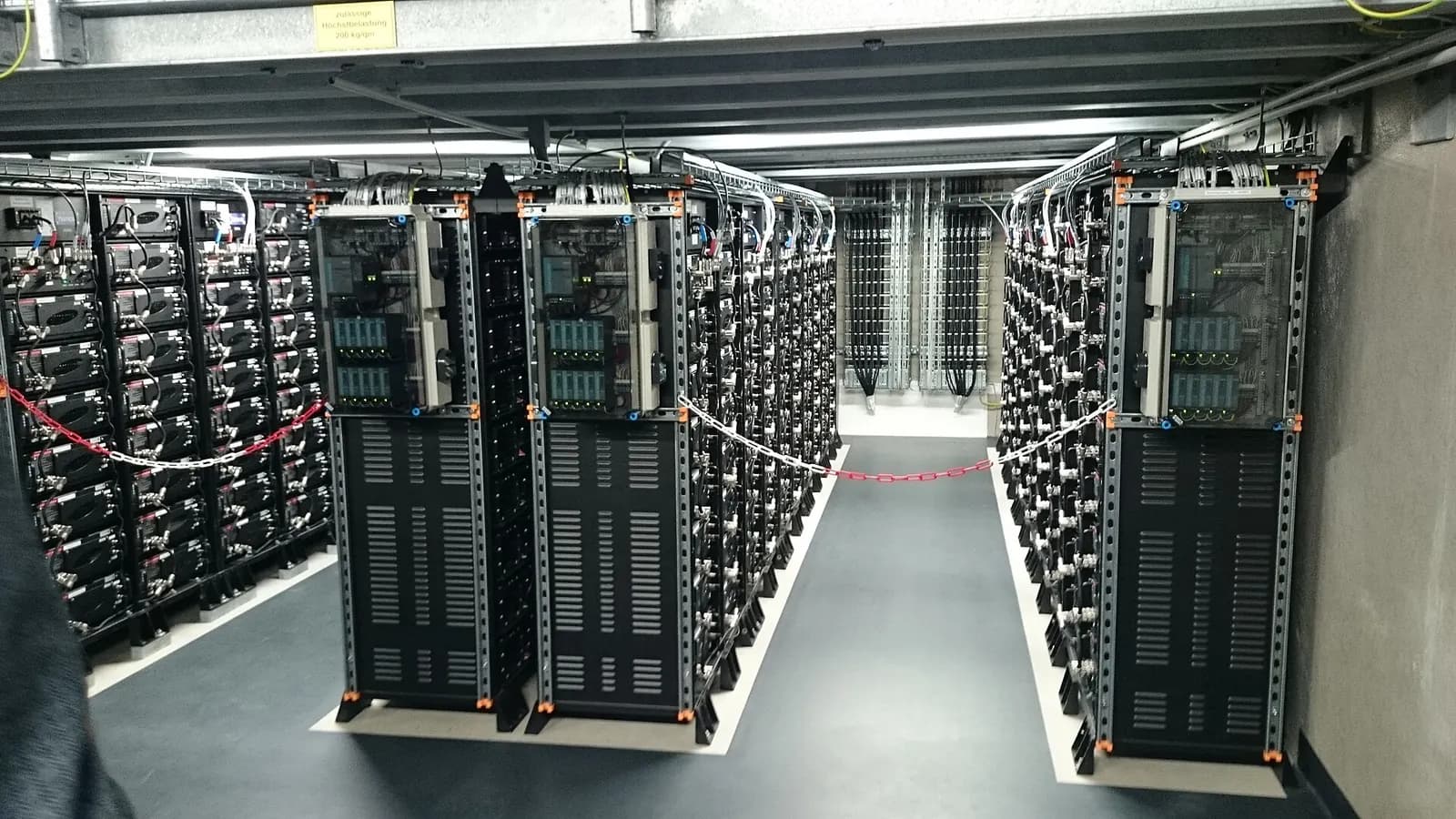
A storage site earns money only when it is available and responds as committed. If the site controller misreads state of charge, the battery may run out halfway through a dispatch period. If a single BMS fault trips the whole site instead of one string, availability drops and with it revenue. If the meter sign convention is wrong, the site may export when it should import. These are controls problems, and they are found faster on a test bench than in a settlement report.
Augmentation is another reason to design the controls carefully. Many sites add batteries over the years to offset degradation, sometimes from a different vendor or generation. A site controller and SCADA system built with clear device models and a structured points list can take new equipment without a rewrite. One built around a single vendor's quirks cannot.
Design choices that decide availability
- Data volume: decide which BMS data is polled fast, which is polled slowly and which stays in the BMS. Polling everything fast floods the network.
- Time stamps: sync every device to one time source so event sequences can be reconstructed after a trip.
- Alarm design: group thousands of BMS alarms into meaningful site alarms with clear priorities.
- Redundancy: decide where a single failure would stop the site and where it should not.
- Remote access: secure, logged access for the operator, the integrator and the battery vendor, segregated from control traffic.
Commissioning checklist
Much of that can be tested before the site is energized. We build a simulation of BMS, inverters and meter, run the site controller and SCADA against it and test dispatch, limits and communication failures in the office. The approach is the same one we use in factories, described in virtual commissioning. Safety requirements for the installation are covered in our post on NFPA 855 and storage controls.
Wartens engineers SCADA, monitoring dashboards and controller logic for storage and solar-plus-storage sites for U.S. integrators and developers. See our battery storage and solar controls service, the U.S. market briefing, or send us your single-line diagram and points list.