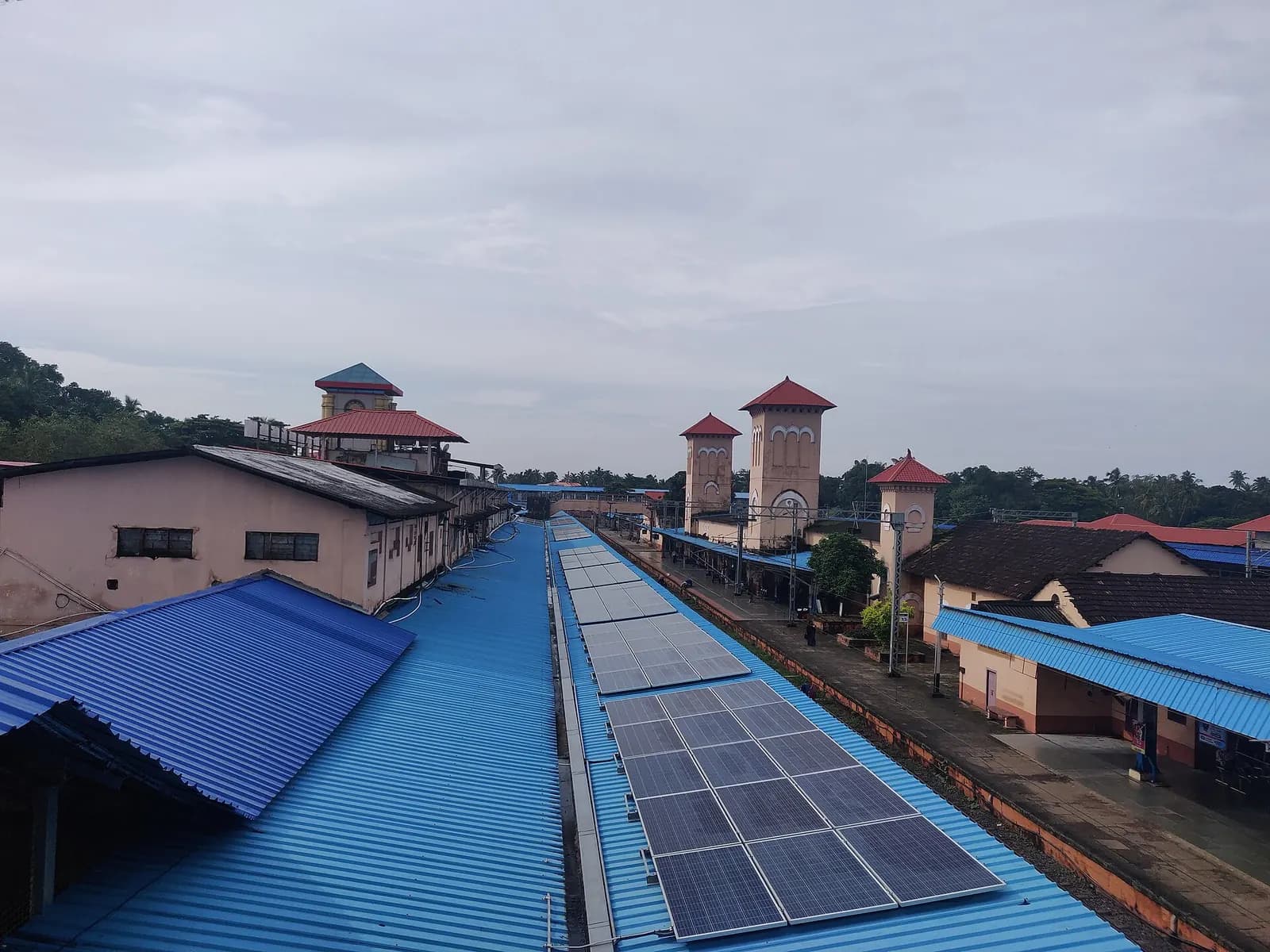
The PM Surya Ghar subsidy for NRIs works through the family home's electricity connection. The scheme pays a central subsidy on residential rooftop solar of ₹30,000 per kW for the first 2 kW and ₹18,000 for the third kW, capped at ₹78,000 for systems of 3 kW and above (Outlook Money). The application is made against the KSEB consumer number, so in most NRI families the person named on the connection, often a parent, is the applicant.
Below we set out the amounts, eligibility, the portal steps and the practical points that matter when the person paying for the system lives in Dubai, Abu Dhabi, Doha or Riyadh. Rules can change, so confirm the current position on the official portal before you commit.
What the scheme offers
PM Surya Ghar: Muft Bijli Yojana is a central government scheme run by the Ministry of New and Renewable Energy. The ministry describes an outlay of over ₹75,000 crore to bring rooftop solar to one crore households, with up to 300 units of free electricity a month (MNRE). By October 2026 more than 60 lakh households had joined and over 37,000 vendors were registered, with the national portal integrated with more than 80 distribution companies (Angel One).
| System size | Central subsidy | Suggested for monthly use of |
|---|---|---|
| 1 kW | ₹30,000 | 0 to 150 units (1 to 2 kW) |
| 2 kW | ₹60,000 | 150 to 300 units (2 to 3 kW) |
| 3 kW and above | ₹78,000 (cap) | Above 300 units |
The table follows the published tiers (Outlook Money). A 5 kW system still receives ₹78,000; the extra capacity is paid for in full.
PM Surya Ghar subsidy for NRIs: who should apply
The scheme is for residential households with their own roof, a valid electricity connection and no previous solar subsidy. Registration asks for the state, the distribution company, the electricity consumer number, a mobile number and an email (Outlook Money). In practice that means:
- If the KSEB connection is in a parent's name, the parent applies, with an Indian mobile number they can use for OTPs, and the subsidy goes to the bank account given in the application.
- If the connection is in your own name, you can apply, but you will need an Indian mobile number for OTPs and a bank account that can receive the credit. Ask your bank which of your accounts suits this.
- If ownership and the connection name differ, sort that out with KSEB before you apply. Mismatches are a common cause of delay.
The steps, in order
- Register on the national portal with the KSEB consumer number and mobile number.
- Apply for rooftop solar and wait for feasibility approval from KSEB.
- Install the system through a registered vendor.
- Submit the plant details and apply for the net meter.
- KSEB inspects the installation and the commissioning certificate is issued.
- Submit bank details and a cancelled cheque for the subsidy, which is then credited.
These steps follow the published process (Outlook Money). Wartens Energy handles the portal registration and KSEB net-metering paperwork for families who use us, which is the part most NRIs find hardest to manage from abroad (Wartens Energy).
PM Surya Ghar Muft Bijli: How To Apply Online? | PM Suryoday Yojna | Free Electricity | #shorts
ET Now
This video is hosted on YouTube. Playing it loads content from Google, which may set cookies.
Watch on YouTubeSpecial cases NRI families run into
New houses. If the family home is newly built and the permanent KSEB connection is not yet in place, wait for it. The application needs a valid connection and consumer number.
Two connections on one property. Some homes have a separate connection for an upstairs portion or an outhouse. Each connection is treated on its own, so decide which one carries the load you want to offset.
Loans. If you would rather not pay the full amount up front, ask about bank loans for rooftop solar. Wartens Energy prepares the loan documents for families who choose this route. Kerala's own renewable energy agency, ANERT, also publishes state programmes, so check whether anything applies alongside the central subsidy.
Keep a paper trail. Save screenshots of every portal stage, the feasibility approval, the commissioning certificate and the bank details you submitted. If the credit is delayed, these are what KSEB or the portal helpdesk will ask for, and they are much easier to find if they sit in one shared folder that you and your family can both open.
How the subsidy changes the numbers
For a 3 kW system the ₹78,000 subsidy is a large share of the cost, which is why payback for an NRI family home is usually measured in a handful of years rather than a decade. Our cost and payback guide shows how to calculate it for your own bill. Remember that the subsidy is credited after commissioning, so you pay the installer first and receive the subsidy later.
Next step
Send us a recent KSEB bill, the name on the connection and a few roof photos. Wartens Energy will confirm eligibility during the video survey and give you a fixed written quote. Start with our remote installation guide, our energy systems page, or contact our Abu Dhabi office.