Lockout tagout VR training lets technicians practise isolating, locking, tagging and proving dead on a virtual switchboard, pump or transformer bay, so the first time they make a mistake is in a headset rather than in front of live equipment. For UAE power, water, district cooling and oil and gas sites, it fills the gap between the classroom permit-to-work briefing and supervised work on the plant.
Our earlier article on VR safety training for oil and gas covered the broad case. This one goes deeper on a single procedure, energy isolation, because it is common to almost every energy and utility site and because the steps can be scored objectively.
Why isolation is worth training in VR
Hazardous energy is not only electrical. The US regulator OSHA lists electrical, mechanical, hydraulic, pneumatic, chemical and thermal sources, and its standard 29 CFR 1910.147 requires employers to train workers in the purpose and function of the energy control programme (OSHA). The UK's HSE guidance HSG85, Electricity at work: safe working practices sets out the key elements of safe working on or near electrical equipment. UAE operators usually build their own procedures from references like these plus their emirate's OSH framework and their client's permit-to-work rules.
The problem is practice. A technician on a substation or a desalination plant may carry out a full multi-point isolation only a few times a year, and you cannot let a trainee get it wrong on the real system to learn from it. VR removes that limit: the trainee can miss a stored-energy source, see the consequence, and repeat the task until the sequence is automatic.
What a good LOTO scenario should test
- Preparation: read the isolation certificate, identify every energy source on the drawing, collect the right locks and tags.
- Notification: inform the operators and the area authority before anything is switched.
- Shutdown and isolation: stop the equipment by the normal method, then open the correct isolators in the correct order.
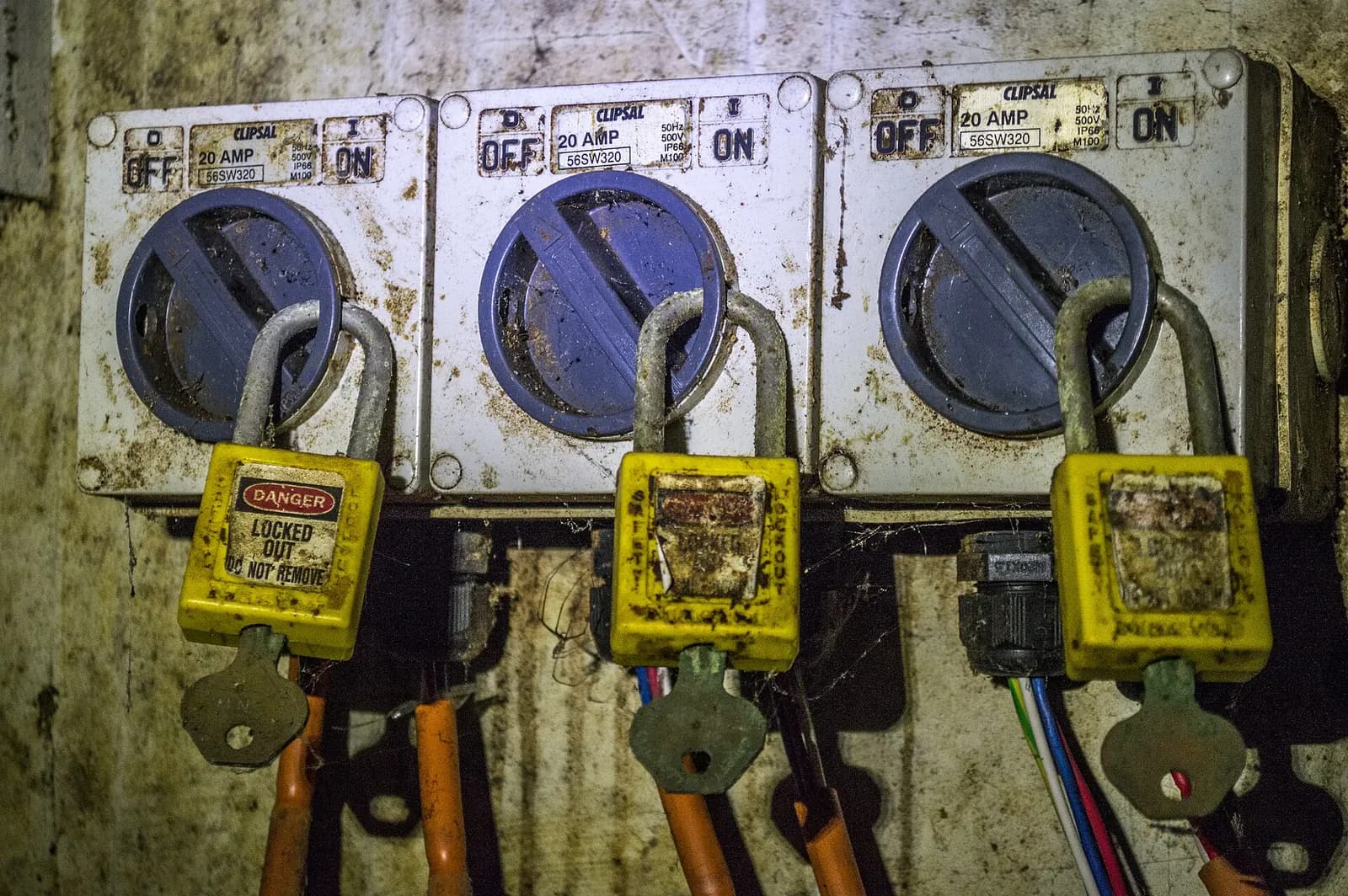
- Lock and tag: fit personal locks and tags to every isolation point, including the ones that are easy to forget, such as control supplies and pneumatic lines.
- Release stored energy: discharge capacitors, bleed pressure, block or lower suspended parts.
- Prove dead: test the tester, test the circuit, test the tester again. Attempt a start and confirm nothing moves.
- Restoration: remove locks in the right order, check the area is clear, and hand back to operations.
Each step can be scored. A VR module should record what the trainee missed and in what order they acted, not just whether they reached the end.
VR Training: Navigating MV Substation Transformer Isolation and LOTO Procedures
Digital Engineering and Magic
This video is hosted on YouTube. Playing it loads content from Google, which may set cookies.
Watch on YouTubeHow iUNI's VR safety modules work
iUNI, the Wartens group's VR and digital twin company, sells off-the-shelf VR Safety Training Modules. Each is a 15 to 30 minute scenario with hazard identification, a scored assessment and a completion certificate, running on Meta Quest 2 and 3 or PC VR. The library includes lockout/tagout, electrical safety and arc flash, confined space entry, working at height and fire safety and evacuation.
For the energy sector, iUNI's oil and gas and energy page describes an electrical safety and arc flash module covering arc flash simulation, LOTO procedures, PPE selection and risk assessment exercises, and an offshore platform module that includes permit to work and confined space entry. Where a generic switchboard is not close enough to your plant, iUNI builds custom simulations of your own equipment and procedures.
Off-the-shelf or custom?
| Situation | Off-the-shelf module | Custom simulation |
|---|---|---|
| Induction and refresher for many staff | Good fit | Not needed |
| Site-specific isolation of a critical asset | Partial fit | Good fit |
| Rehearsing a new procedure before a shutdown | Weak fit | Good fit |
| Time to deploy | Days | Weeks to months |
Our usual advice is to start with the off-the-shelf module for awareness and assessment, then build a custom scenario for the one or two isolations that carry the most risk on your site, such as a transformer bay or a high-pressure pump skid. Published module and custom prices are on iUNI's pricing page.
Measuring whether it works
HSE committees rightly ask for evidence. Decide what you will measure before the first headset arrives. Useful measures include first-attempt pass rates in the VR module, the number of missed isolation points per attempt, the time a supervisor spends correcting trainees during their first field isolation, and near-miss reports that involve isolation. Compare a group trained with VR against one trained the usual way over the same period.
Keep the comparison honest. A new training method often looks better simply because it is new and gets attention. Run the measurement for at least two intakes, and look at what trainees still get wrong in the field: those errors tell you which steps the scenario needs to emphasise.
Rolling it out on a UAE site
VR does not replace authorisation. A technician who passes a VR module still needs your site's competence assessment and a supervised isolation on real equipment before working alone. What VR changes is how prepared they are when they get there.
The same headsets can carry technical training: our VR PLC training lab article explains how virtual controllers teach automation skills.
Next step: tell us which isolation procedures matter most on your site through contact, and our immersive training team will suggest whether an off-the-shelf module or a custom scenario fits.