Turnkey automation in India means one contractor owns the control system from the first functional specification to a line that runs at rated speed: design, PLC and SCADA programming, panel build coordination, installation supervision, commissioning and support. For a new plant built under a Production Linked Incentive scheme, that single point of responsibility usually decides whether production starts in the quarter the incentive calculations assume, or two quarters later.
The money behind these projects is real. Government figures reported by Morung Express (IANS) put actual PLI investment across 14 sectors at over ₹2.40 lakh crore by 31 March 2026, led by solar PV modules, pharmaceuticals and automobiles. A PIB release of 27 March 2026 listed 836 approved applications and incremental production and sales above ₹20.41 lakh crore as of 31 December 2025. Most of that capital lands as new lines that need controls engineering, fast.
What a turnkey automation scope in India should include
The phrase gets used loosely, so write the boundaries down. On the projects we see in food, pharma, auto components and packaging, a complete scope has six parts.
- Functional design specification. Sequences, interlocks, alarms, recipes and operator screens agreed in writing before any code is written.
- Electrical and control design. I/O list, panel general arrangement, wiring diagrams, network architecture and the bill of materials.
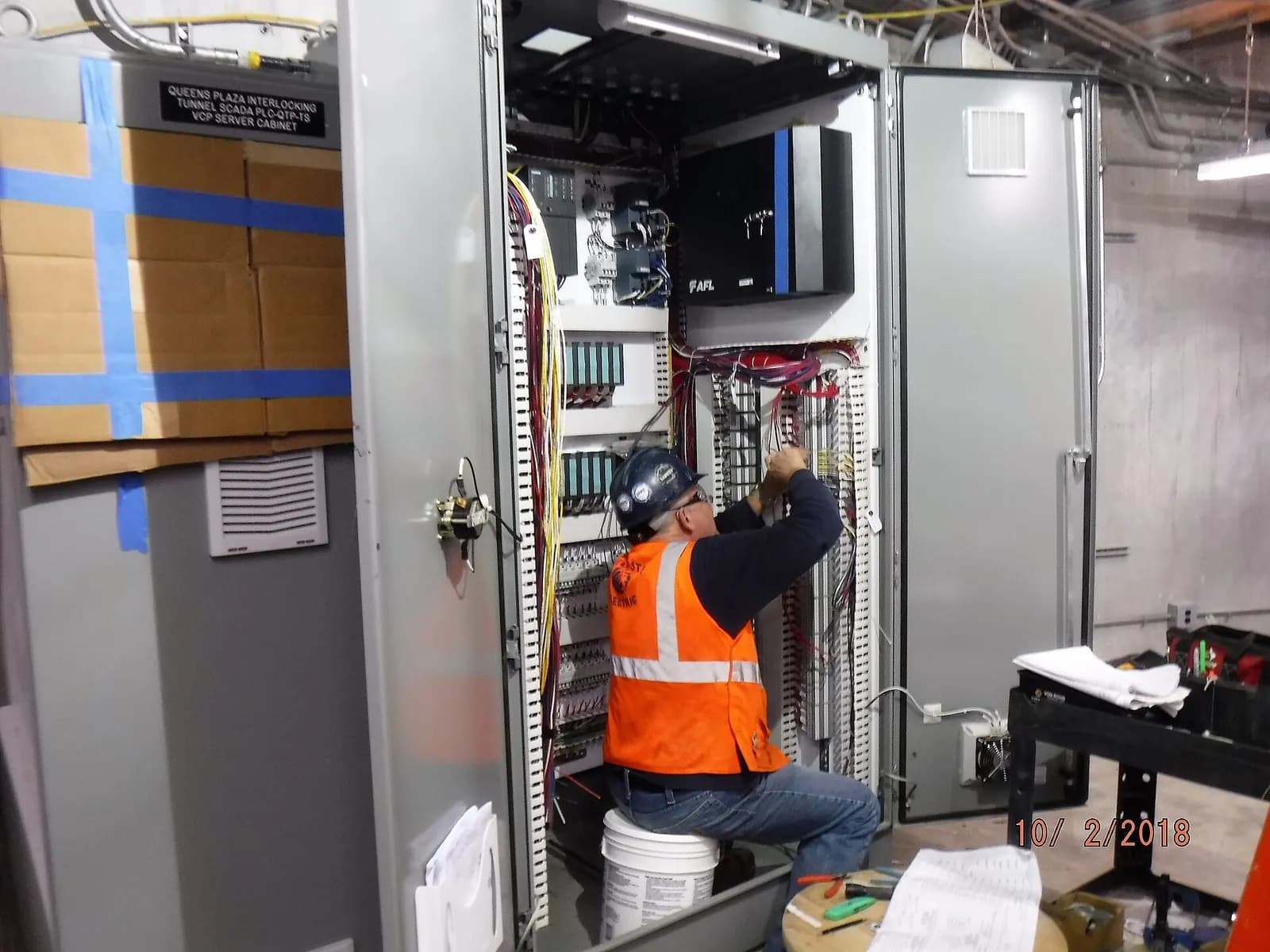
- Panel build coordination. Most panels are fabricated by a local panel shop. The integrator issues drawings, answers queries and witnesses the panel FAT.
- PLC, HMI and SCADA software. Written to a project standard in an IEC 61131-3 language, with tag naming, alarm classes and user levels fixed early.
- Site installation and commissioning. Loop checks, I/O checks, dry runs, wet runs and a performance run against the agreed output.
- Handover and support. As-built drawings, commented source code, backups, operator training and a defined support window.
If any of these sit with a different vendor, name who owns the gap. The classic Indian site problem is a machine OEM, a panel builder and a SCADA vendor each assuming another party will write the line-level interlocks between their equipment.
Sequencing: the order that keeps a PLI line on time
On a greenfield line the critical path rarely runs through the software. It runs through information. Equipment suppliers send motor lists and sensor data late, the panel shop waits for final I/O, and the programmer waits for both. A turnkey contractor should push the following order.
| Stage | Typical output | What to freeze before moving on |
|---|---|---|
| Weeks 1 to 3 | Functional spec, I/O list draft | Process sequence and safety concept |
| Weeks 3 to 6 | Panel drawings, network design | Final I/O count with 15 to 20% spare |
| Weeks 6 to 12 | Panel build, PLC and HMI code | Alarm list and screen standard |
| Weeks 10 to 14 | Simulation test, panel FAT | Test results signed by the client |
| Site | Loop checks, dry and wet runs | Performance run criteria |
The week numbers are an illustration for a mid-sized line, not a quote. The point is overlap: software can be written and tested against a simulated machine while the panel is still being wired. We cover how that works in our guide to virtual commissioning for PLI plants.
Talk to Rockwell Automation Before you Build Your Smart Manufacturing Facility
Rockwell Automation
This video is hosted on YouTube. Playing it loads content from Google, which may set cookies.
Watch on YouTubeChoosing platforms and standards up front
Pick the PLC family once, for the whole plant, and write it into every equipment purchase order. A site that ends up with Siemens on the process skid, Allen-Bradley on the filler and Delta on the packing machine pays for it in spares, training and integration time for years. Where OEMs insist on their own controller, specify the network protocol and the data each machine must expose to the line PLC and SCADA.
Two references help keep everyone honest. IEC 61131-3, now in its 2025 edition, defines the PLC programming languages most vendors implement. The ISA-95 standard gives a shared model for how the control layer talks to MES and ERP, which matters if the plant wants production data for PLI reporting or customer audits.
Where turnkey projects in India usually slip
- Late OEM data. Put dates for motor lists, P&IDs and machine I/O into the equipment contracts, with the integrator copied.
- Power quality on site. New plants often run on temporary supply during commissioning. Plan for it, or drives will trip and look like software faults.
- No time for the performance run. If the incentive clock is ticking, owners skip it. Then the line runs at 70% of rated output and nobody knows why.
- Undocumented changes. Every change made at site must reach the as-built drawings and the archived program.
- Operator training as an afterthought. Train shift leaders on the real HMI before handover, not on the last afternoon.
How Wartens delivers turnkey automation in India
Our engineering centre in Electronic City, Bengaluru, designs and programs control systems for clients in five countries. In India we go a step further and deliver on site: design, PLC and SCADA programming, panel build coordination, commissioning and support, for new and expanding plants in food, pharma, auto components and packaging. Our engineers are trained across 20 PLC brands, including Siemens, Allen-Bradley, Mitsubishi, Delta, ABB and Schneider Electric. You can read more about the market drivers on our India automation page.
If your line includes robots, the same team handles cell programming and integration, and in India we also offer robots on subscription. See our automation engineering services for the full scope, and our article on choosing a PLC and SCADA system integrator for the questions to ask any bidder, including us.
Next step: send us your process description, equipment list and target start-of-production date through the contact page. We will come back with a written scope, schedule and price.