S7-300 end of life is now a dated event: Siemens states that the SIMATIC S7-300 and ET 200M system families will be available until 2033 (Siemens). For a UAE plant running a handful of S7-300 CPUs, that leaves time. For a plant or utility with dozens of them, spread across lines that cannot stop for long, it is a programme that should start now.
Our general guide to PLC and SCADA modernisation in the UAE covers cutover methods. This article is narrower: how to read the phase-out, rank your S7-300 estate by risk, and choose between stocking spares, a staged migration and a full replacement.
What S7-300 end of life actually means
Siemens retires products in stages, and the dates for individual modules can differ from the headline. Before planning, download the phase-out notice and the migration guide for S7-300/400 to S7-1500 from Siemens Industry Online Support, and check the status of every order number in your plant against it. Distributors and spares brokers publish summaries, but the Siemens entry is the one to plan from.
In practice the effects arrive before the final date. As a family moves towards discontinuation, new modules get harder to buy, repair turnaround grows and spares prices rise. Plants in the UAE also face lead times for shipping, so the practical deadline for a critical line is earlier than the published one.
Rank your S7-300 estate by risk
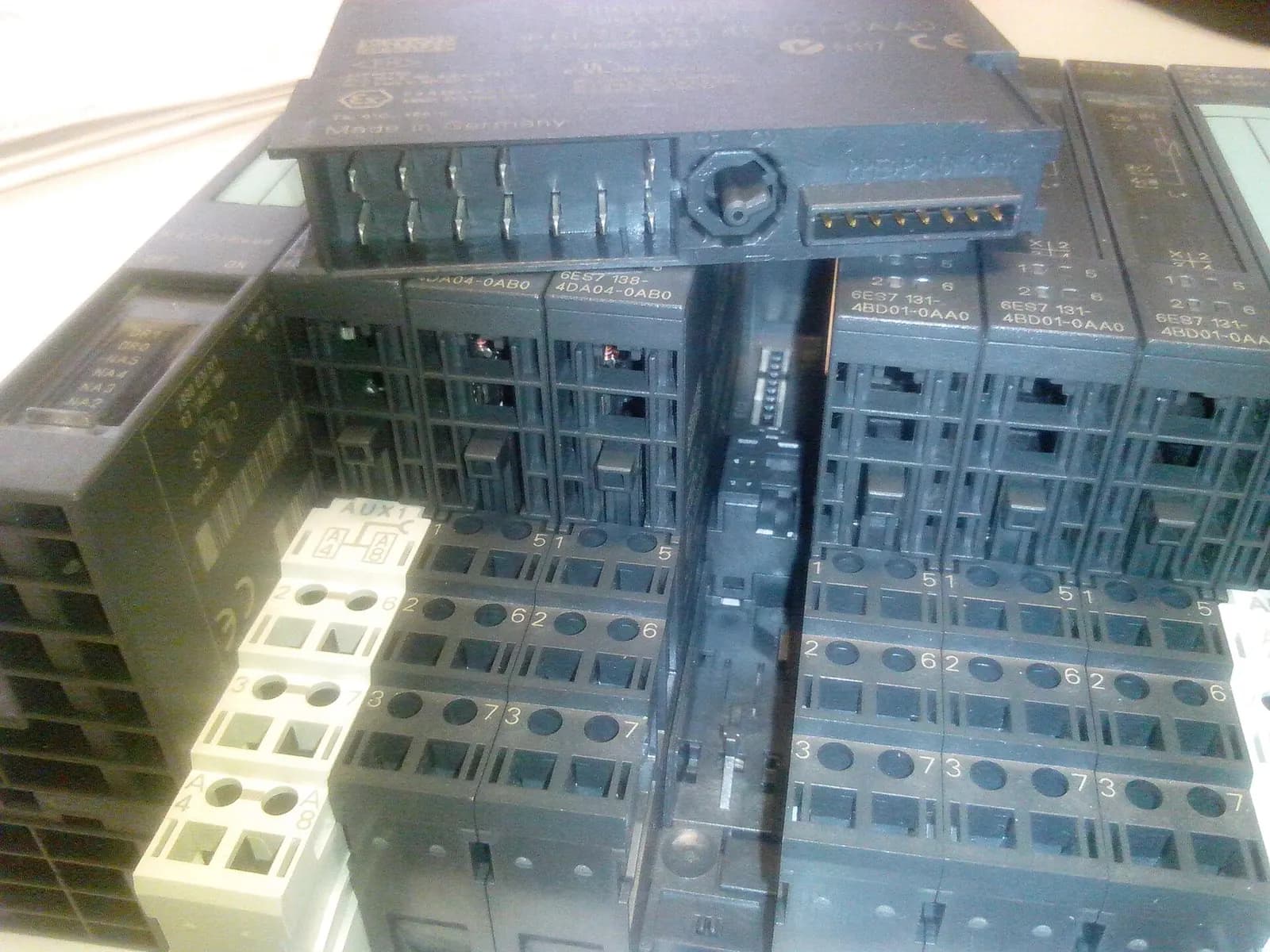
- List every controller. CPU type and firmware, I/O modules, communication processors, HMI panels, network type (PROFIBUS or MPI), and where the project files are.
- Check you have the software. A surprising number of plants have no current backup of the STEP 7 project, or only an upload without symbols and comments. Fix that first.
- Score criticality. What does an hour of downtime cost on this line, and is there a manual fallback?
- Score supportability. Spares on the shelf, number of different module types, and whether anyone on site can still work with SIMATIC Manager.
- Plot the two scores. High criticality and low supportability go first. Low on both can wait, with spares stocked.
Three ways to handle the phase-out
| Option | When it fits | Watch out for |
|---|---|---|
| Stock spares and wait | Low-criticality lines, or a line that will be replaced before 2033 | Spares prices, shelf life of batteries and backups |
| Staged migration | Critical lines that cannot stop for long | Mixed old and new systems for a period, more test effort |
| Full replacement with S7-1500 | Lines already due for upgrade, or with poor documentation | Longer shutdown, field wiring changes |
The successor is the SIMATIC S7-1500, with PROFINET integrated in the CPUs, motion control functions in every CPU and a scalable modular design, engineered in TIA Portal. Moving to it is also the moment to fix what the old system never had: proper network segmentation, data access through OPC UA for monitoring, and documentation that matches the code.
What are the differences between SIMATIC S7-300 and S7-1500 PLCs?
RealPars
This video is hosted on YouTube. Playing it loads content from Google, which may set cookies.
Watch on YouTubeThe software side of the migration
TIA Portal can import STEP 7 Classic projects, but an S7-300 program does not become a good S7-1500 program by conversion alone. Expect to review absolute addressing, replace some system functions, decide whether to use optimised block access, and retest every sequence. That retest is where simulation pays: the migrated code is run against a model of the line before the shutdown, so the cutover weekend is spent on hardware rather than logic.
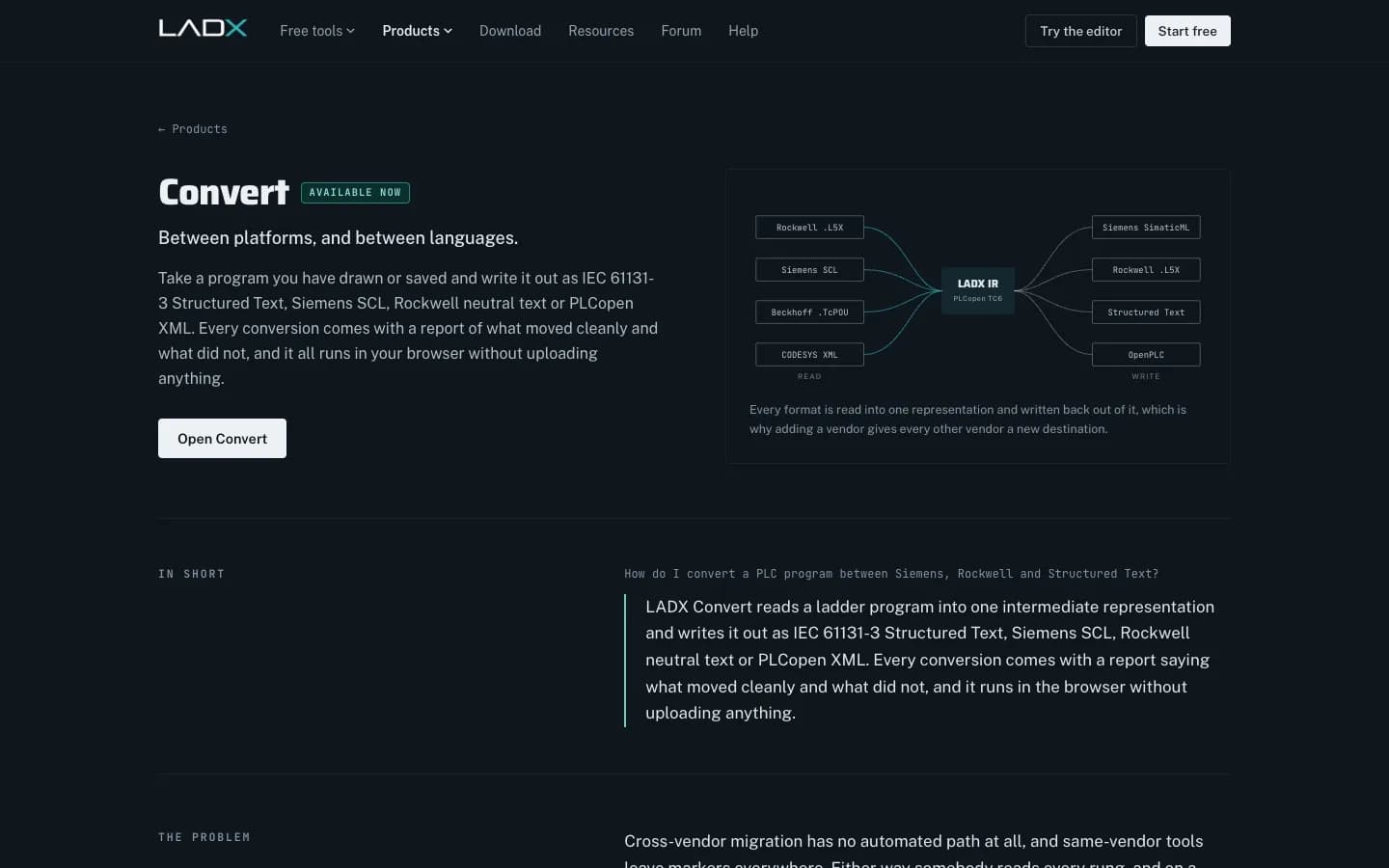
Tools help, within limits. LADX Convert, part of the LADX workbench from the Wartens group, writes a ladder program drawn in LADX out as IEC 61131-3 Structured Text, Siemens SCL, Rockwell neutral text or PLCopen XML, with a report of what converted cleanly and what needs a decision. Reading vendor projects back in is, in LADX's own words, the half that is not built yet, so it is not a STEP 7 migration tool today. Where it helps is rewriting individual routines in a portable form.
Networks, panels and drives move too
An S7-300 rarely sits alone. Many UAE plants built in the 2000s run PROFIBUS DP to remote I/O and drives, MPI to older operator panels, and a SCADA that talks to the CPU through a communication processor. Each of those links has to be planned. Some PROFIBUS devices can stay for a while behind a gateway or a CPU with a PROFIBUS interface; others are easier to replace with PROFINET devices at the same time as the controller.
Operator panels of the same era are usually due for replacement anyway, and a migration is the right time to redraw screens to a modern standard rather than copying old graphics. Check the SCADA driver too: a new CPU can mean new tag addresses, and a SCADA that silently reads the wrong address is worse than one that fails loudly. List every connection, test each one in simulation, and include the network drawing in the handover pack.
Skills and timing
Plan the people as well as the hardware. Maintenance teams who know SIMATIC Manager need TIA Portal skills before the first migrated line goes live, not after. edWartens runs PLC and SCADA training in Abu Dhabi and online. And schedule cutovers around the plant's real constraints: in the UAE that often means avoiding the summer peak for utilities and cooling, and aligning with planned shutdowns.
Next step: send us your controller list, or simply the photos from your plant walk, through contact. Our automation engineering team will rank the estate by risk and propose a phased S7-1500 plan.