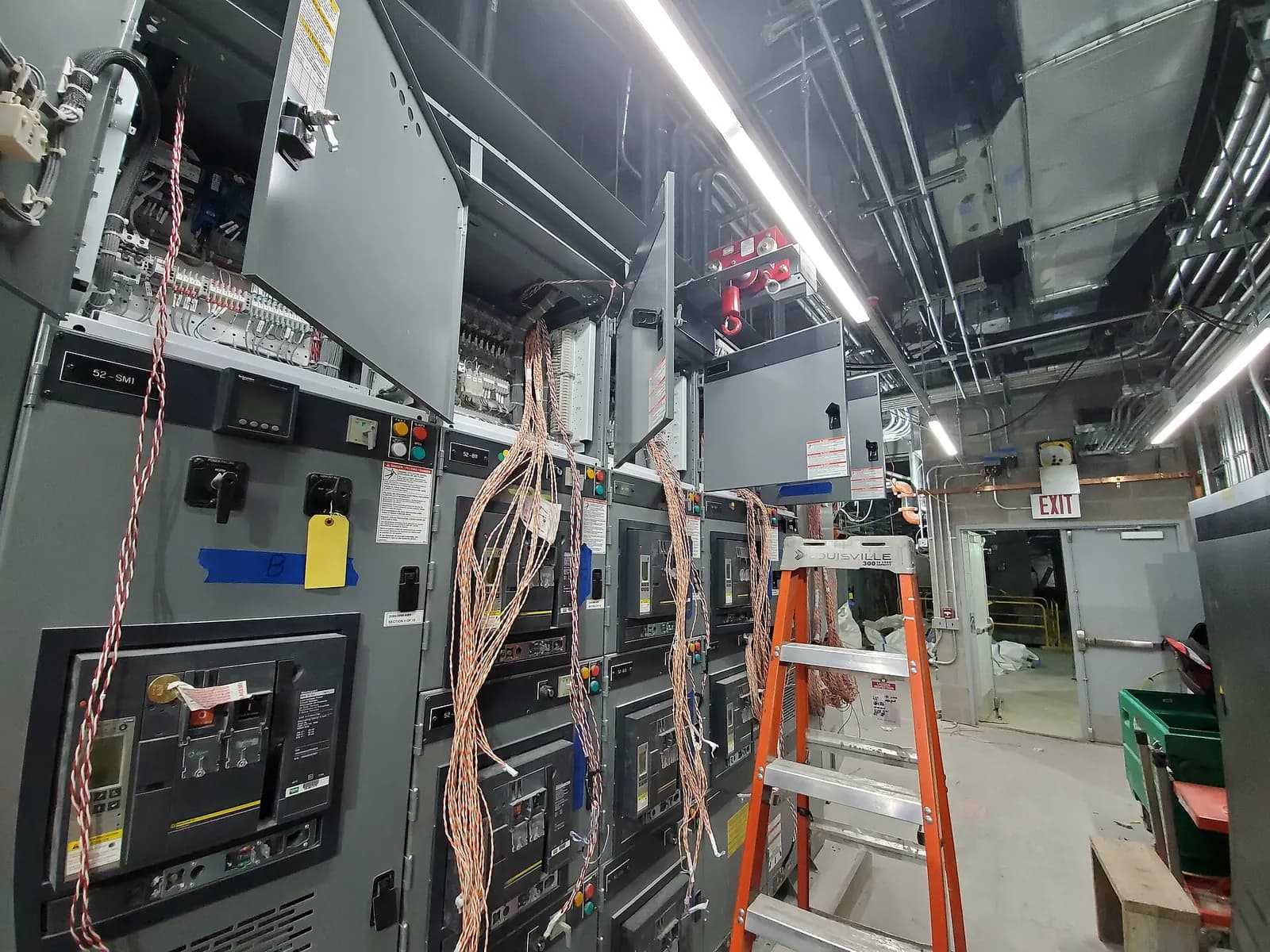
A digital twin in the UAE is a live 3D model of a plant or building, fed by the same sensors and controllers that run the real asset, and used to monitor, test changes and train people without touching production. The first useful twin is rarely a showpiece. It is a working tool that answers one expensive question, such as why a chiller plant draws more power every August or why a filling line loses 40 minutes a shift.
This guide explains what goes into an operational twin, what it asks of your team and your data, and how to judge whether your site is ready. It is based on how iUNI, the Wartens brand for digital twins and XR, scopes and builds them, with engineering from our India centre and a contact in Abu Dhabi.
What a digital twin in the UAE actually does
Strip away the marketing and a twin does four jobs. Most sites start with one and add the others once the model and data links exist, because the expensive part (an accurate model tied to live signals) is built once.
- Monitoring: operators see the plant or building in 3D with live values on the equipment itself, not on a separate trend screen.
- What-if simulation: you test a new shift pattern, a setpoint change or an extra machine on the model before you try it on the floor.
- Virtual commissioning: new PLC logic runs against the model first, so interlock and sequence faults are found at a desk. See our virtual commissioning guide.
- Training: the same model becomes a safe place for operators to practise start-ups, trips and fault finding.
What goes into an operational twin
An operational twin has three layers. Each one depends on information you already hold, even if it is scattered across drawings, PLC projects and spreadsheets.
| Layer | What it contains | Where it comes from |
|---|---|---|
| 3D model | 1:1 geometry of equipment, piping, rooms and access routes | CAD, BIM or laser scans; site photos for gaps |
| Live data | Tags for temperatures, flows, states, alarms and energy | PLC, SCADA, BMS and meters via OPC UA, Modbus or MQTT |
| Logic and analytics | Rules, KPIs, anomaly detection, what-if models | Process knowledge, maintenance history, ERP data |
iUNI twins are built from CAD at 1:1 scale, connected to live IoT data and viewed in a browser-based 3D viewer that needs no software install. They include an analytics dashboard, anomaly detection and what-if simulation, and they integrate with SCADA, PLC and ERP systems (iUNI). Because Wartens started as a controls engineering firm, the twin reads your control system the way your own engineers do, tag by tag.
Where twins pay back in UAE plants and buildings
The strongest cases in the UAE sit where downtime or energy is expensive and the asset is complex enough that nobody holds the whole picture in their head. Maintenance is the clearest example. MarketsandMarkets valued the UAE predictive maintenance market at USD 271.6 million in 2026 and forecasts USD 544.9 million by 2031, with smart infrastructure and buildings among the fastest-growing users (MarketsandMarkets).
Energy is the other driver. A twin of a central plant, with chillers, pumps and cooling towers modelled against live load, shows where the kilowatts go hour by hour. That is the basis for the facility management twins we describe separately.
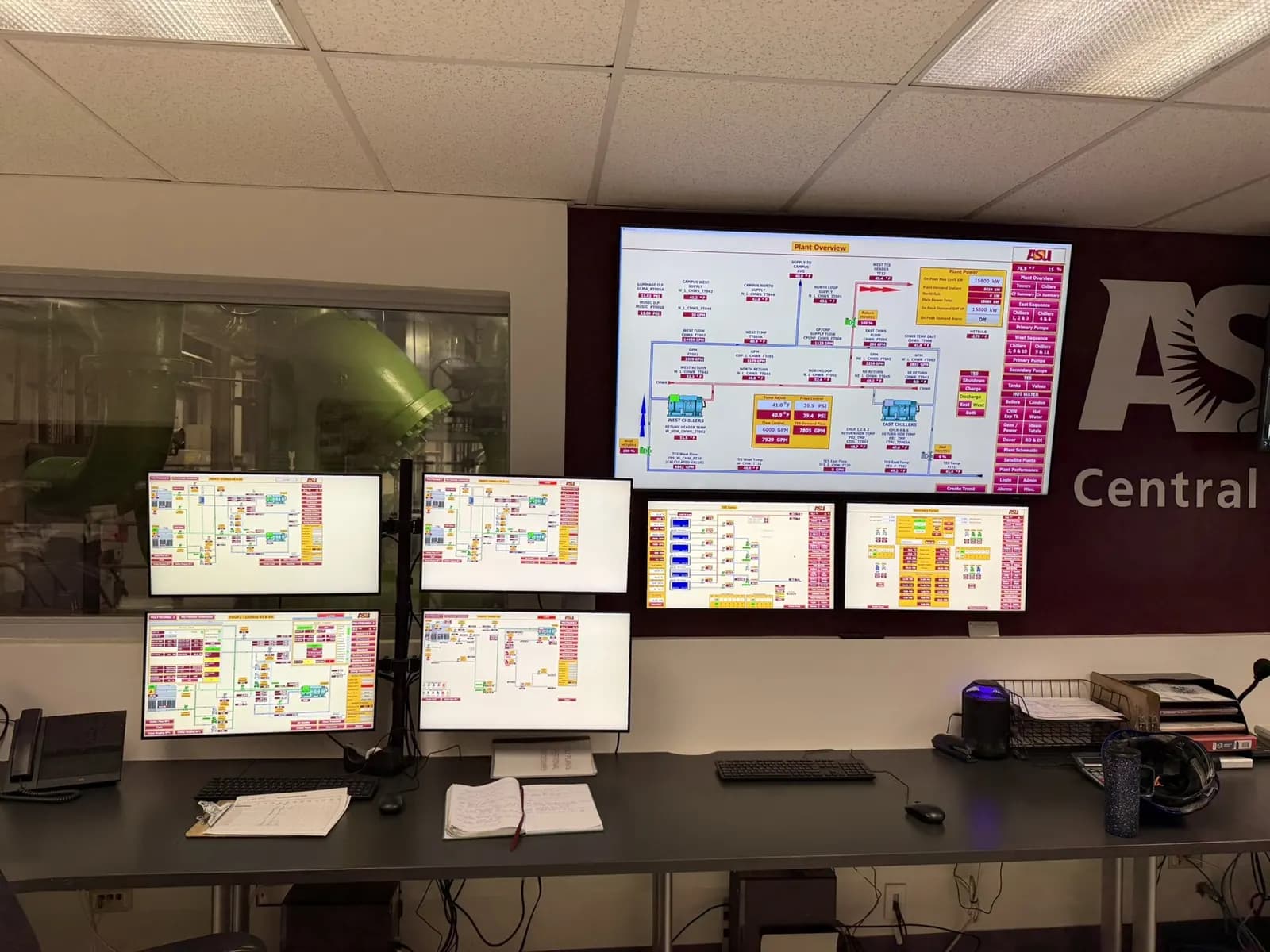
Energy and oil and gas operators in the Emirates already use electrical twins this way. ETAP's case study of ADNOC's Das Island power hub, which runs 12 steam and gas turbine generators, describes an electrical digital twin combined with an operator training simulator so that staff can rehearse switching and fault response before touching the live system (ETAP). The same idea scales down to a single factory or tower.
How long it takes and what you need to provide
A typical twin project takes 12 to 24 weeks (iUNI). The range depends less on the 3D work than on how clean your data is. A site with a tidy SCADA tag list and current drawings sits at the short end. A site with three generations of controllers and no as-built drawings sits at the long end.
- Pick the question. One use case, one area, one measurable target, for example cutting unplanned stops on two compressors.
- Collect what exists. CAD or BIM files, P&IDs, PLC and SCADA exports, alarm lists and a year of maintenance records.
- Agree the data path. Usually read-only OPC UA or MQTT from an edge gateway, so the twin never writes to your controllers.
- Build and validate. The model is checked against site photos and live values until operators recognise it.
- Hand over and extend. Train the users, then add the next area or use case on the same model.
Beyond Simulation: How AI Supercharges the Digital Twin
Siemens
This video is hosted on YouTube. Playing it loads content from Google, which may set cookies.
Watch on YouTubeStandards, openness and avoiding lock-in
Ask any supplier how your twin will be readable in ten years. The ISO 23247 series sets out a digital twin framework for manufacturing (ISO), and open protocols such as OPC UA keep the data layer independent of any one vendor. Insist that you own the 3D model, the tag mapping and the analytics rules. Those three items are the real value of the project.
The market is moving quickly. Grand View Research valued the global digital twin market at about USD 35.8 billion in 2025 and expects 31.1% annual growth to 2033 (Grand View Research via PR Newswire). Fast growth means many new platforms. Open formats protect you if your chosen one does not last.
What we would do first
Start small and measurable. Choose the asset that costs you most when it stops, model that area, connect it read-only and run it for three months before widening the scope. For context on why UAE industry is investing now, read our UAE market briefing. When you have a candidate area, send us the drawings and a tag list through contact and we will come back with a written scope for a digital twin.